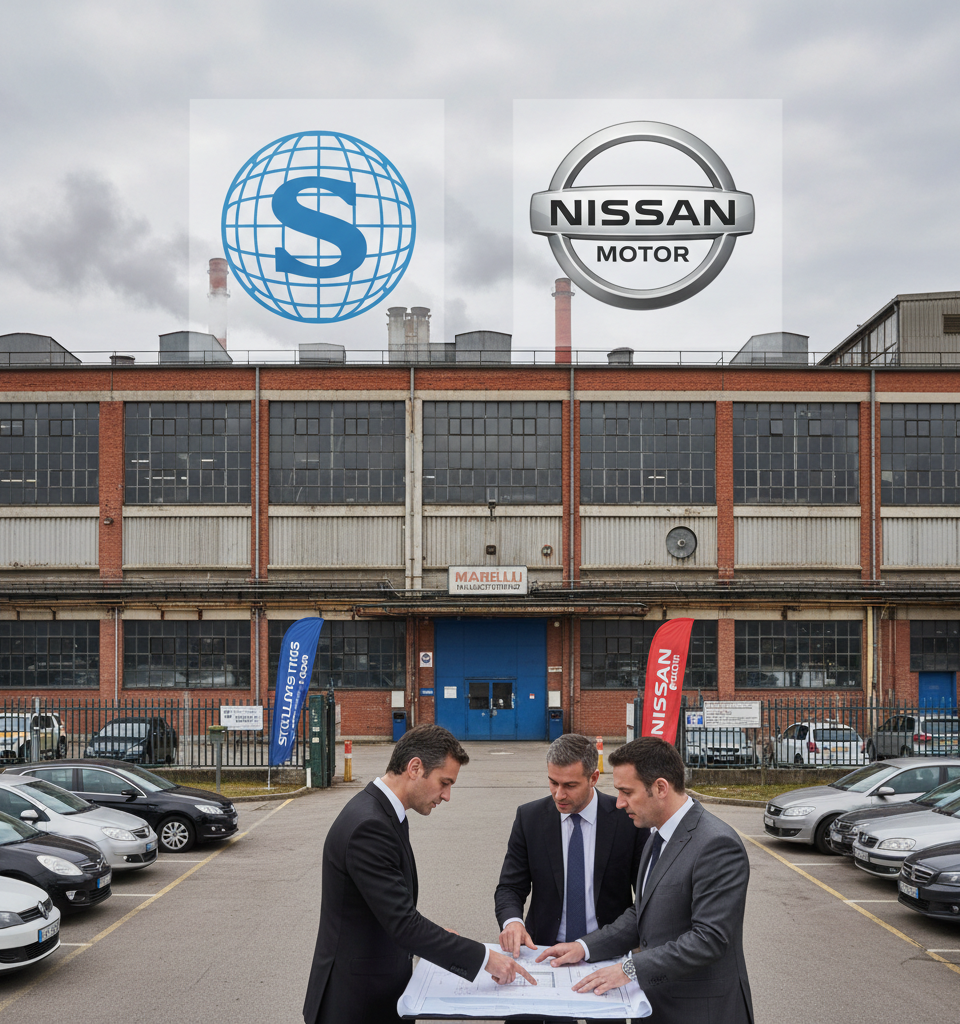
Amid its challenging bankruptcy reorganization, auto parts maker Marelli has attracted significant interest from two major automotive players: Stellantis and Nissan. Both companies are reportedly engaged in talks regarding the potential acquisition of specific Marelli assets, a move that could significantly reshape parts of the beleaguered supplier's operations and future.
Marelli, a key supplier to numerous global automakers, has been grappling with financial difficulties, leading it into a period of intensive restructuring. The potential divestment of assets to Stellantis, one of the world's largest automotive groups formed from the merger of Fiat Chrysler Automobiles and PSA Group, and Nissan, a leading Japanese car manufacturer, underscores the strategic value still held within Marelli's operational components despite its broader financial woes. This current situation highlights the intense pressures faced by suppliers in a rapidly evolving automotive industry, marked by technological shifts and economic volatility.
While specific details regarding which assets are under discussion remain undisclosed, any such acquisition would likely focus on Marelli's more attractive or strategically aligned business units. Marelli’s extensive portfolio spans lighting, powertrain, electronics, and interiors, among other areas. It is plausible that Stellantis and Nissan are targeting segments that could enhance their in-house capabilities, secure vital supply chains, or eliminate competitive overlaps. The reports suggest these are not discussions for a full takeover of Marelli, but rather a more targeted acquisition of specific components or divisions that align with the strategic objectives of the interested parties.
The automotive parts supplier landscape has been subject to immense consolidation and financial strain in recent years. Manufacturers are under constant pressure to innovate while simultaneously managing costs and navigating supply chain disruptions. Marelli's predicament reflects a broader trend where even established players can find themselves in precarious positions. The entry of Stellantis and Nissan into these discussions indicates a strategic play to capitalize on distressed assets, potentially at favorable valuations, which could offer them technological advantages or vertical integration opportunities.
An acquisition of Marelli assets by Stellantis could further bolster its control over critical components for its extensive array of brands, which include Jeep, Peugeot, Fiat, and Chrysler. For Nissan, securing assets from Marelli could either strengthen its existing supply chain relationships or introduce new technological capabilities, particularly in areas like advanced electronics or lighting systems where Marelli has established expertise. Such moves are often aimed at improving efficiency, reducing reliance on external suppliers, and gaining a competitive edge in product development.
The coming months will likely reveal more about the nature and progress of these discussions. Should these talks materialize into concrete agreements, it would mark a significant step in Marelli's reorganization efforts, potentially providing much-needed liquidity or streamlining its operations. For Stellantis and Nissan, any acquisition would represent a strategic investment aimed at enhancing their future automotive product lines and manufacturing efficiencies. The global automotive industry will be closely watching these developments as they could signal further consolidation and strategic repositioning among key players in the supply chain.