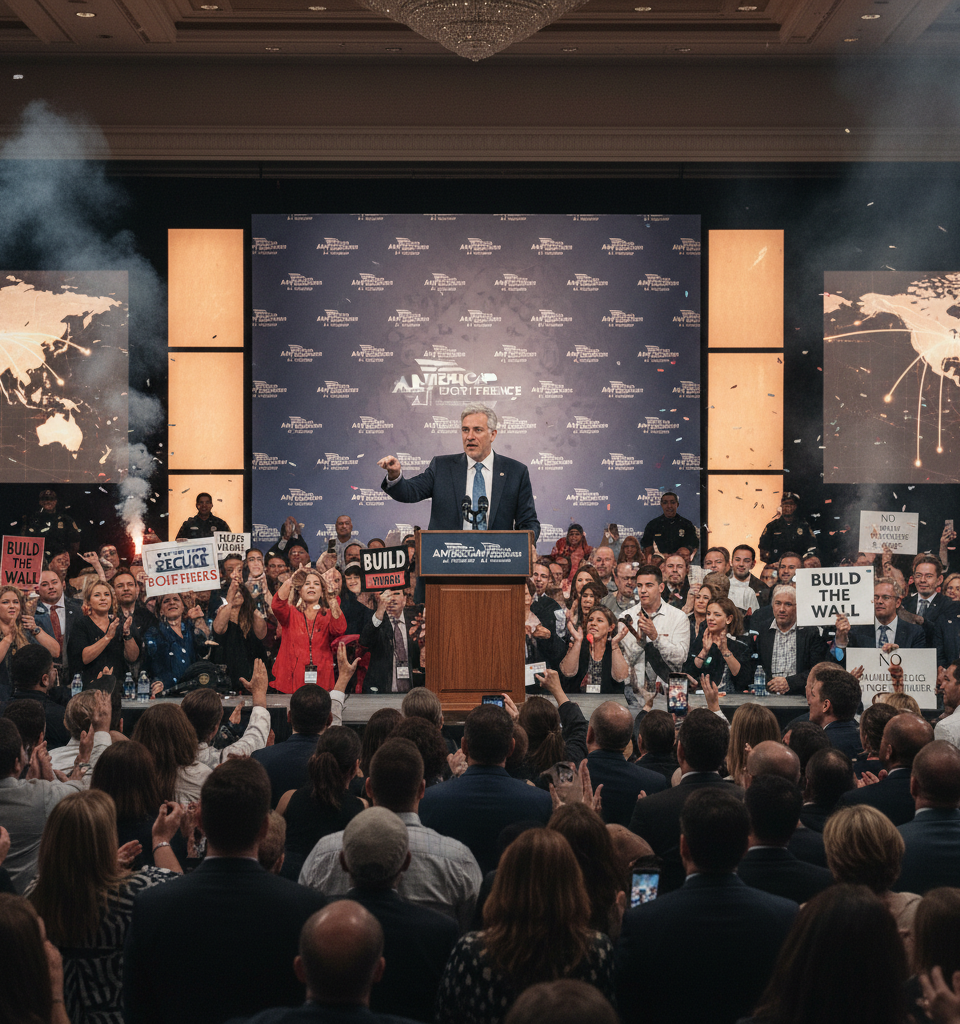
Stephen Miller, the influential architect behind former President Donald Trump's stringent immigration policies, remains a potent force advocating for a sweeping overhaul of U.S. immigration, despite the nation's current social and political volatility. Speaking to various outlets recently, Miller reiterated his long-held conviction that the United States should implement "a moratorium on immigration from third world countries until we can heal ourselves as a nation." This assertion underscores a continued, albeit more discreet, effort to shape future immigration discourse, even amidst the backdrop of significant national unrest, including the recent chaos in Minneapolis and subsequent nationwide protests.
Unwavering Commitment to 'America First' Immigration
Miller's continued advocacy holds significant weight, given his instrumental role in shaping the Trump administration's immigration strategy, which saw a dramatic reduction in legal immigration and an intensification of border enforcement. His agenda, rooted in an "America First" nationalist ideology, prioritizes what he views as the economic and cultural preservation of the United States by drastically limiting entry. This perspective is a direct continuation of policies that led to significant controversy, including the 'zero tolerance' policy at the border and the expansion of the 'Remain in Mexico' program. His sustained influence highlights the enduring impact of his ideology on a segment of the American political landscape.
Key Tenets: Moratorium and Reshaping Demographics
At the core of Miller's present push is the call for a temporary cessation of immigration from what he terms "third world countries." While concrete details on the precise definition or implementation strategy for such a moratorium remain largely unarticulated, the intent is clear: to drastically reduce non-Western immigration flows. This approach is consistent with prior efforts under the Trump administration, which saw attempts to limit family-based immigration, increase merit-based systems, and cap refugee admissions to historic lows, reaching 15,000 in fiscal year 2021—a stark contrast to the Obama administration's 110,000 in 2016. Such proposals, if enacted, would fundamentally alter the demographic trajectory and labor market dynamics of the United States.
Broader Implications for Economic Growth and Labor Markets
Economists and industry leaders have frequently pointed to immigration as a critical driver of economic growth, innovation, and labor market flexibility. Recent analyses by the National Academies of Sciences, Engineering, and Medicine, for instance, have shown that immigrants contribute significantly to scientific advancements and entrepreneurship, often filling critical labor gaps. A sweeping moratorium, as proposed by Miller, could have profound negative impacts on sectors reliant on immigrant labor, including agriculture, healthcare, and technology. The tech industry, in particular, frequently cites the need for a steady influx of skilled professionals to maintain its competitive edge on the global stage. Reduced immigration could exacerbate existing labor shortages and potentially stifle innovation, with a projected impact on GDP that could run into hundreds of billions of dollars over a decade.
Expert Perspectives on Policy Viability and Impact
Immigration experts generally view Miller's proposals as highly contentious and challenging to implement within the existing legal framework. Sarah Pierce, a policy analyst at the Migration Policy Institute, notes that such a moratorium would face immense legal challenges and significant public backlash, particularly given the U.S.'s international obligations and long-standing legal precedents. Furthermore, political scientists argue that while such rhetoric resonates with a specific base, achieving bipartisan consensus on such restrictive measures remains deeply unlikely in the current political climate. There is also concern about the humanitarian implications and potential for increasing xenophobia inherent in such broad categorizations of nations.
The Evolving Landscape of Immigration Debate
Looking ahead, Miller's continued advocacy suggests that highly restrictive immigration policies will remain a significant point of debate within conservative circles and potential future administrations. While direct legislative action on a moratorium might be difficult, his influence can still shape the narrative around border security, asylum reform, and the types of legal immigration permitted. Upcoming electoral cycles will likely feature these discussions prominently, with candidates potentially adopting variations of Miller's stance. The future of U.S. immigration will undoubtedly be a battleground between those advocating for open borders and those pushing for tighter controls, with Miller’s ongoing, quieter efforts continuing to fuel the latter side of the argument.