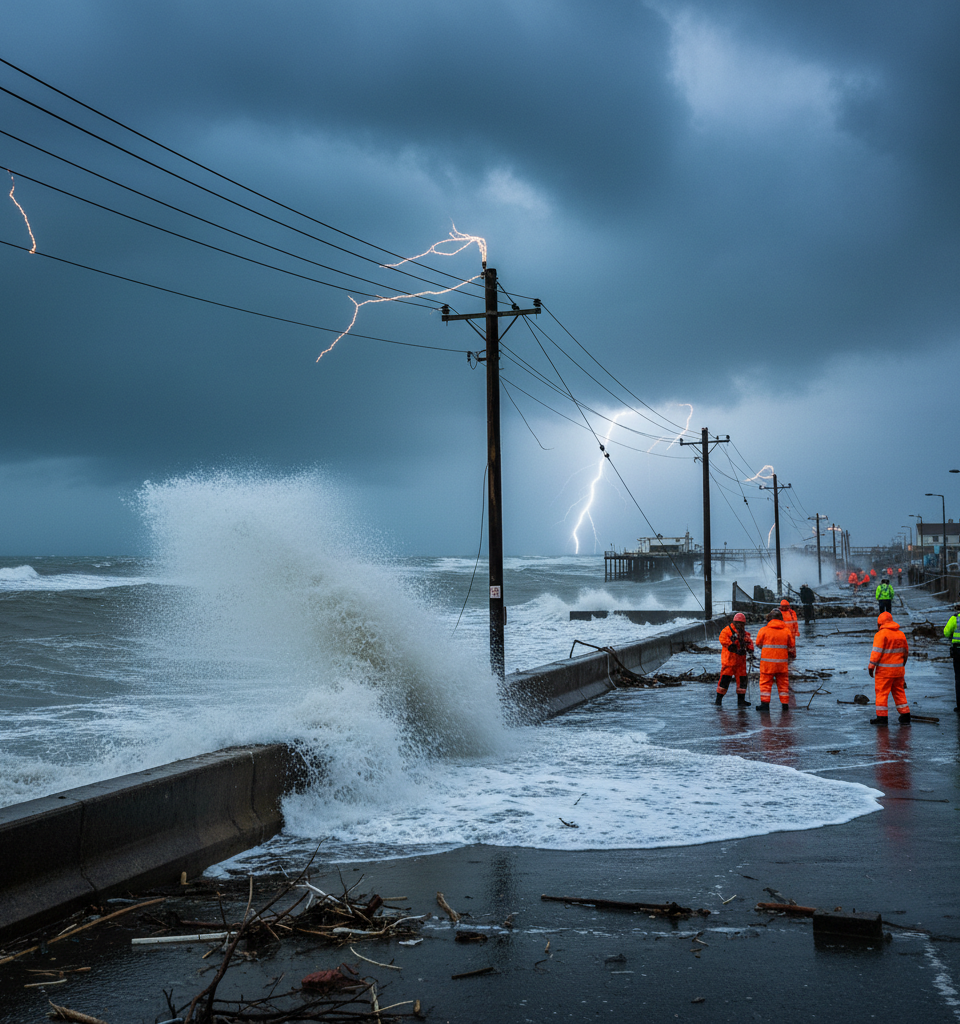
**London, UK – ** – Storm Dave is forecast to intensify significantly overnight, prompting the Meteorological Office to issue an amber wind warning for substantial areas across the United Kingdom. This escalated alert, signaling a high risk of widespread disruption and potential danger, comes as yellow wind warnings remain in effect for parts of all four UK nations – England, Scotland, Wales, and Northern Ireland. The potent weather system is projected to sweep eastward, bringing gale-force winds and challenging conditions that could impact travel, infrastructure, and daily life for millions.
Context and Severity
The progression of Storm Dave follows a period of unsettled weather, but its expected deepening marks a critical escalation. Amber warnings, the second-highest level of alert, indicate a high likelihood of impacts such as power cuts, structural damage, and significant travel delays. While yellow warnings caution against potential hazards, amber warnings necessitate greater preparedness and awareness from the public and emergency services. The last comparable widespread amber wind warning across such extensive regions was seen during Storm Corrie in early 2022, which left tens of thousands without power.
Key Details and Forecast
The Meteorological Office predicts that gusts could reach 80-90 mph in exposed coastal areas, particularly in parts of western Scotland, Northern Ireland, and the Irish Sea coastline. Inland regions under the amber warning, including sections of northern England and central Scotland, could still experience winds of 60-70 mph. The peak intensity of the storm is expected between 10 PM GMT and 6 AM GMT, with conditions gradually abating through the morning. Ferry services across the Irish Sea and North Sea have already seen significant cancellations and delays, with further disruption anticipated on road and rail networks. Authorities urge residents in affected areas to secure outdoor items, avoid unnecessary travel, and prepare for potential power outages.
Industry and Infrastructure Impact
The deepening of Storm Dave poses a considerable threat to critical infrastructure and various economic sectors. The energy sector is bracing for potential power cuts, with utility companies deploying additional resources and on-call teams to respond to downed lines. Transportation networks, including aviation, rail, and maritime, are facing widespread cancellations and delays, impacting supply chains and commuter travel. The construction industry faces particular challenges, with sites likely to halt outdoor operations, leading to project delays and increased safety risks. Insurance companies anticipate a surge in claims related to property damage from high winds, potentially running into hundreds of thousands of pounds if the storm's impact is severe.
Expert Analysis and Preparedness
Climate scientists and meteorological experts are closely monitoring Storm Dave's trajectory and intensity. Dr. Eleanor Vance, a senior meteorologist at the University of Reading, commented, "The rapid deepening of this low-pressure system is a concern. While not unprecedented, the widespread nature of the amber alerts suggests a significant energy transfer within the atmosphere that will translate to very strong surface winds. Public adherence to safety warnings will be crucial in minimizing casualties and damage." Emergency services and local councils have activated their severe weather response plans, coordinating resources and issuing public health advisories.
Forward Outlook and Future Implications
Beyond the immediate impact of Storm Dave, meteorologists will be assessing potential follow-on effects, such as coastal flooding in areas with unusually high tides combined with storm surges. The frequency and intensity of such extreme weather events are increasingly being linked to broader climate change patterns. Governments and infrastructure providers are under growing pressure to invest in resilient infrastructure and early warning systems to mitigate future impacts. The event underscores the ongoing need for robust climate adaptation strategies across the UK to protect communities and economic stability from an evolving climate threat.