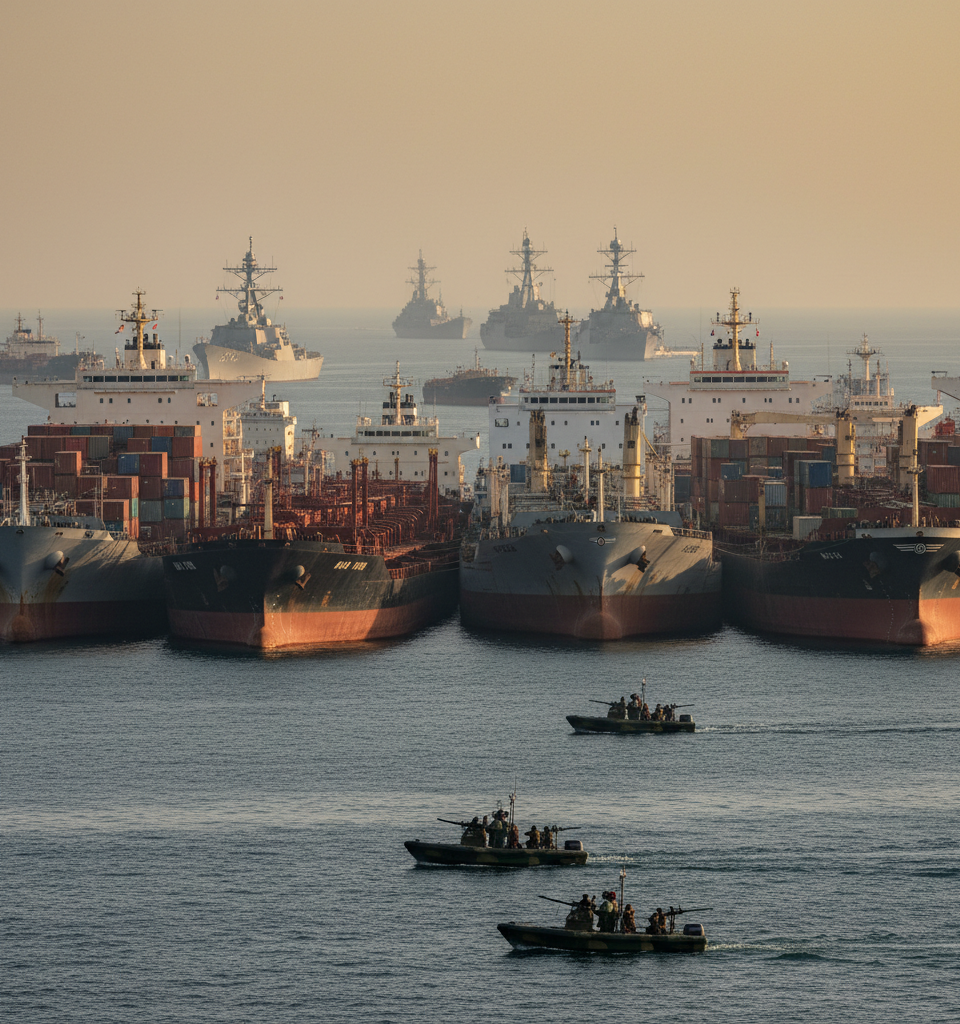
Commercial shipping through the Strait of Hormuz, a vital artery for global energy markets, has been effectively frozen since May 5 amid escalating tensions between the United States and Iran. Tehran's new requirement that all commercial vessels submit detailed manifest and operational data to its newly established Persian Gulf Strait Authority has been met with defiance from international shipping lines and a stern warning from Washington, dramatically impacting maritime trade and global supply chains.
Context and Background
This latest maritime standoff is a direct consequence of the long-standing animosity and proxy conflicts between the US and Iran, exacerbated by recent developments in regional security. The Strait of Hormuz, a narrow passage between the Persian Gulf and the Gulf of Oman, is globally recognized as the most strategically important choke point for oil transit, with approximately one-fifth of the world's total oil consumption — around 21 million barrels per day — passing through it. Previous disruptions, such as mine attacks on tankers in 2019 or the seizure of oil tankers, have consistently sent crude oil prices soaring, highlighting the strait's indispensable role in global energy security. The current situation echoes these past flashpoints, adding another layer of complexity to an already volatile geopolitical landscape.
Key Details and Specifics
Sources within major shipping conglomerates confirm that no commercial transits have successfully navigated the strait under the new Iranian requirements since the May 5 deadline. The Iranian Maritime Affairs Agency, operating under the directive of the Persian Gulf Strait Authority, released a statement last week emphasizing the need for "enhanced transparency and security protocols" for all vessels traversing its claimed territorial waters. Shipowners are now mandated to provide a 72-hour pre-notification, detailed cargo manifests, crew nationality data, and the ultimate destination of goods, information previously deemed proprietary or subject to international maritime conventions.
The US Fifth Fleet, stationed in Bahrain, has publicly labeled Iran's new demands as "unilateral, illegitimate, and a clear violation of international maritime law," confirming that its naval assets are actively engaged in monitoring the situation, though no direct confrontation has yet occurred.
Industry and Market Impact
The immediate impact on global commerce has been palpable. Freight forwarding premiums for cargo bound for or originating from the Persian Gulf have surged by up to 150% for those few shipping lines contemplating alternative, lengthier routes, raising concerns about inflationary pressures. Oil prices have seen a modest but consistent climb, with Brent Crude futures rising over 4% to $87.50 per barrel this week, reflecting market anxiety over potential supply disruptions. Analysts at JPMorgan Chase estimate that a prolonged closure could, within weeks, lead to a 20-30% increase in global crude oil prices, potentially triggering a worldwide recession. Industries reliant on Gulf-sourced petrochemicals and other raw materials are also bracing for significant supply chain bottlenecks and increased operational costs.
Expert Perspective
Dr. Arash Hamid, a senior fellow at the Royal United Services Institute, described the situation as a dangerous gamble. "Tehran is testing the limits of international tolerance, leveraging its geographical advantage to exert political pressure," Dr. Hamid stated in an interview. "The US and its allies face a dilemma: concede to these unprecedented demands, which would establish a problematic precedent, or escalate the standoff, risking broader conflict. Neither option is palatable." Maria Rossi, a global trade economist at the Peterson Institute for International Economics, underscored the economic stakes, noting that "a sustained disruption longer than two weeks would effectively paralyze significant portions of global trade, causing billions in losses daily and pushing consumer prices higher across numerous sectors."
What's Next?
Diplomatic efforts are reportedly underway, spearheaded by Oman and Qatar, to mediate between Washington and Tehran. However, both sides appear entrenched in their positions. The US State Department has indicated it is consulting with international partners to formulate a unified response, potentially including further sanctions on Iran's maritime sector. Meanwhile, a consortium of major international shipping associations is preparing a formal challenge to Iran's new regulations through the International Maritime Organization (IMO). The immediate future remains uncertain, but the current impasse threatens not only global energy flows but also the intricate web of international trade, demanding a swift and decisive resolution before the economic fallout becomes irreversible.