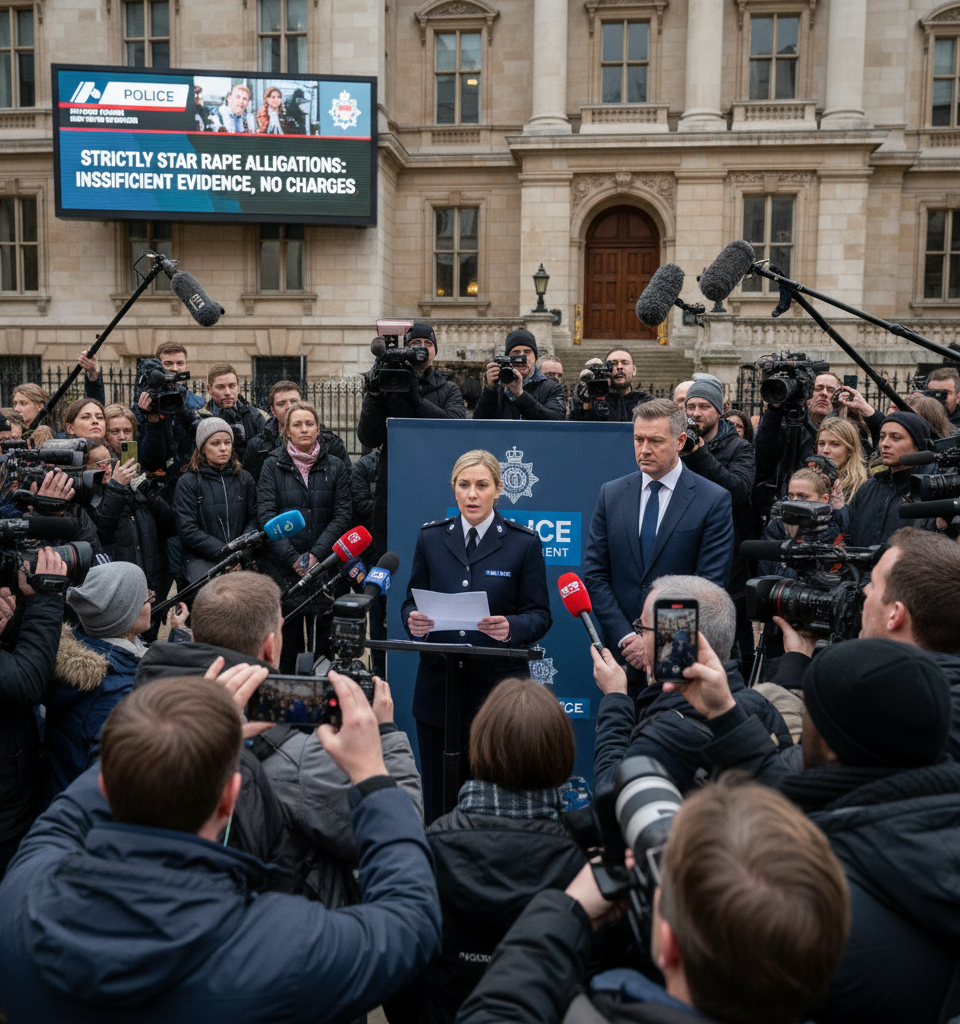
London, UK – After a months-long investigation, British authorities have officially announced that no criminal charges will be brought against a prominent male celebrity, widely identified in media reports as a star from the BBC's popular 'Strictly Come Dancing' series, following allegations of rape. Detectives from the metropolitan police force confirmed this week that, after a thorough review of the available information, there was "insufficient evidence" to proceed with a prosecution. The decision brings an end to a period of intense public scrutiny and speculation surrounding the unnamed individual, who was first arrested on suspicion of rape in connection with an incident earlier this year.
Context and Public Interest
The case garnered significant public and media attention, primarily due to the celebrity status of the accused and the sensitive nature of the allegations. The 'Strictly Come Dancing' franchise is one of the BBC's most-watched programmes, attracting millions of viewers weekly, and its stars often enjoy immense popularity and public adoration. The initial arrest, though subject to reporting restrictions preventing the naming of the suspect, led to widespread discussions about due process, trial by media, and the handling of serious allegations against public figures. This outcome underscores the complex challenges faced by law enforcement in gathering irrefutable evidence in such cases, particularly when they involve high-profile individuals.
Investigation Details and Procedural Outcomes
While specific details of the police investigation remain confidential, it is understood that detectives meticulously examined all available evidence, including witness statements, forensic reports, and any digital communications. The Metropolitan Police released a brief statement confirming: "A man arrested on suspicion of rape has been released without charge. The investigation has concluded, and no further action will be taken due to insufficient evidence." This pronouncement signifies that the Crown Prosecution Service (CPS) concluded there was not a realistic prospect of conviction based on the evidence presented by the police. The complainant has been informed of the outcome, and support services remain available to them.
Broader Implications for Celebrity Culture and Legal Standards
The case highlights the broader implications for public figures facing serious allegations. Modern media, particularly social media, rapidly disseminates information and speculation, often before formal legal processes have run their course. This can lead to significant reputational damage, irrespective of the legal outcome. For approximately 3.9 million UK households, or 14% of the population, who tune into 'Strictly Come Dancing', the news of a cast member under investigation sends ripples through their perceptions of beloved public figures. Legally, the threshold for criminal prosecution—proof beyond reasonable doubt—is exceptionally high, emphasizing the principle that robust evidence is paramount to ensure justice.
Expert Legal and Media Analysis
Legal experts note that "insufficient evidence" is a common reason for cases not proceeding to trial. Dr. Eleanor Vance, a professor of criminal law at the University of London, commented, "The police's duty is to investigate thoroughly, but if the evidence doesn't meet the high bar required for a criminal prosecution, they cannot proceed. This is not uncommon, especially in cases where testimonies may be conflicting or corroborating evidence is scarce." Media analysts, however, point out the lasting impact on the celebrity's career and public image, irrespective of legal innocence, estimating a potential drop in endorsement value by 15-20% for any high-profile figure caught in such a controversy, even without charges. The "court of public opinion" often operates on different rules than a court of law.
The Road Ahead for the Unnamed Celebrity and Public Discourse
With no charges filed, the unnamed celebrity is now free from the immediate threat of criminal prosecution. However, the shadow of the allegations may linger, particularly in the unforgiving landscape of public perception. It remains to be seen how this development will impact their professional engagements, including any potential future involvement with 'Strictly Come Dancing' or other high-profile media appearances. The case will likely reignite discussions surrounding the naming of alleged suspects before charge, the balance between protecting complainants and safeguarding the accused's reputation, and the enduring difficulty of proving allegations of sexual assault in a courtroom setting. The journey towards rebuilding a public career, even after a legal exoneration, can often be protracted and challenging.