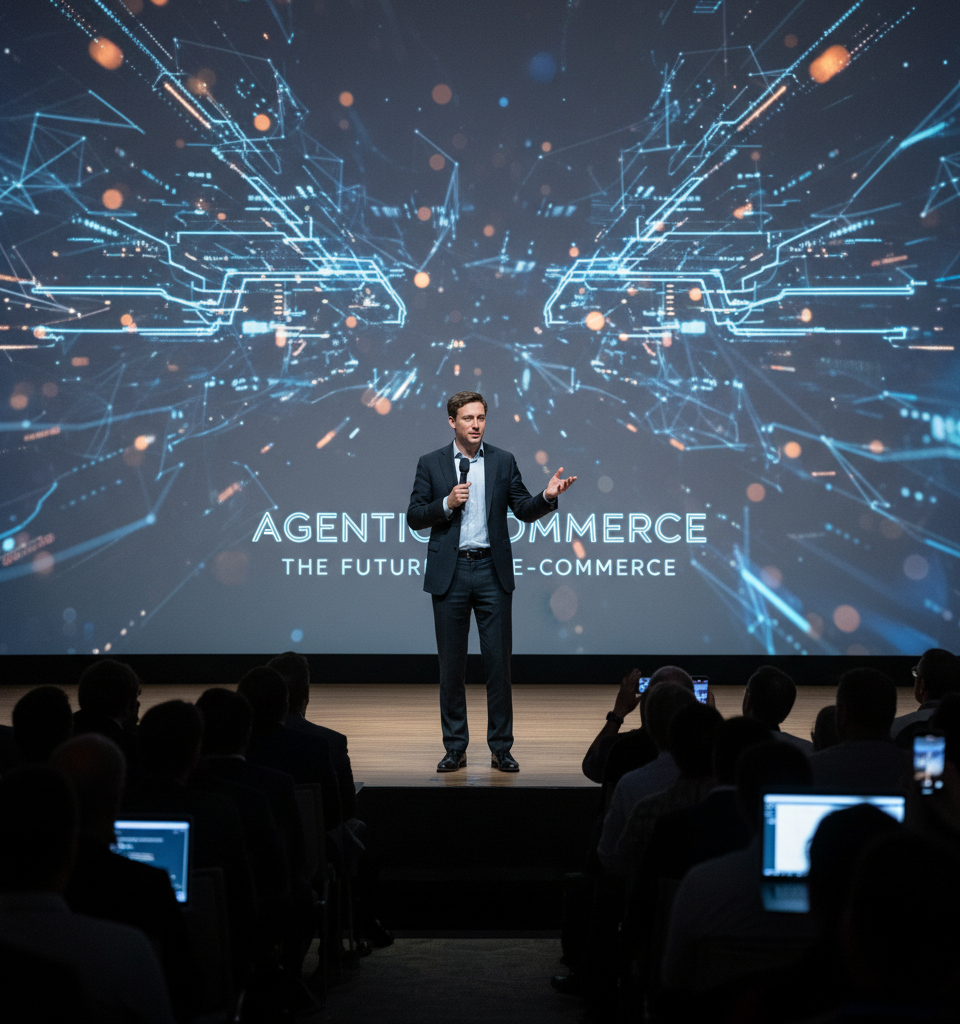
John Collison, the influential co-founder of payment processing giant Stripe, has ignited a discussion around the imminent transformation of online shopping, asserting that "agentic commerce" is poised to completely overhaul the digital retail landscape. Speaking to Bloomberg, Collison articulated his belief that current keyword-based search mechanisms are "ridiculous" and destined to be supplanted by sophisticated AI agents that will autonomously conduct purchasing activities on behalf of consumers. This vision suggests a structural recalibration of e-commerce, impacting everything from consumer discovery to retail fulfillment.
The Dawn of Agentic Commerce
Collison's assertion is not merely a technological prediction but a commentary on the inherent inefficiencies of the current online shopping experience. For decades, e-commerce has largely revolved around consumers actively searching for specific products, a process he deems cumbersome. Agentic commerce, by contrast, proposes a paradigm where AI systems, equipped with user preferences, purchasing history, and real-time market data, proactively identify, compare, and even execute purchases. This shift promises a more personalized, efficient, and potentially seamless shopping journey, moving beyond the reactive nature of present-day online retail.
Disrupting the E-commerce Status Quo
The implications of such a change extend far beyond consumer convenience. If AI agents become the primary means of product discovery and purchase, retailers will need to fundamentally rethink their sales strategies. The traditional emphasis on search engine optimization (SEO) and direct-to-consumer digital marketing might diminish, replaced by a focus on agent-facing optimization and the ability to seamlessly integrate with diverse AI purchasing systems. This could level the playing field for smaller retailers who can adapt quickly, while posing a significant challenge to established e-commerce giants heavily invested in existing infrastructure.
Expert Perspectives and Market Impact
While Collison’s vision is forward-looking, the concept of AI-driven automation in commerce has been a topic of increasing interest among technologists and business strategists. Analysts suggest that the success of agentic commerce will hinge on several factors, including the reliability and trustworthiness of AI agents, user adoption rates, and the development of robust, secure payment infrastructures capable of handling automated transactions. "We're moving towards a world where algorithms don't just recommend products but proactively procure them," notes Dr. Emily Carter, a professor of digital economics at a leading business school. "The challenge for retailers will be to optimize for agent interaction, not just human eyeballs."
Paving the Way for New Retail Models
This evolving landscape will likely foster new business models and services. Companies specializing in AI agent development, product data optimization for AI consumption, and secure agent-to-vendor transaction protocols could emerge as significant players. Furthermore, the concept has direct ties to the broader trend of ambient commerce, where transactions occur almost invisibly in the background, driven by intelligent systems anticipating user needs. Stripe, as a critical enabler of online payments, stands to significantly benefit from this shift, positioning itself as the underlying infrastructure for these automated financial flows.
The Road Ahead: Challenges and Opportunities
While the promise of agentic commerce is compelling, widespread adoption faces hurdles. Ethical considerations around data privacy, the potential for algorithmic bias in purchasing decisions, and the need for clear accountability frameworks will be paramount. Technical challenges, such as ensuring the interoperability of various AI agents and vendor systems, also remain. However, the potential for vastly improved efficiency and personalized experiences for consumers, coupled with new avenues for revenue growth for retailers, positions agentic commerce as a significant area of innovation for the next decade. Collison's strong advocacy underscores a growing consensus among tech leaders that the next frontier of e-commerce will be defined by intelligent automation.