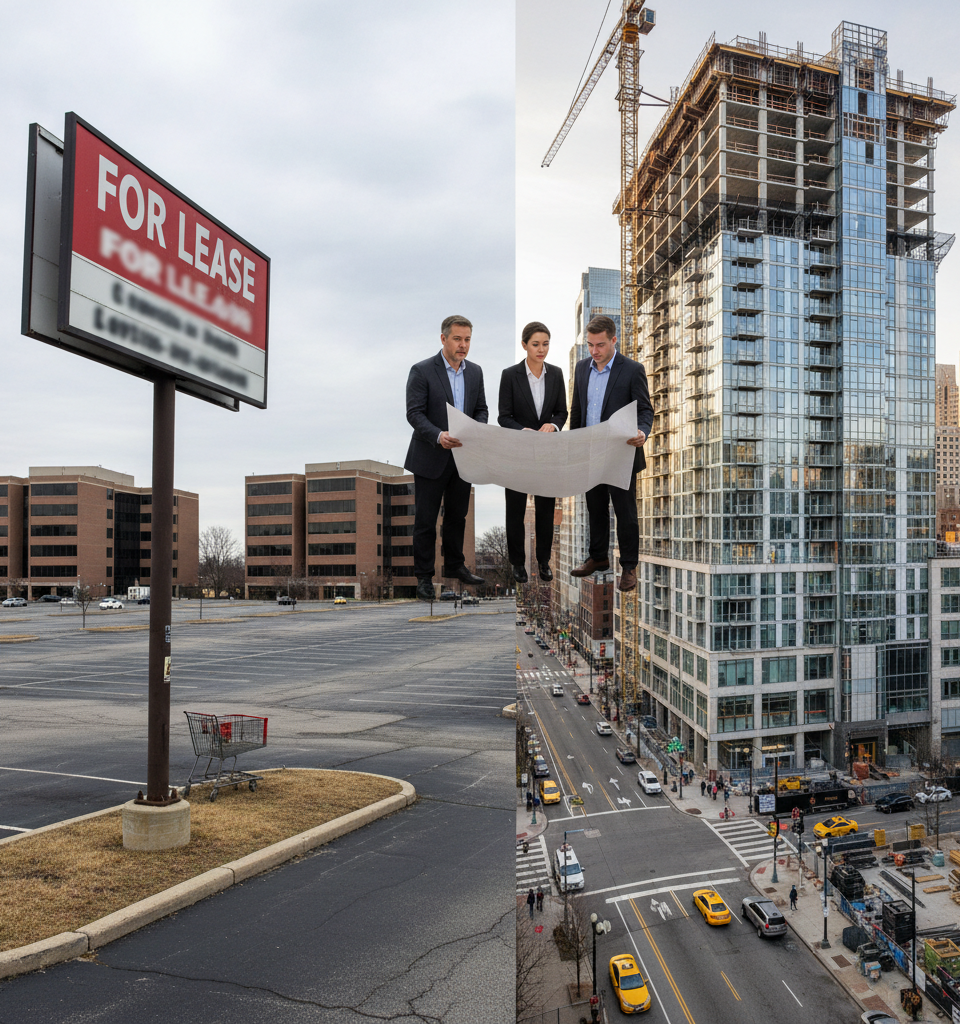
Office-to-residential conversions, a burgeoning trend reshaping Center City Philadelphia's skyline, are proving largely uneconomical for developers in the adjacent suburban communities. Despite a clear demand for housing and an abundance of aging office stock, the financial calculus in Pennsylvania's bedroom communities frequently fails to "pencil out," deterring widespread adaptation of this urban revitalization strategy. This phenomenon highlights a growing divergence in real estate development trends between urban centers and their peripheries.
As remote and hybrid work models continue to impact office occupancy rates, particularly in older Class B and C buildings, the conversion of these structures into residential units has emerged as a critical adaptive reuse strategy. In Center City, incentivized by factors like higher rents, density, and sometimes tax abatements, developers have successfully transformed numerous office properties into apartments. However, these same conditions are conspicuously absent or inverted in the suburbs, leading to a persistent challenge in repurposing underperforming commercial assets.
Economic Barriers Prove Formidable
The primary impediment to suburban office-to-residential conversions is rooted in economics. According to industry analysis, the all-in cost of converting an office building into residential units in suburban Philadelphia often ranges from $250 to $350 per square foot. With average rental rates for new suburban apartments typically falling between $2.00 and $2.50 per square foot, the return on investment frequently falls short of making these projects attractive to developers. For an office building conversion to be financially viable, rental rates would generally need to be 30-40% higher or construction costs significantly lower, neither of which is consistently achievable in these markets. Furthermore, suburban office layouts often present unique design challenges compared to their urban counterparts. Deeper floor plates, fewer windows per square foot, and extensive parking requirements can dramatically increase conversion costs. Repurposing these structures necessitates substantial investment in new plumbing, electrical systems, HVAC, and often façade modifications to meet residential building codes and desirable living standards. These costs, coupled with lower market rents compared to downtown, create a disparity that makes new ground-up construction or other commercial redevelopments more appealing to investors.
Broader Market Implications
This suburban conversion drought has broader implications for regional planning and economic development. Without viable adaptive reuse options, many suburban office parks risk becoming stranded assets, contributing to vacancies and blight. Municipalities grappling with dwindling tax bases and a desire for more diverse housing options are left seeking alternative solutions. While some developers explore partial conversions or the integration of mixed-use elements, a wholesale shift from office to residential remains an uphill battle. This situation also limits the potential for creating denser, more walkable communities in areas traditionally characterized by sprawling single-family homes, further entrenching car-dependent lifestyles.
Expert Insights on the Divide
Real estate analysts emphasize the critical role of market fundamentals. "In Center City, the premium for urban living, combined with the scale and density of existing infrastructure, allows for rental rates that can absorb the significant costs of conversion," explains Sarah Chen, a senior real estate economist at Regional Insights Group. "In the suburbs, you often lack that critical mass. The value proposition for a renovated office apartment simply doesn't compete as effectively with new construction or existing single-family homes on a price-per-square-foot basis for developers." She adds, "Without a significant delta in rental income or substantial public incentives, these projects will continue to be exceptions rather than the norm outside the urban core."
What Lies Ahead
Looking forward, the viability of suburban office-to-residential conversions may hinge on several evolving factors. A sustained increase in suburban rental demand, driven by demographic shifts or a scarcity of new housing, could eventually tip the scales. Additionally, state and local governments could play a more active role through targeted incentive programs, such as tax abatements specifically for adaptive reuse, streamlined permitting processes, or grants to offset conversion costs. The exploration of alternative financing models or innovative construction techniques that reduce per-square-foot conversion expenses could also contribute to making these projects more feasible in the future. Until such shifts occur, developers will likely continue to prioritize new construction or other commercial ventures in the suburban Philadelphia market, leaving many underutilized office buildings in search of a new purpose.