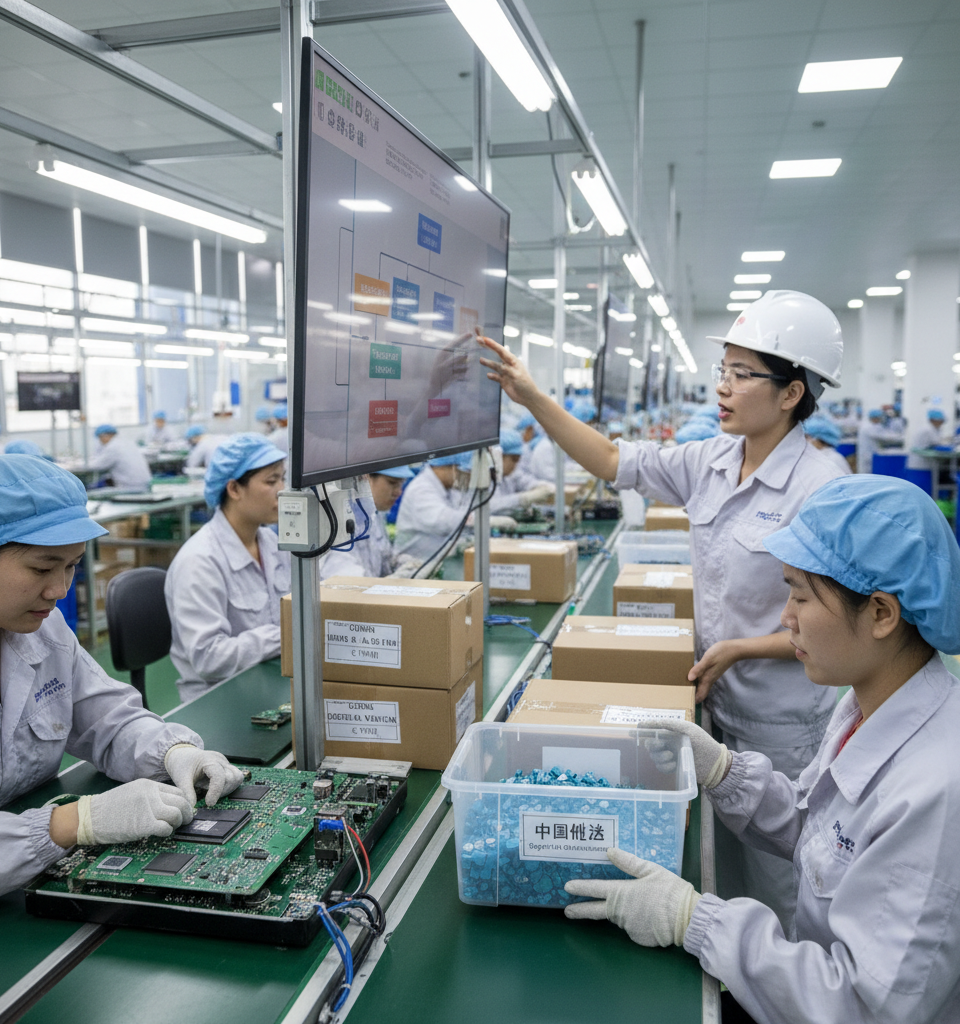
Amid ongoing geopolitical tensions and the strategic imperative for supply chain resilience, numerous multinational corporations have explored or enacted plans to shift manufacturing operations out of China. Vietnam, in particular, has emerged as a primary beneficiary of this "China-plus-one" strategy, attracting significant foreign direct investment and new production facilities. However, a closer examination reveals that this geographical relocation often falls short of achieving true independence from China, with foundational elements of the manufacturing ecosystem remaining deeply intertwined with the Chinese industrial base.
The drive to diversify production stems from lessons learned during recent global disruptions, including trade disputes, pandemic-induced lockdowns, and escalating logistical challenges. Businesses have sought to mitigate risks associated with over-reliance on a single manufacturing hub. Vietnam's competitive labor costs, growing infrastructure, and favorable trade agreements have positioned it as an attractive alternative for final assembly and some stages of production. This strategic pivot is intended to create more robust and flexible supply chains, guarding against future exogenous shocks.
Despite the visible shift of factories and assembly lines to Vietnamese soil, the underlying infrastructure of global manufacturing often remains firmly rooted in China. A critical factor is the origin of essential components and specialized tooling. For a vast array of products, the intricate network of suppliers for parts – from microchips to specialized plastics and metals – continues to be concentrated in China. This means that even if a product bears a "Made in Vietnam" label, a significant proportion of its constituent parts likely began their journey in Chinese factories before being shipped to Vietnam for assembly.
Beyond just parts, the dependence extends to the highly specialized machinery and tooling required for modern manufacturing. Setting up a new production line, whether for electronics, textiles, or automotive parts, often necessitates precision tools and complex molds. China's mature industrial ecosystem provides these with unparalleled speed, cost-effectiveness, and scale. Sourcing such specialized equipment from other regions can lead to substantial delays, increased costs, and challenges in maintaining production consistency and quality standards.
Furthermore, the speed and efficiency of China's logistics and supply chain infrastructure are difficult to replicate elsewhere. The ability to rapidly source components, adjust production lines, and dispatch finished goods with minimal lead times is a hallmark of China’s manufacturing dominance. Even when final assembly moves to Vietnam, companies frequently rely on established Chinese logistical networks and express freight capabilities to ensure timely delivery of crucial inputs, highlighting an enduring reliance on China’s operational agility.
This phenomenon illustrates a nuanced reality of global supply chain restructuring. While companies can relocate their final assembly points, dismantling and rebuilding an entire upstream supply chain of countless specialized suppliers, logistical pathways, and technological expertise is a far more complex and capital-intensive endeavor. This explains why many firms find themselves engaged in a partial diversification, achieving geographic spread in final production while essential dependencies on Chinese inputs persist.
Industry analysts frequently caution that simply moving assembly does not equate to full de-risking. They emphasize the need for a deeper, more fundamental restructuring of the entire supply ecosystem, including investment in alternative sources for raw materials, intermediate goods, and advanced machinery. Such a comprehensive shift would require significant long-term commitments, substantial capital expenditure, and the development of new industrial capacities in target countries, which could take years, if not decades, to fully materialize.
Looking ahead, the discussion around supply chain resilience is evolving beyond mere geographic relocation. Future strategies are expected to focus more on true de-coupling of critical components and technological dependencies, rather than just re-shoring or friend-shoring final assembly. This would entail fostering indigenous capabilities and developing robust alternative supplier networks in multiple regions to genuinely dilute concentration risks, a monumental undertaking that remains a significant challenge for global industries.