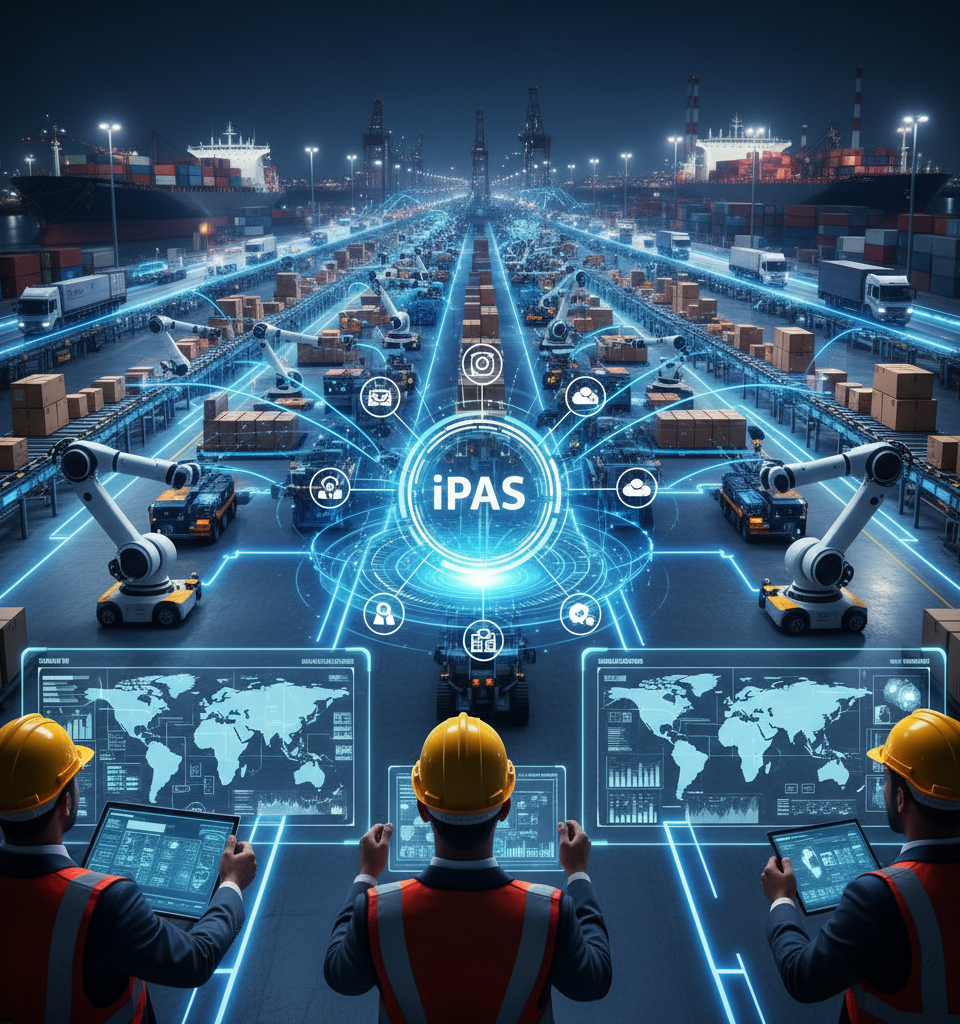
Global supply chains are rapidly becoming the proving ground for automation-led Integration Platform as a Service (iPaaS), as businesses contend with escalating operational complexity and rapidly expanding ecosystems. Faced with the limitations of legacy integration models that buckle under the costs and inflexibility of constant change, enterprises are increasingly turning to next-generation iPaaS solutions. This strategic pivot, first championed by innovators like Edgeverve, is fundamental to maintaining operational fluidity and competitive advantage in a dynamically intertwined global economy.
The Breaking Point of Legacy Systems
For decades, traditional middleware and point-to-point integrations served as the backbone of enterprise connectivity. However, the relentless expansion of partner networks, the proliferation of cloud applications, and the sheer volatility of today's global events – from geopolitical shifts to unforeseen disruptions like the COVID-19 pandemic – have pushed these legacy systems to their absolute limits. The cost of maintaining, updating, and scaling these bespoke integrations has become prohibitive, often consuming a significant portion of IT budgets and diverting resources from innovation. Businesses found themselves trapped in a cycle of constant re-coding and re-architecture, unable to adapt swiftly to new demands or opportunities.
Driving the iPaaS Transition
Automation-led iPaaS addresses these challenges directly by offering a more agile, scalable, and cost-effective integration framework. Unlike its predecessors, iPaaS is designed for continuous change, enabling organizations to absorb new partners, integrate diverse data sources, and automate complex workflows without the need for extensive manual intervention or re-development. Key features include low-code/no-code development environments, Artificial Intelligence (AI) and Machine Learning (ML) driven automation, and robust API management capabilities. This allows supply chain managers to quickly onboard new suppliers, manage real-time inventory adjustments, and orchestrate complex logistics across geographically dispersed operations, significantly reducing integration timelines from months to mere weeks or even days.
Industry-Wide Impact and Adoption
The strategic adoption of automation-led iPaaS is reverberating across various industries. Logistics companies are leveraging it to optimize routing and delivery schedules, while manufacturers are enhancing visibility across their multi-tier supplier networks to mitigate risks and improve production planning. Retailers are using iPaaS to unify e-commerce platforms with warehousing and fulfillment systems, providing a seamless customer experience. Market forecasts suggest substantial growth, with the global iPaaS market projected to reach over $10 billion by 2026, growing at a Compound Annual Growth Rate (CAGR) exceeding 25%. Early adopters are reporting improvements in operational efficiency by as much as 30% and significant reductions in integration-related IT expenditure.
Expert Insights on the Future of Integration
Industry analysts and experts are in broad agreement regarding the inevitability and benefits of this transition. "The modern supply chain is a living, breathing entity that demands integration solutions capable of real-time adaptation," states Sarah Chen, a leading analyst at Gartner. "Automation-led iPaaS is not just an incremental improvement; it represents a fundamental shift towards truly intelligent and resilient operational frameworks." She emphasizes that enterprises failing to modernize their integration strategies risk falling behind competitors who can leverage data and automate processes at a significantly faster pace. The consensus is that successful businesses will be those that embrace platforms offering both broad connectivity and deep automation capabilities.
The Path Ahead: AI and Hyperautomation
The future trajectory for automation-led iPaaS within supply chains is deeply intertwined with advancements in AI and hyperautomation. Expect to see iPaaS solutions incorporating more sophisticated predictive analytics, enabling supply chains to anticipate disruptions proactively rather than merely reacting to them. Machine learning algorithms will further refine automation processes, identifying patterns and optimizing workflows autonomously. The integration of advanced Robotic Process Automation (RPA) with iPaaS will create comprehensive hyperautomation strategies, extending automation deeper into operational processes and reducing human intervention to an absolute minimum. This evolution promises supply chains that are not only resilient but also self-optimizing and predictive.
Overcoming Implementation Challenges While the benefits are clear, the journey to full iPaaS adoption isn't without its challenges.
Organizations must navigate the complexities of migrating legacy systems, managing change across diverse teams, and ensuring robust data governance and security. A phased implementation strategy, starting with critical integration points and scaling incrementally, is often recommended. Furthermore, selecting an iPaaS vendor that offers strong support, a comprehensive API library, and industry-specific templates can significantly smooth the transition. Ultimately, the successful deployment of automation-led iPaaS will hinge on a combination of strategic planning, executive buy-in, and a clear understanding of the evolving demands of the global supply chain landscape.