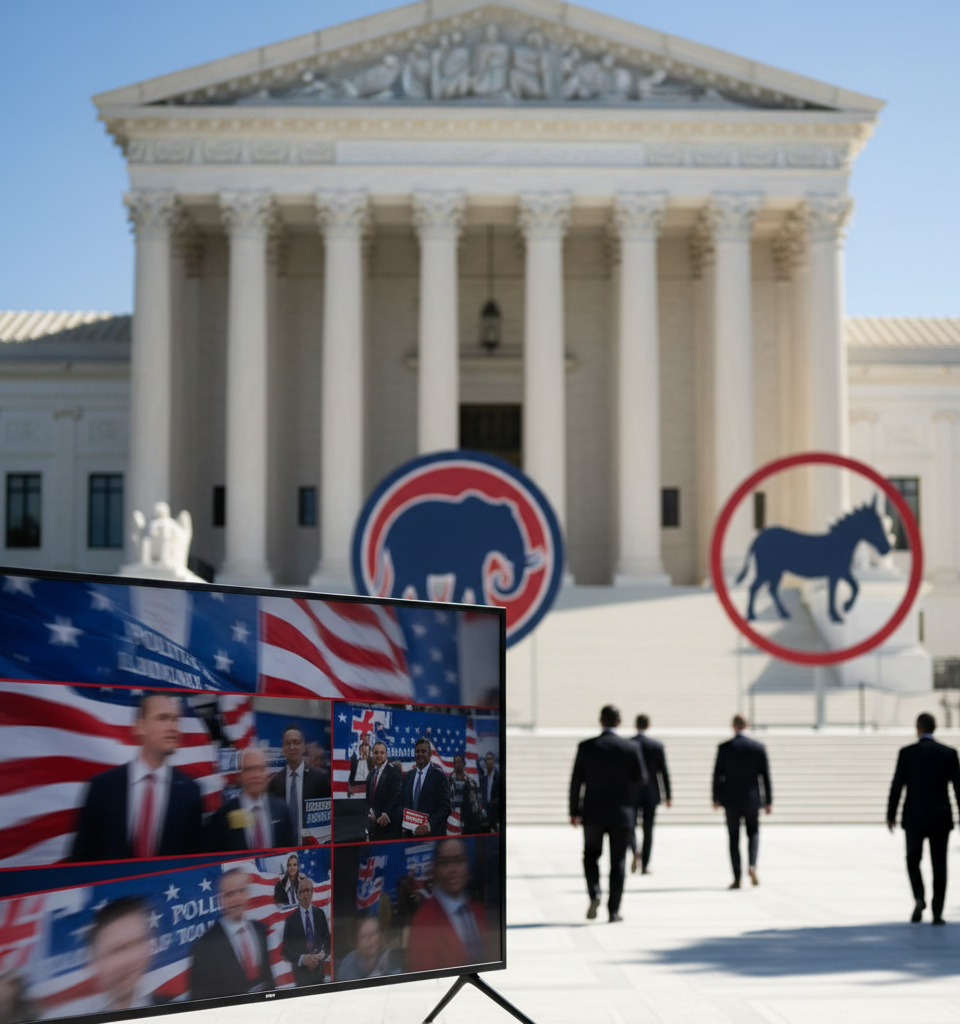
The Supreme Court's recent decision granting political parties discounted television advertising rates for campaigns coordinated with candidates represents a significant shift in campaign finance. This ruling could alter political advertising strategies, potentially reducing costs for parties and increasing their media presence in competitive electoral districts.
Court Decision Bolsters Republican Spending Power
In a landmark ruling delivered Friday, the nation's highest court determined that political parties should receive the same preferential advertising rates typically offered to candidates themselves when their campaign spending is coordinated. This verdict is widely seen as a financial boon for the Republican Party, offering a strategic advantage in the lead-up to pivotal elections.
The core of the ruling addresses the long-standing debate over the financial classification of political party advertising that directly supports individual candidates. Previously, such ads were often treated as independent expenditures, subject to higher, non-discounted commercial rates. The Supreme Court's decision now places these coordinated ads in a more favorable category, equating them to candidate-run advertisements in terms of pricing.
Campaign Finance Dynamics Shift
This ruling fundamentally alters the landscape of political spending, particularly for television advertising, which remains a cornerstone of major election campaigns. By securing lower rates, parties can either stretch their existing budgets further, buying more airtime, or reallocate saved funds to other campaign activities such such as ground operations or digital outreach.
The immediate beneficiary is expected to be the Republican Party, although the ruling applies to all political parties. Analysts suggest that the GOP, known for its extensive reliance on broadcast media during election cycles, will be able to maximize its advertising impact. This could lead to a more saturated media environment in key swing states and districts, potentially influencing voter perception and turnout.
Industry and Market Implications
For television broadcasters, the ruling could introduce complexities. While they will still sell ad time, the mandated lower rates for coordinated political party ads may impact their revenue projections during election periods. Broadcasters typically profit from the premium rates charged for political advertising, especially during competitive races. This decision may compel them to adjust their pricing models and sales strategies for future political cycles.
The shift might also intensify competition for ad slots during peak viewing times, as parties with expanded budgets vie for limited inventory. Media buying agencies specializing in political campaigns will need to adapt their strategies to leverage these new discounted rates, potentially streamlining the process of securing airtime for party-coordinated messaging.
What Lies Ahead
As the political calendar progresses towards upcoming elections, observers will closely monitor how political parties, especially the Republican Party, utilize this new financial leverage. The immediate effect is expected to be an increase in the volume of party-coordinated television advertisements. This could lead to more nuanced, issue-specific messaging directly tied to candidates, as parties now have a more cost-effective way to amplify their endorsements.
The long-term implications could extend to how campaigns are funded and executed, potentially shifting power dynamics within campaign finance. The ruling may also prompt further discussions and potential legal challenges regarding the definition and regulation of political advertising spending and its influence on electoral outcomes.