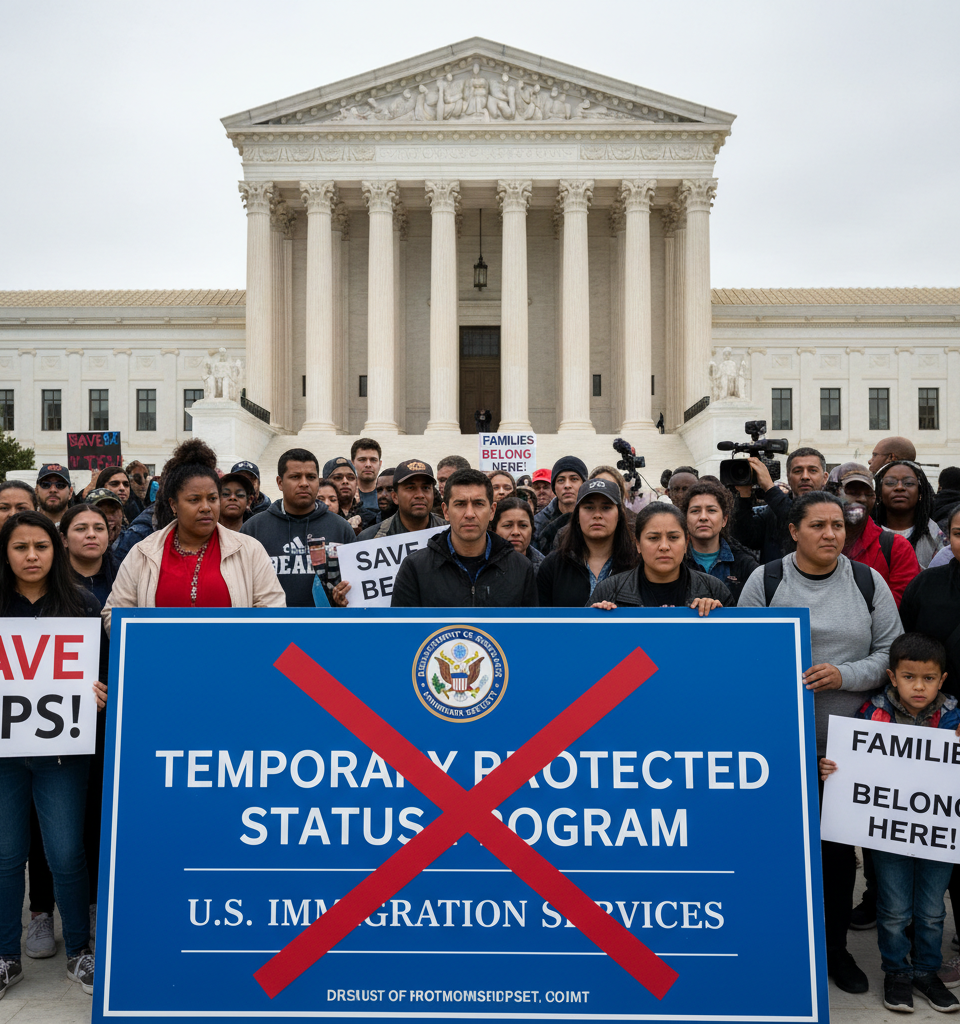
The future of the Temporary Protected Status (TPS) program appears increasingly precarious following a decisive Supreme Court ruling. This decision, handed down amidst ongoing debates surrounding immigration policy, provides the Trump administration with augmented authority to potentially remove TPS designations for numerous countries. Consequently, an estimated hundreds of thousands of individuals who currently hold TPS could face removal from the program.
TPS, established under the Immigration Act of 1990, offers temporary legal status to foreign nationals residing in the United States whose home countries are deemed unsafe due to armed conflict, natural disasters, or other extraordinary and temporary conditions. For decades, it has served as a humanitarian lifeline, allowing eligible individuals to live and work in the U.S. without fear of deportation. The recent Supreme Court's intervention marks a pivotal moment, shifting the landscape for these protected communities.
Shifting Legal Landscape
The Supreme Court's ruling, the specifics of which are yet to be fully dissected in their practical implications, appears to validate the administration's broader interpretation of its executive authority concerning immigration matters. While the full text of the decision is complex, initial analyses suggest a weakening of judicial oversight on executive actions related to immigration status. This effectively gives the administration more unilateral power to terminate TPS for designated countries, bypassing the protracted legal challenges that have previously stalled such efforts.
Impact on TPS Holders
The immediate ramifications for current TPS holders are considerable uncertainty and anxiety. Individuals from countries such as El Salvador, Honduras, Haiti, Nepal, Nicaragua, and Sudan, among others, constitute the bulk of the TPS population. Many have established lives in the U.S., including families, businesses, and deep community ties, some for over two decades. The potential revocation of their status would not only threaten their residency but also lead to an exodus of skilled workers and taxpayers from the American economy, creating widespread social and economic disruption. It could also separate families, with U.S.-born children potentially facing the prospect of their parents' deportation.
Broader Immigration Policy Implications
This development is significant within the broader context of U.S. immigration policy. It signals a potential tightening of immigration enforcement and a move away from humanitarian-based protections that have historically been part of the nation's immigration framework. The ruling could embolden the administration to pursue other stringent immigration measures, potentially redefining who is allowed to reside and work within the country. Advocacy groups and immigrant rights organizations are already gearing up for significant legal and political battles, anticipating a sustained effort to safeguard the rights of affected populations.
What Lies Ahead
Looking ahead, the administration is expected to leverage this ruling to expedite its efforts to terminate TPS for the remaining countries. This likely involves reviewing existing designations and possibly announcing new termination dates, although the precise timeline remains unclear. Legal challenges from civil rights organizations and affected communities are almost certainly on the horizon, though the Supreme Court's stance suggests a more difficult path for such litigation. Congress could also intervene with legislative action, though the current political climate makes bipartisan consensus on immigration reform challenging. The coming months will be critical in determining the fate of hundreds of thousands of individuals and the future direction of the TPS program itself.