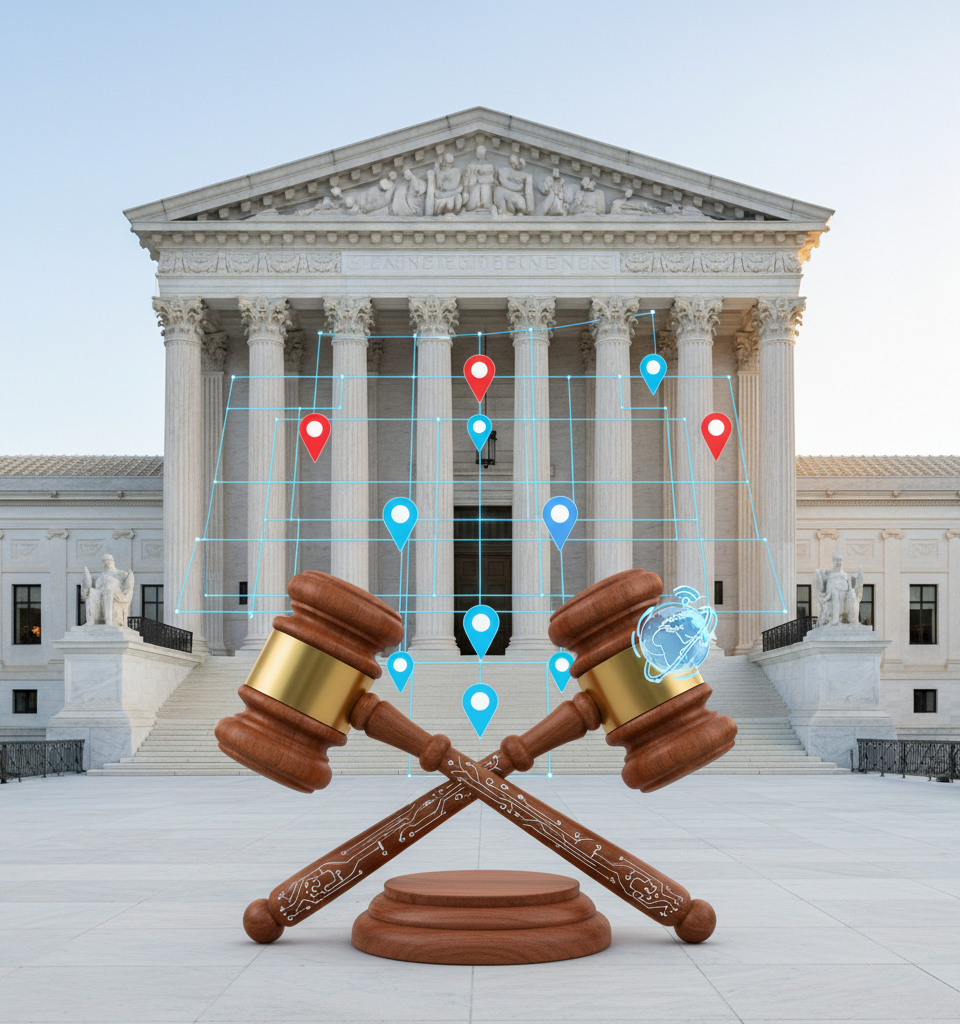
S. Supreme Court is set to deliberate on a groundbreaking case concerning the legality and scope of geofence warrants, a powerful yet controversial investigative technique employed by law enforcement. These warrants compel technology companies, primarily Google, to disclose location data of all devices present within a specified geographical area during a particular timeframe.
The upcoming review stems from growing legal challenges regarding their constitutionality, particularly under the Fourth Amendment, which protects against unreasonable searches and seizures. Critics argue that these broad data dragnet requests compromise the privacy of countless innocent individuals caught in the dragnet, while proponents maintain they are crucial tools for solving complex crimes. Geofence warrants, often referred to as "reverse-location searches," operate by demanding data that could implicate anyone near a crime scene, rather than focusing on a specific suspect.
This approach has led to an increasing number of false positives, where individuals with no connection to a crime are identified as potential suspects, leading to invasive investigations and unwarranted scrutiny. The technology's rise in popularity among law enforcement agencies – with hundreds, if not thousands, of such warrants issued annually – directly correlates with the proliferation of smartphones and the pervasive collection of location data by tech giants. This judicial review represents a critical juncture in defining the boundaries of digital surveillance in an age where personal location data is constantly generated and stored.
Key to the Supreme Court's deliberations will be understanding the technical intricacies of how location data is collected and processed. Geofence warrants typically target data collected through Google's Location History feature, which records a user's movements over time. While Google claims it received approximately 11,500 geofence demands in 2020 alone, a significant increase from previous years, the exact number is likely higher due to non-disclosure agreements and the involvement of other tech companies.
Civil liberties advocates, such as the Electronic Frontier Foundation, assert that these warrants fundamentally undermine constitutional protections by effectively searching everyone in an area without individualized suspicion. Conversely, law enforcement agencies argue that in an era of sophisticated digital crime, traditional investigative methods are often insufficient, and location data offers invaluable leads, especially in cases where physical evidence is scarce. This legal battle has far-reaching implications for the tech industry, particularly for companies that collect and store vast amounts of user location data.
A ruling limiting geofence warrants could force tech companies to re-evaluate their data retention policies and potentially enhance user privacy controls. Conversely, a decision affirming their broad use might prompt public outcry and increased pressure on these companies to advocate for stronger user protections. The outcome could set a precedent for how American courts interpret privacy in the digital age, influencing not only geofence warrants but also future legislation regarding data collection and government access to personal information.
Legal scholars and privacy advocates largely concur that the Supreme Court must establish clear constitutional guidelines for these types of searches. Professor Orin Kerr, a leading expert on Fourth Amendment law, has emphasized the need for courts to balance the government's legitimate investigative needs with individuals' reasonable expectations of privacy. Many experts believe that without such explicit guidance, law enforcement agencies will continue to operate in a legal grey area, leading to inconsistent application of the law and potential abuses.
The core contention revolves around whether the "particularity requirement" of the Fourth Amendment — that warrants must particularly describe the place to be searched, and the persons or things to be seized — can be reconciled with a dragnet search that encompasses potentially thousands of innocent individuals. Looking ahead, the Supreme Court's decision will likely reshape the landscape of digital privacy and law enforcement investigations. A ruling in favor of stricter scrutiny for geofence warrants could necessitate new legislative frameworks to define acceptable uses of location data in criminal investigations.
Alternatively, if the Court upholds the broad application of these warrants, it could empower law enforcement while simultaneously fueling a broader public debate about the limits of government surveillance and the responsibility of technology companies in protecting user data. Congress may then face increased pressure to enact comprehensive federal data privacy legislation, moving beyond the fragmented state laws currently in place. The ultimate impact will reverberate through both the legal system and the digital economy, influencing future tech innovations and user trust for years to come.