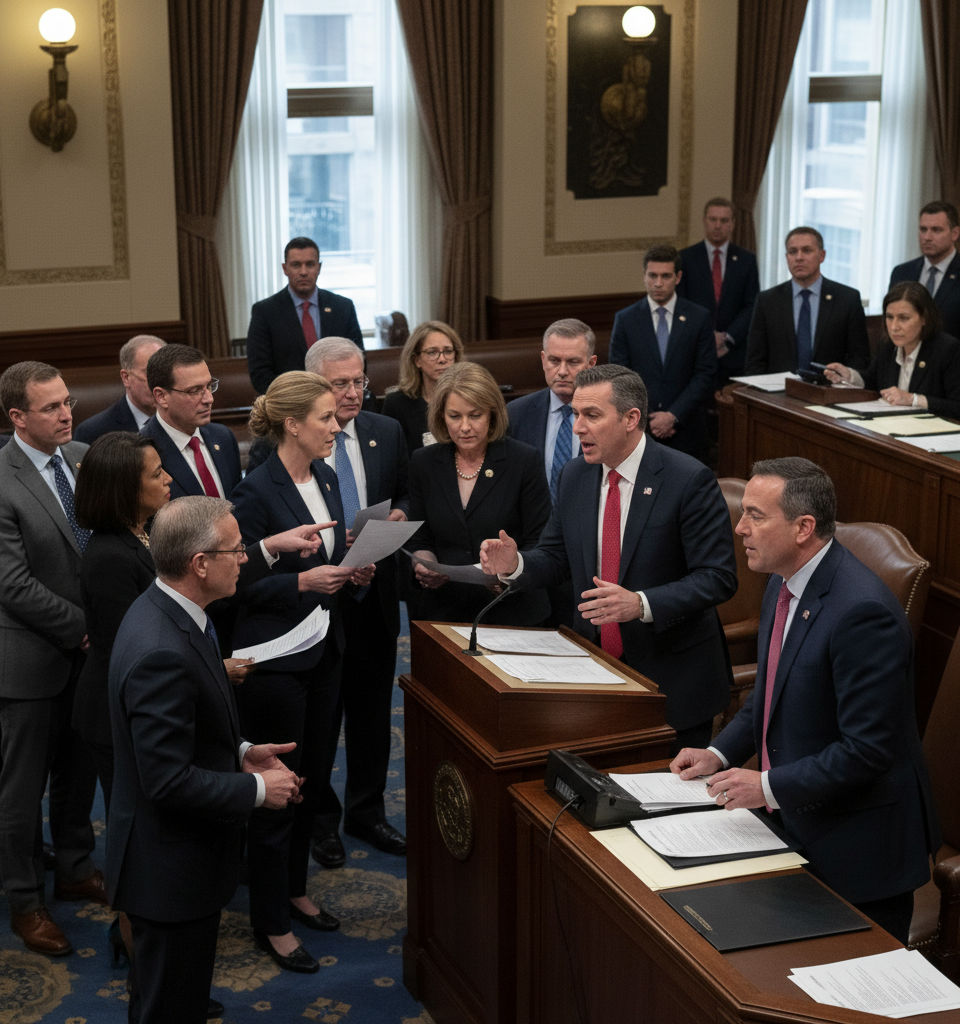
Washington D.C. – The U.S. House of Representatives is on the cusp of an unprecedented procedural battle, with discussions underway to consider the expulsion of Representative Eric Swalwell (D-CA) within days, following resurfaced allegations of sexual assault. This potential legislative action, if pursued, threatens to establish a significant and potentially destabilizing precedent, likely emboldening calls for similar removal votes against members from across the political spectrum based on alleged misconduct, ethical breaches, or even past controversies.
The Gravity of Expulsion: A Rare and Consequential Act
The move to expel a sitting member of Congress is an extraordinarily rare and severe disciplinary measure, invoked only a handful of times in U.S. history, primarily during the Civil War era for disloyalty. The last successful expulsion occurred in 2002 for bribery. Article I, Section 5, Clause 2 of the U.S. Constitution grants each chamber the power to "punish its Members for disorderly Behaviour, and, with the Concurrence of two thirds, expel a Member." This high bar underscores the gravity of such a vote, making Swalwell's situation a critical test of congressional mettle and fairness. The current political climate, characterized by deep partisan divides and an increasingly weaponized approach to ethical complaints, makes this push particularly fraught.
Allegations and Reactions: The Specifics Driving the Motion
The calls for Swalwell's expulsion stem from recently highlighted accusations of sexual assault, though specific details remain contentious and have not led to criminal charges. While Swalwell vehemently denies the allegations, a growing number of Republican members, including [specific Republican leader or member, if applicable, e.g., Rep. Marjorie Taylor Greene (R-GA) or House Speaker Kevin McCarthy (R-CA)], have publicly demanded his removal. Democratic leadership, while acknowledging the seriousness of any sexual assault claim, has largely defended Swalwell, emphasizing the lack of formal charges or an independent investigation leading to findings of guilt. The House Ethics Committee has not, to date, publicly announced an active investigation into these specific allegations against Swalwell, further complicating the procedural path forward.
Broader Implications for Congressional Conduct and Ethics
Should the House proceed with the expulsion vote, regardless of its outcome, it will inevitably catalyze a broader scrutiny of congressional conduct and ethical standards. This move is anticipated to set a precedent for future removal motions, potentially transforming what was once an extraordinary measure into a more common, albeit still challenging, political tool. This could include renewed calls for expelling members facing ethics investigations, those with controversial pasts, or even those whose rhetoric is deemed inflammatory by the opposing party. The risk is a tit-for-tat dynamic where both parties aggressively pursue expulsions, diverting legislative focus and further eroding institutional stability.
Expert Analysis: A Dangerous Precedent for Partisan Warfare
Political analysts and constitutional law experts are cautioning against the potential ripple effects. Dr. Evelyn Reed, a political science professor at Georgetown University, commented, "An expulsion vote over allegations that haven't been adjudicated in a formal process, criminal or even through a House Ethics Committee finding, opens a dangerous door. It risks transforming the House into a jury for public accusations, rather than a legislative body. We could see a significant increase in frivolous or politically motivated motions, further paralyzing Congress." Legal scholars also highlight the stringent two-thirds majority requirement, noting its intended purpose to prevent partisan expulsions.
The Unfolding Path: What Lies Ahead for the House
The immediate future holds several possibilities. House leadership could schedule a vote on the expulsion resolution, allow it to remain in committee, or direct the Ethics Committee to launch a formal investigation. Should a vote proceed, intense lobbying efforts and behind-the-scenes negotiations are expected from both parties. The outcome will not only determine Representative Swalwell's fate but also send a powerful signal about the House's willingness to use its most extreme disciplinary power. Beyond Swalwell, both parties could face increased pressure to address internal conduct issues of their own members, potentially leading to more frequent, albeit less severe, censure resolutions or stripping of committee assignments. The financial implications for campaigns and legal defense funds for members facing such scrutiny could also escalate dramatically in the coming years. This situation underscores a pivotal moment for the integrity and procedural norms of the U.S. Congress, with long-lasting ramifications for its members and its public standing.