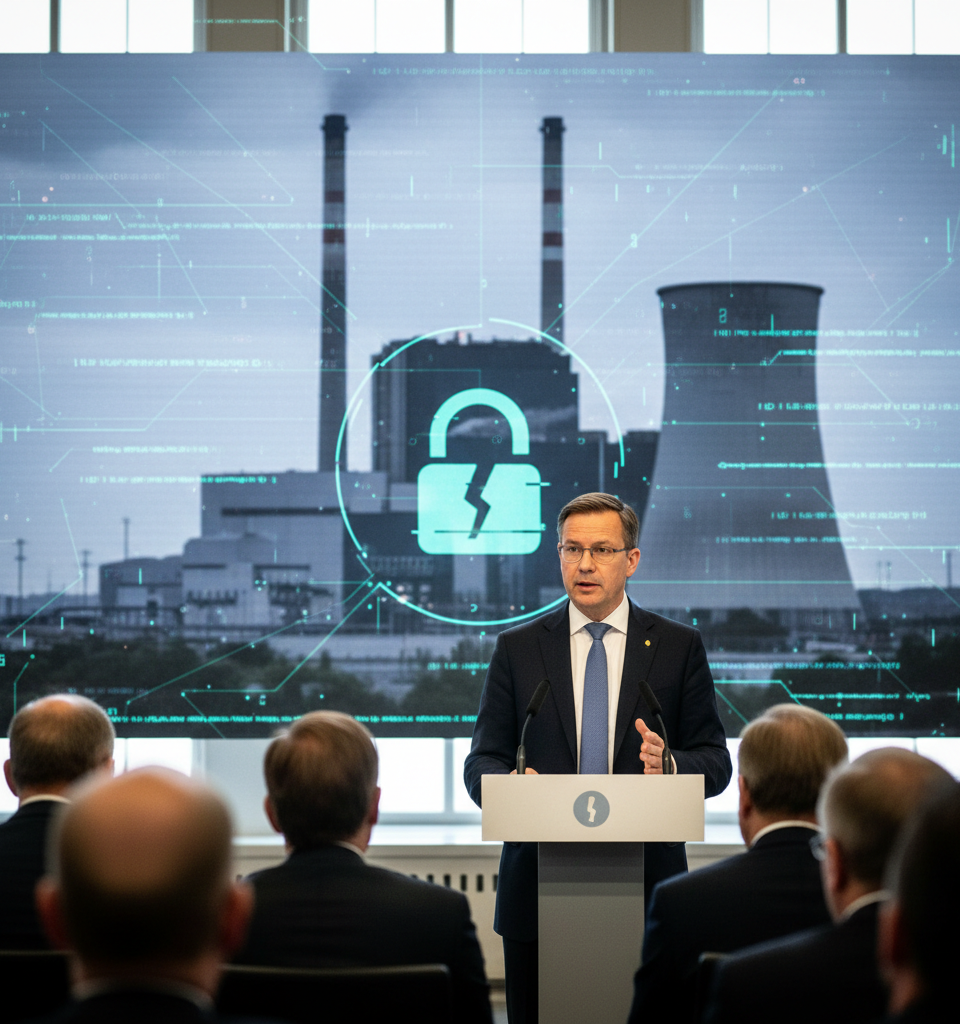
STOCKHOLM, SWEDEN – Sweden's Minister for Civil Defense, Carl-Oskar Bohlin, has unequivocally accused Russian state-sponsored actors of orchestrating a "destructive" cyberattack against a Swedish thermal power plant. The incident, disclosed this week, marks a significant escalation in the ongoing shadow war in cyberspace, with Bohlin warning that Russian hackers are "now attempting destructive cyber attacks against organizations in Europe." While specific details regarding the targeted plant and the extent of the damage remain under wraps for national security reasons, the direct attribution by a senior government official underscores the gravity of the assault and its potential implications for European energy security.
Escalating Cyber Warfare and Geopolitical Tensions
This incident is not an isolated event but rather a stark indication of the evolving landscape of cyber warfare, particularly in the context of Russia's full-scale invasion of Ukraine. For years, Western intelligence agencies have cautioned about the increasing sophistication and audacity of Russian cyber operations, often targeting critical infrastructure, disinformation campaigns, and espionage. The direct targeting of a thermal power plant, a vital component of a nation's energy grid, signifies a potential shift towards more disruptive, rather than merely disruptive or espionage-oriented, attacks. This development also heightens the geopolitical friction between Russia and NATO-aligned nations like Sweden, which recently joined the alliance, further solidifying the perception of cyberspace as a primary theater of conflict.
Key Details Emerge Through Official Statements
While the Swedish government has been cautious with granular details, Minister Bohlin's statements provide crucial insights. He emphasized the "destructive" nature of the attack, suggesting an intent to cause physical damage, operational disruption, or data loss, rather than simple data exfiltration. Although the timeframe of the attack was not disclosed, its public revelation now suggests that Swedish authorities have completed their preliminary forensic analysis and confidently identified the perpetrator. Bohlin's explicit warning about Russian hackers expanding their targets to "organizations in Europe" indicates that Sweden views this attack as part of a broader, coordinated campaign, necessitating heightened vigilance across the continent. The lack of specific financial damages or operational downtime reported publicly could indicate either a thwarted attack or a successfully contained incident with minimal long-term impact on services.
Broadening Impact on European Infrastructure Reliability
The revelation of this attack sends ripples across Europe's energy and critical infrastructure sectors. Companies operating in these vital areas are now under increased pressure to re-evaluate and bolster their cyber defenses. The incident will likely accelerate investments in advanced threat detection, incident response capabilities, and supply chain security for operational technology (OT) systems. Insurers, too, will be closely watching, potentially leading to adjustments in cyber insurance premiums and coverage for critical infrastructure. The perceived vulnerability could also spur greater cross-border collaboration on cyber intelligence sharing and joint defensive exercises among European nations, aiming to create a more resilient collective shield against state-sponsored threats.
Expert Analysis: A Calculated Escalation
Cybersecurity experts are largely in agreement that this attack represents a calculated escalation by Russia. "Targeting critical infrastructure, especially energy, serves multiple strategic objectives: it can sow panic, disrupt economies, and demonstrate capability," explains Dr. Anya Sharma, a senior cybersecurity analyst at the European Cyber Security Agency (ECSA). "The 'destructive' nature suggests an intent beyond information gathering – it's about projecting power and potentially creating leverage." Other experts point to the timing, noting Russia's historical patterns of escalating cyber operations in conjunction with geopolitical events. They highlight the increasing sophistication of state-sponsored actors, who are adept at exploiting zero-day vulnerabilities and employing advanced persistent threats (APTs) to gain deep access to systems.
The Path Forward: Enhanced Vigilance and Unified Defense
Looking ahead, the immediate future will see intensified efforts by European governments and critical infrastructure operators to fortify their digital perimeters. National cybersecurity agencies are expected to issue updated threat advisories and provide enhanced guidance to public and private sector entities. There will likely be a push for more stringent regulatory frameworks pertaining to critical infrastructure cybersecurity, potentially harmonizing standards across the European Union. Furthermore, the incident will serve as a strong impetus for increased international cooperation, particularly within NATO and the EU, to share threat intelligence, coordinate defensive measures, and potentially develop joint deterrence strategies against state-sponsored cyber aggressors. The goal will be to create a more unified and resilient cyber defense posture capable of withstanding increasingly sophisticated and destructive attacks.