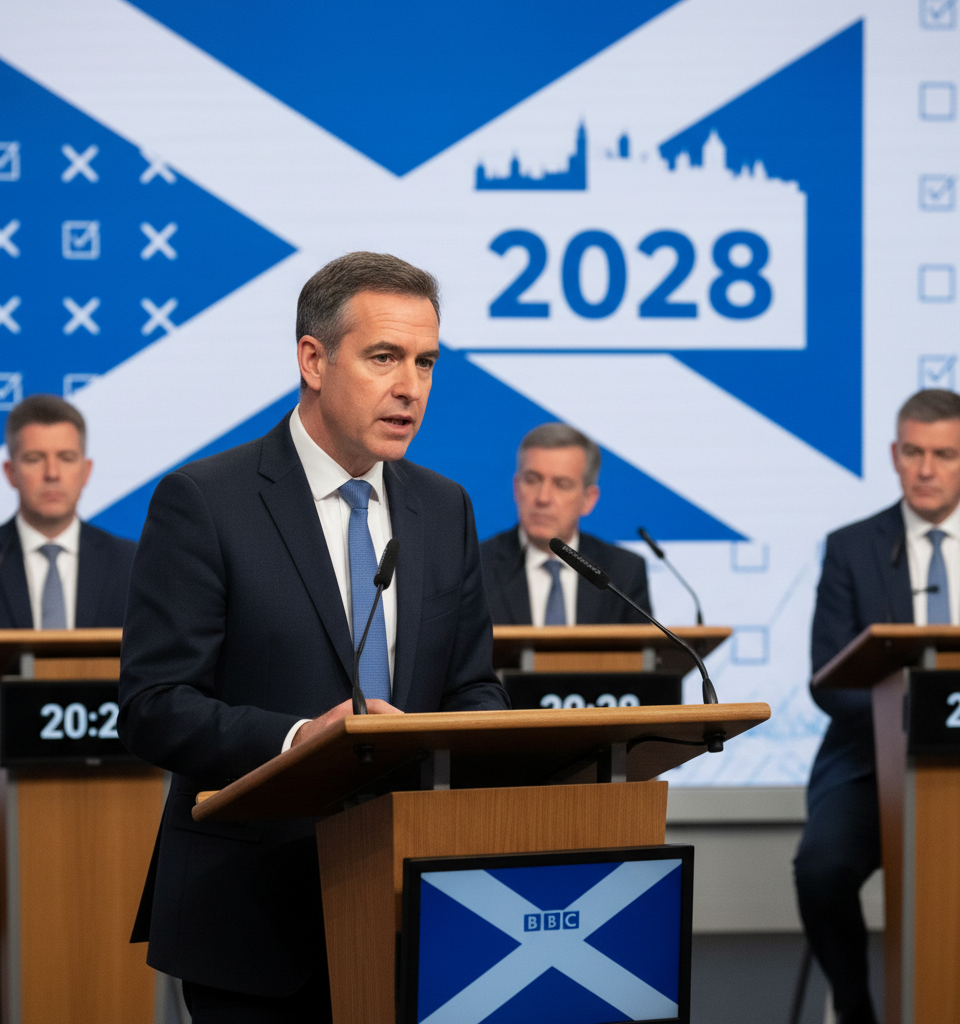
Edinburgh, Scotland – Scotland's First Minister John Swinney has publicly stated that a second Scottish independence referendum could realistically be held by 2028, a declaration made during a high-stakes BBC televised debate just weeks before the crucial Scottish election. The leader of the Scottish National Party (SNP), who assumed the top political office recently, laid out the ambitious timeline during a robust exchange with opposition leaders, firmly placing the independence question back at the forefront of the nation's political agenda. This bold assertion not only sets a clear objective for his administration but also promises to be a defining issue for voters heading to the polls.
Historical Context and Political Imperative
The push for Scottish independence is not new, deeply rooted in centuries of shared history with the United Kingdom. The first independence referendum, held in 2014, saw 55.3% of voters opting to remain part of the UK, versus 44.7% who favored independence. However, the political landscape was drastically altered by the 2016 Brexit referendum, where 62% of Scottish voters chose to remain in the European Union, contrasting sharply with the overall UK vote to leave. Proponents of independence, including the SNP, argue that Brexit fundamentally changed Scotland's constitutional position and democratic mandate, necessitating a fresh vote. Swinney's renewed commitment to a 2028 timeline underscores the SNP's core mission to achieve self-determination, positioning it as a pivotal issue for the upcoming election and beyond.
Key Strategic Details and Political Challenges
During the debate, Swinney articulated that while 2028 is an aspirational target, achieving it would require a clear mandate from the Scottish electorate in next month's election. He emphasized the necessity of demonstrating sustained public support for independence to the UK government, which has consistently refused to grant a Section 30 order – the legal mechanism required for a legitimate referendum. Swinney's strategy hinges on leveraging electoral success to apply pressure on Westminster. He also acknowledged the significant logistical and legislative hurdles, including the drafting of a new referendum bill and navigating potential legal challenges, signaling a protracted political battle regardless of the election outcome.
Broader Political and Economic Implications
A renewed push for independence carries profound implications beyond Scotland's borders. For the broader UK, it represents a significant challenge to national unity and could trigger a period of political instability. Economically, discussions around Scotland's potential post-independence financial arrangements, currency choices, and trade relationships are complex and contentious. Analysts project potential short-term market volatility in response to increased uncertainty, impacting the British pound and investor confidence across the UK. The energy sector, particularly Scotland's North Sea oil and gas reserves, and renewable energy potential, would also face critical jurisdictional and regulatory shifts.
Expert Analysis and Public Sentiment
Political analysts are divided on the feasibility of a 2028 referendum. Professor Sir John Curtice, a leading expert on Scottish politics, notes that while public support for independence has fluctuated since Brexit, it has not consistently reached the sustained majority levels that might compel the UK government to acquiesce. He suggests that the SNP would need to demonstrate a substantial increase in support, perhaps exceeding 50% consistently in opinion polls for an extended period, to build an irresistible case. Economists at the Fraser of Allander Institute highlight the ongoing fiscal challenges that an independent Scotland would face, particularly concerning its budget deficit and the complexities of establishing new economic institutions.
The Road Ahead: Electoral Battle and Future Dynamics
The immediate focus shifts to next month's Scottish election, where the SNP aims to secure a decisive victory to strengthen its mandate for a future independence vote. The opposition parties, including Scottish Labour and the Scottish Conservatives, are vehemently against another referendum, arguing for a focus on cost-of-living issues and public service improvement rather than constitutional change. Should the SNP achieve a strong performance, it would undoubtedly intensify the calls for a referendum, setting up a likely confrontation with the UK government. The coming months will be critical in shaping not only Scotland's political trajectory but also the future constitutional makeup of the United Kingdom.
Conclusion
John Swinney's commitment to a 2028 independence referendum has injected renewed vigor into Scotland's constitutional debate. While the path ahead is fraught with political and legal challenges, the upcoming election will serve as a crucial barometer of public sentiment and the SNP's ability to drive forward its primary objective of an independent Scotland. The declaration has firmly established the 'indyref2' question as a central pillar of Scottish politics for the foreseeable future.