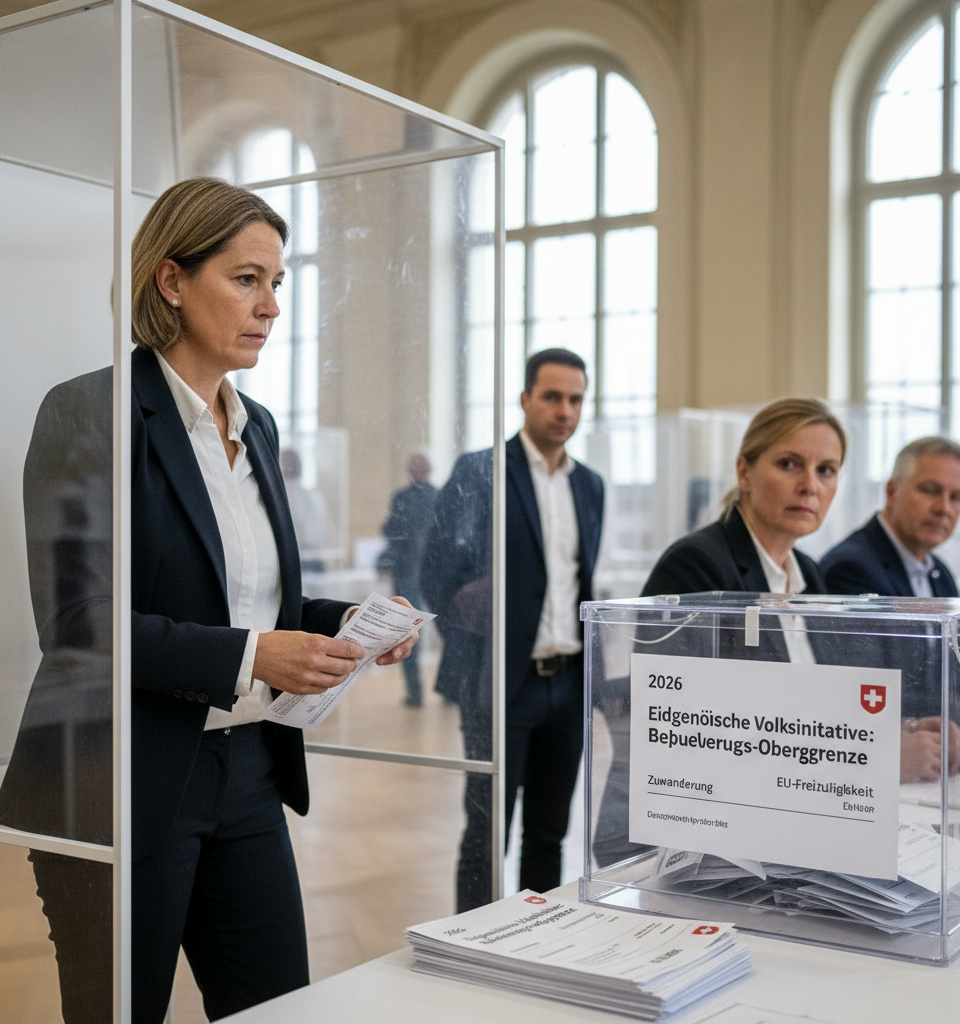
Switzerland is currently facing a pivotal moment as its citizens prepare to vote on a proposed initiative designed to cap the country's permanent resident population at 10 million. This forthcoming referendum carries substantial implications, particularly for Switzerland's long-standing immigration policies and its intricate relationship with the European Union concerning the free movement of people.
The proposed cap is not merely a demographic measure; it directly addresses core aspects of Swiss national identity and economic strategy. Historically, Switzerland has experienced steady population growth, fueled in part by robust immigration essential to its labor market. The nation, known for its high quality of life and strong economy, has long attracted foreign workers and residents. However, this growth has also led to heightened concerns among some segments of the population regarding infrastructure strain, environmental impact, and cultural preservation, forming the bedrock of the current initiative.
The initiative, if approved, would mandate a strict upper limit on the total number of permanent residents in Switzerland. Proponents argue that such a cap is necessary to manage resource consumption, alleviate pressure on public services, and maintain the country's unique character. They contend that uncontrolled population growth could compromise the high standards of living and environmental quality that Switzerland is renowned for. The mechanism for enforcing this cap, if passed, would involve significantly stricter immigration quotas and potentially a re-evaluation of existing residency permits.
The most acute impact of this potential population cap is expected to be felt in Switzerland's relationship with the European Union. Switzerland is not an EU member but has a series of bilateral agreements that grant it access to the EU's single market in exchange for, among other things, the free movement of people. A population cap, by definition, would contradict the principles of free movement, one of the cornerstones of the EU. Analysts suggest that such a move could trigger a severe crisis in EU-Swiss relations, potentially jeopardizing other crucial bilateral accords, including those governing trade, research, and economic cooperation. Industries heavily reliant on foreign labor, such as healthcare, hospitality, and specialized manufacturing, could face significant challenges under a more restrictive immigration regime.
Experts are closely watching the proceedings, noting that a 'yes' vote would force the Swiss government into complex negotiations with Brussels. The EU has consistently upheld the indivisibility of its four freedoms – goods, services, capital, and people – making any concession on free movement highly unlikely. This could lead to a scenario where Switzerland either revokes its free movement agreement, thereby risking the unraveling of its entire bilateral treaty framework, or finds itself in a protracted diplomatic stalemate. The economic fallout from such a disruption could be substantial, potentially impacting Switzerland's access to its largest trading partner and hindering its economic growth.
The immediate future will see intensified public debate and campaigning ahead of the vote. Both sides are expected to present compelling arguments, with proponents emphasizing sovereignty and sustainability, and opponents highlighting economic risks and the potential damage to international relations. The outcome of this vote will not only shape Switzerland's demographic future but will also serve as a crucial indicator of public sentiment regarding immigration and international cooperation within Europe.
Looking ahead, regardless of the referendum's outcome, the discussion around population density and immigration is poised to remain a prominent feature of Swiss political discourse. Should the cap be approved, the Swiss government would be tasked with the formidable challenge of implementing the new constitutional mandate while attempting to mitigate the inevitable repercussions on its international standing and economic stability. Conversely, if rejected, the debate over sustainable growth and resource management is likely to continue, albeit through different policy avenues.