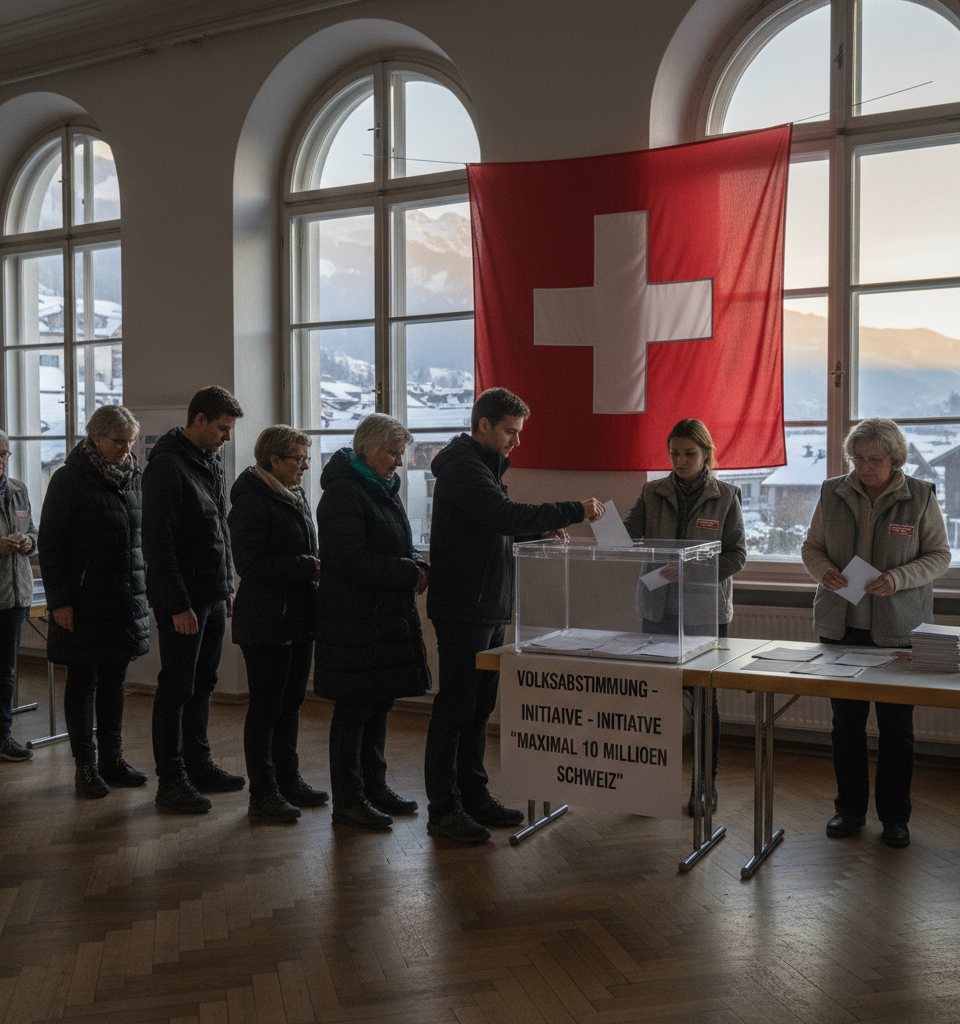
Early projections from national referendum counts indicate that Swiss voters are poised to reject the controversial "10-Million Switzerland" initiative. While not all ballots have been tabulated, current trends strongly suggest that approximately 55% of participants have voted against the proposal, which sought to impose a strict cap on the country's resident population. This preliminary outcome, emerging from a nationwide vote, signals a likely continuation of Switzerland's current immigration policies, subject to final confirmation as counting concludes.
Context of the "10-Million Switzerland" Initiative
The "10-Million Switzerland" initiative, championed by conservative factions, aimed to enshrine a population limit in the Swiss constitution, primarily citing concerns over infrastructure strain, environmental impact, and the preservation of national identity. Proponents argued that unchecked population growth, largely driven by immigration, threatened the country's high quality of life and finite resources. Opponents, including the federal government, business associations, and progressive parties, countered that such a cap would severely harm the economy by exacerbating labor shortages, particularly in critical sectors like healthcare and technology, and would undermine Switzerland's international standing and bilateral agreements, notably with the European Union.
The Referendum Process in Switzerland
Switzerland's system of direct democracy frequently sees citizens vote on a wide array of initiatives, many of which can significantly alter national policy. For an initiative to pass, it requires a double majority: a majority of the national popular vote and a majority of the cantons (Swiss states). The federal government and parliament often issue recommendations on such votes, typically advising rejection of initiatives deemed too restrictive or economically damaging. The high participation rates in Swiss referendums underscore the deep public engagement with national policy debates. The current projections, indicating a significant margin against the measure, suggest a clear popular mandate.
Potential Economic and Social Ramifications
Had the initiative passed, its economic repercussions could have been substantial. Business leaders had warned of a potential brain drain and a deepening of labor shortages, particularly in industries reliant on skilled foreign workers. Sectors such as pharmaceuticals, finance, and specialized manufacturing, which are cornerstones of the Swiss economy, often depend on international talent to maintain their competitive edge. Socially, proponents of the cap had voiced concerns about integration challenges and the strain on public services. However, opponents argued that a population ceiling would lead to a more insular society and hinder innovation.
Broader Implications and Future Outlook
This projected rejection by Swiss voters is seen as a reinforcement of the country's more open-door approach to skilled immigration, albeit a regulated one. It also might reflect a public sentiment that prioritizes economic prosperity and global engagement over nativist restrictions. The outcome could allow the government to continue implementing policies aimed at attracting and retaining necessary skills while managing population growth through other, less restrictive means. The debate over immigration and its impact on a small, prosperous nation like Switzerland is ongoing, but this vote provides a clear indication of the current public consensus against a hard population cap.
What This Means for Switzerland's International Relations
Switzerland's relationship with the European Union often centers on the free movement of people. A population cap would have undoubtedly complicated these ties, potentially triggering renegotiations of existing bilateral agreements and straining political relations. The projected rejection of the initiative effectively sidesteps this immediate diplomatic hurdle, allowing Switzerland to maintain its current framework of relations with its largest trading partner. This stability could be crucial as Switzerland continues to navigate its unique position outside of the EU, maintaining close economic and social integration without full membership.
Analyst Perspectives on the Vote
While specific expert quotes are not available at this early stage, analysts surveying the Swiss political landscape suggest that the outcome reflects a pragmatic choice by voters. The economic arguments against a hard cap, emphasizing the need for foreign labor to sustain growth and innovation, appear to have resonated more widely than the protectionist arguments. Political commentators are likely to interpret this as a victory for the federal government and business community, who largely opposed the initiative, and a signal that Swiss voters prefer nuanced policy adjustments over drastic, potentially disruptive, constitutional changes to address population dynamics.
Moving Forward: Policy and Public Discourse
Following the likely rejection, the Swiss government will continue to manage population growth through existing immigration laws and urban planning strategies. The debate around sustainable development, housing, and infrastructure will undoubtedly persist, but without the immediate pressure of an impending constitutional population cap. This outcome suggests that future discussions will likely focus on targeted policy refinements rather than fundamental shifts in national immigration philosophy. The public discourse will probably pivot from the absolute necessity of a cap to more nuanced questions about the integration of new residents and the efficient allocation of resources.
In conclusion, the early projections indicate a significant decision by the Swiss electorate to maintain a more open and internationally connected posture, prioritizing economic vitality over restrictive population controls. The full implications will become clearer once final results are declared and the political landscape reorients itself in light of this outcome.