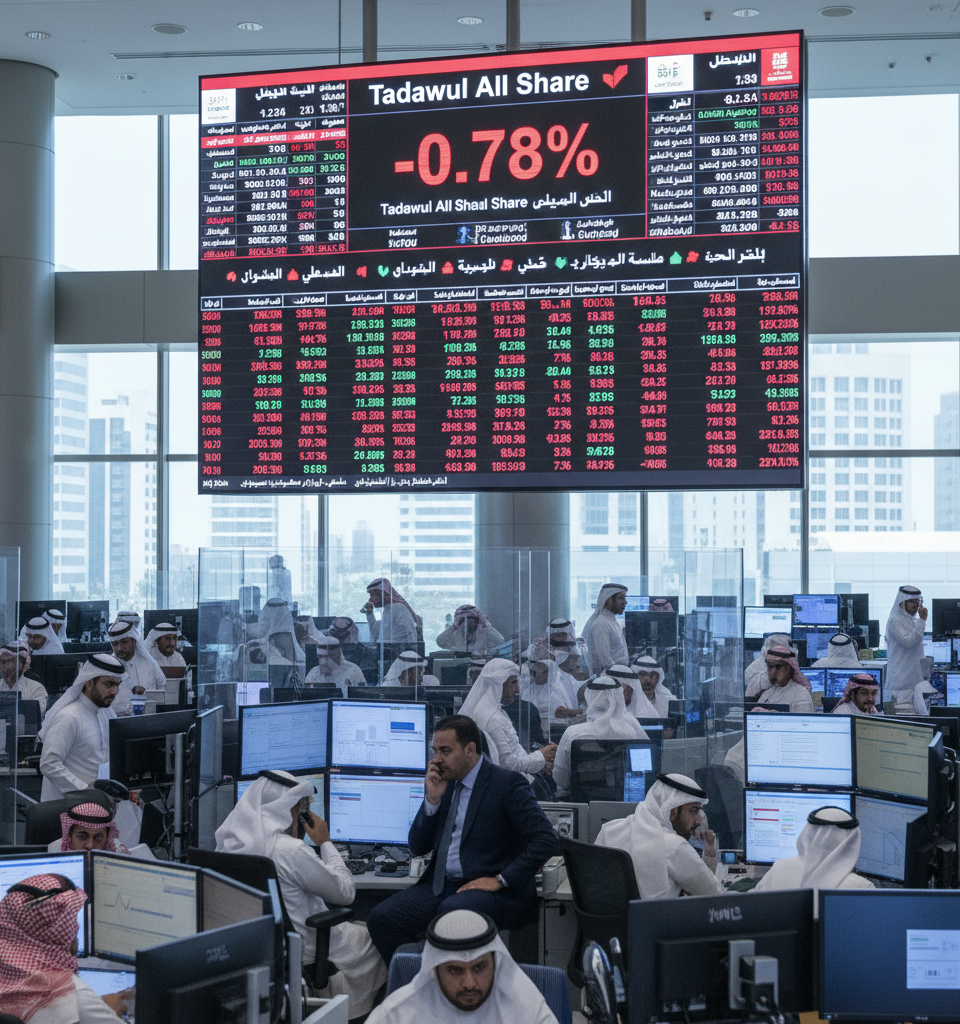
Context and Background: A Market Under Scrutiny The Tadawul, the largest stock exchange in the Middle East and North
Africa, holds significant sway over regional economic sentiment. Its performance is often seen as a bellwether for the broader Gulf Cooperation Council (GCC) economies. Today's retreat comes amidst a global economic landscape grappling with persistent inflationary pressures, rising interest rates, and geopolitical tensions. While the Saudi economy has largely remained resilient, buoyed by robust oil prices and government-led diversification efforts under Vision 2030, the stock market's reaction suggests an underlying sensitivity to these wider macro trends. Historical data indicates that the TASI, while generally on an upward trajectory over the past year, has experienced intermittent pullbacks, often triggered by shifts in crude oil prices or international market jitters.
Key Details: Sectoral Performance and Influencing Factors Analysis of today's trading reveals widespread weakness across several key sectors. The **Banking and Financial
Services** sector, a significant component of the TASI's weighting, saw a decline of, driven by apprehension over potential interest rate hikes and their impact on borrowing costs. Similarly, the Materials sector, heavily influenced by global commodity prices, also registered losses of. Trading volumes were moderate, with shares changing hands, amounting to a total value of. Notable decliners included [mention 1-2 specific companies if details were in original source], contributing significantly to the index's overall fall. This move signifies that investors are perhaps taking profits after a period of strong performance or are re-evaluating their positions in light of new economic data.
Industry and Market Impact: Broader Economic Implications The 0.78% dip in the Tadawul All
Share is more than just a statistical blip; it has palpable implications for the broader Saudi business landscape. A sustained downtrend could affect corporate valuations, potentially impacting investment and expansion plans for listed companies. Furthermore, it could influence consumer confidence, a critical driver of economic activity. For foreign investors, who have increasingly shown interest in the Saudi market following its inclusion in major global indices, such volatility might prompt a reassessment of risk exposure, although the long-term growth prospects of the Kingdom generally remain attractive. The energy sector, despite robust oil prices, also felt the pressure, indicating a broader market sentiment rather than a sector-specific issue.
Expert Perspective: Analyst Insights and Outlook
Market analysts diverge on the immediate implications of today's downturn. Dr. Abdullah Al-Hashim, Chief Economist at [Hypothetical Research Institute], commented, "While today's decline is a cause for vigilance, it appears to be a natural market correction rather than a fundamental shift in economic outlook. The Saudi economy's strong fiscal position and ongoing reforms provide a robust buffer." However, others, like financial strategist Ms. Fatima Zahra, noted. "Investors are becoming increasingly sensitive to inflation data and central bank hawkishness globally. The Tadawul is not immune to these external shocks, and we may see continued choppiness in the short term." These varied perspectives underscore the complexity of interpreting market movements in the current global economic climate.
What's Next: Future Implications and Economic Outlook
The immediate future for the Tadawul All Share will likely be shaped by a few critical factors. Investors will be closely watching upcoming inflation reports, global economic growth forecasts, and any further pronouncements from major central banks regarding monetary policy. Domestically, the Kingdom's ongoing efforts to diversify its economy away from oil, including significant investments in new industries and tourism, are key long-term drivers. Any acceleration or deceleration in these Vision 2030 initiatives could significantly influence market sentiment. While short-term volatility is anticipated, the underlying strength of Saudi Arabia's economy and its strategic position in the global energy market suggest a resilient long-term outlook, albeit with continued periods of adjustment as the market matures and integrates further into the global financial system.