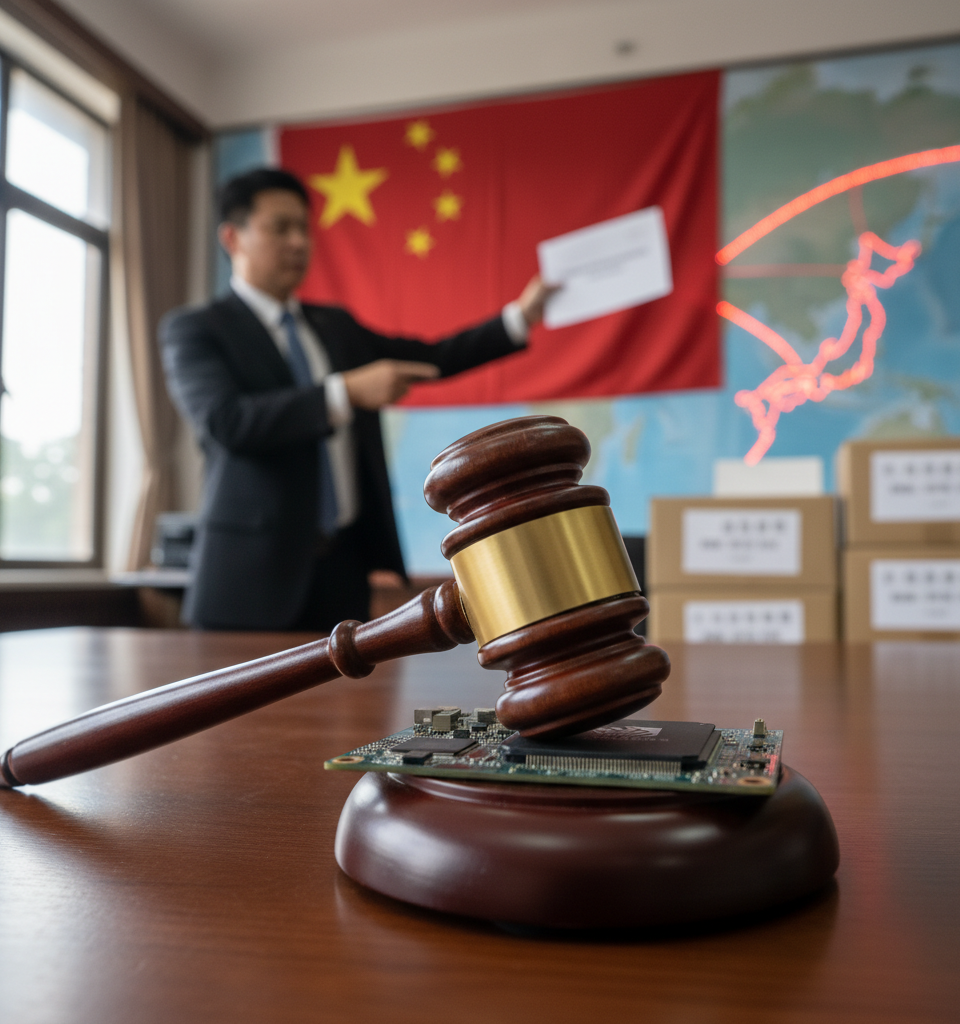
Taiwanese prosecutors are investigating an alleged scheme involving the illicit export of US-restricted NVIDIA AI chips to mainland China, reportedly utilizing Japan as a transit point. The allegations center on three suspects, including a senior vice president at server manufacturer Super Micro, who are accused of facilitating the smuggling of at least one shipment of these high-tech components by falsifying export documents. The sophisticated operation reportedly saw the servers initially dispatched to Japan before their ultimate diversion to mainland China.
The investigation underscores the escalating efforts by China to circumvent US export controls on advanced semiconductor technology, particularly components crucial for artificial intelligence development. The alleged involvement of a high-ranking executive from Super Micro, a significant player in the server industry, highlights the potential for insider involvement in such illicit trade networks. These controls, implemented by the United States to curb China's technological advancement in sensitive areas, have driven a robust black market and complex workaround strategies.
Key details emerging from the investigation suggest the suspects manipulated documentation to obscure the true final destination of the sensitive hardware. The servers, equipped with NVIDIA's powerful AI chips, are critical for developing advanced artificial intelligence systems and supercomputing capabilities. The use of Japan as an intermediary destination points to a deliberate attempt to exploit established trade routes and regulatory frameworks to bypass direct export restrictions from Taiwan to mainland China.
The broader industry impact of such smuggling operations is significant. They not only undermine international export control regimes but also potentially distort global supply chains for critical technology. Companies like NVIDIA and Super Micro face heightened scrutiny and the risk of reputational damage, even if unknowingly entangled in illegal onward shipments. The incident also puts pressure on countries like Japan, often seen as a reliable trading partner, to strengthen their own enforcement mechanisms against transshipment activities that violate international sanctions.
While no specific expert analyses have been released regarding this particular case, industry observers generally agree that such incidents are symptomatic of the intense geopolitical competition surrounding AI technology. Analysts have consistently pointed to China's immense demand for advanced AI chips as a primary driver for these clandestine activities, creating lucrative opportunities for those willing to contravene export regulations. The increasing sophistication of these smuggling methods suggests a well-resourced and organized effort to acquire restricted technology.
The implications of this investigation could be far-reaching, potentially leading to further arrests, charges, and tightened export compliance measures across the supply chain. Authorities in Taiwan, Japan, and the United States will likely be collaborating to uncover the full extent of the network and prevent future occurrences. The case serves as a stark reminder of the ongoing challenges in enforcing technological restrictions in an interconnected global economy and highlights the continuous cat-and-mouse game between regulators and those seeking to bypass controls. Future developments in this case will be closely watched by governments and technology firms alike.