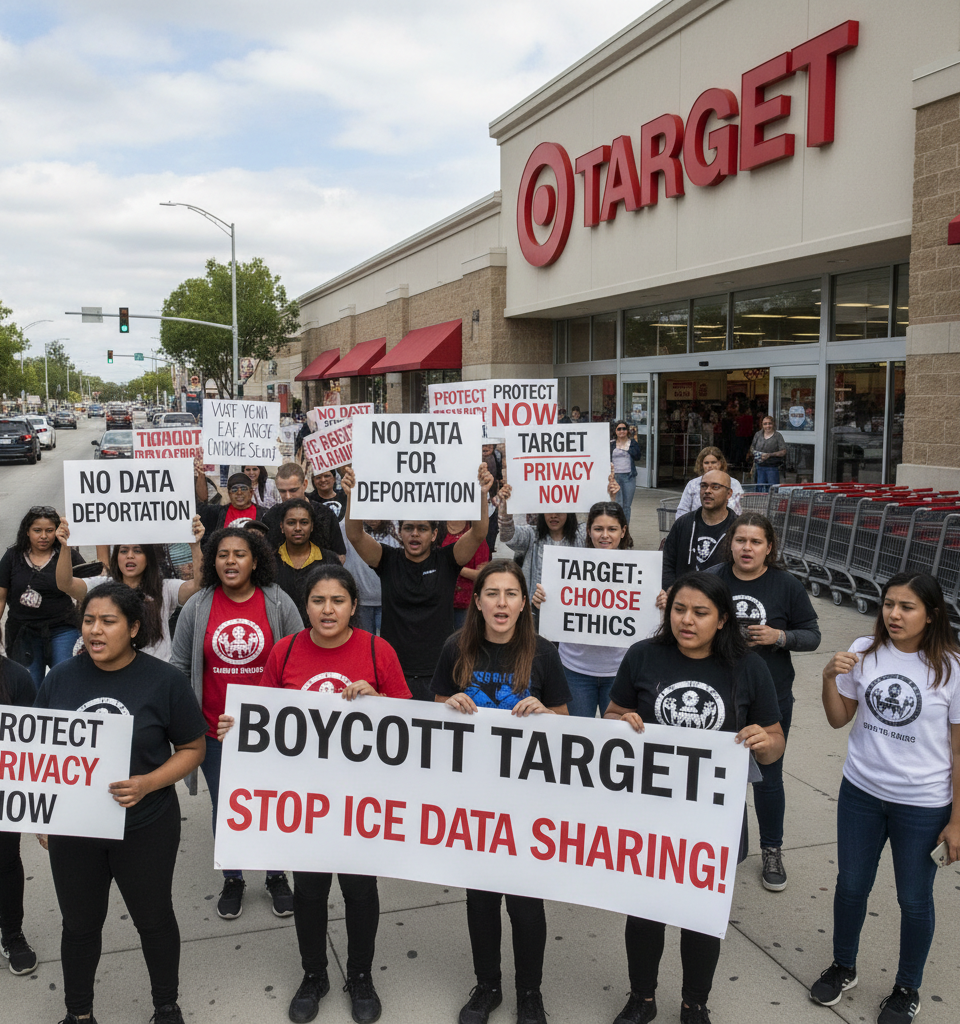
MINNEAPOLIS, MN – Target Corporation is once again embroiled in controversy, this time facing a renewed boycott effort spearheaded by the American Federation of Teachers (AFT). The labor union announced its campaign, urging consumers to cease shopping at Target stores, citing the retailer's policies regarding sharing customer data with U.S. Immigration and Customs Enforcement (ICE). This latest public relations challenge emerges as Target intensely focuses on a critical turnaround strategy aimed at reversing recent declines in sales and attracting a broader customer base, adding a unique layer of complexity to its corporate recovery.
Escalating Pressure on a Retail Giant Under Scrutiny
This isn't Target's first encounter with boycotts, and its timing is particularly sensitive. The company has been under immense pressure to reignite its financial performance after several quarters of uneven results, including a 3.7% decline in comparable sales year-over-year reported in its most recent earnings call. The AFT's stance highlights a growing trend of consumers and advocacy groups scrutinizing corporate social responsibility, especially concerning sensitive issues like immigration and data privacy. For Target, a brand that has historically cultivated an inclusive image, navigating this ethical minefield while simultaneously pursuing aggressive growth targets presents a significant reputational and operational challenge.
The Core of the Controversy: Data Sharing with ICE
The AFT's boycott demands that Target clarify and potentially alter its policies regarding data sharing with ICE. While specific incidents triggering the AFT's protest were not immediately detailed in their public statements, the union's general concern revolves around how customer information might be used in potentially harmful ways for undocumented individuals and their families. This echoes broader national debates about corporations' roles in government surveillance and the protection of civil liberties. Retailers, by virtue of their vast customer databases and transaction records, often find themselves inadvertently—or intentionally—at the nexus of these contentious issues, making their data privacy policies a critical point of public engagement and potential backlash.
Broader Implications for the Retail Sector
This situation extends beyond Target, serving as a potent reminder for the entire retail industry. Companies are increasingly expected to not only deliver products and services but also align with societal values and ethical standards. The 'conscious consumer' movement is gaining traction, where purchasing decisions are often influenced by a brand's stance on social, environmental, and political issues. Other major retailers have faced similar pressures, indicating a shift in consumer expectations that goes beyond price and convenience. Failure to adequately address these concerns can lead to significant brand damage, impacting customer loyalty and, ultimately, the bottom line. The incident underscores the importance of transparent and robust data privacy policies, a subject that has only grown in prominence following various high-profile data breaches and privacy scandals.
Expert Insights: Balancing Business and Ethics
Retail industry analysts are closely watching the situation. Dr. Eleanor Vance, a professor of marketing at Northwestern University, commented, "Target is in a precarious position. While any boycott can create a short-term dip, the long-term damage depends on the sustained commitment of the protesters and how effectively Target communicates its position and any subsequent actions. They need to balance legal obligations with their brand's carefully curated image of social responsibility." Another expert, Mr. David Chen, a retail consultant, added, "In an era of tight margins and intense competition, any negative publicity that deters even a small percentage of shoppers can have a disproportionate impact, especially during a turnaround phase where every sale counts. Target's challenge is to find a path that satisfies diverse stakeholders without alienating its core customer base or legal obligations."
What Lies Ahead for Target
The immediate future will test Target's corporate agility and communications strategy. The company will likely need to decide whether to publicly address the AFT's demands, reiterate its existing data privacy policies, or potentially revise them. Any response will be scrutinized by consumer advocacy groups, investors, and its vast customer base. The longevity and intensity of the boycott will be critical factors in determining its actual financial impact. Furthermore, Target's ability to demonstrate progress on its sales turnaround initiatives while navigating this ethical dilemma will significantly influence investor confidence and its market valuation. Analysts will be keen to see if this boycott impacts traffic during key shopping seasons, particularly the upcoming holiday period, which is crucial for retail profitability. The confluence of operational challenges and societal demands means Target's board and executive team have a delicate tightrope to walk in the months ahead.
The Potential Financial Ripple Effect
While the exact financial impact of the AFT boycott is difficult to quantify immediately, past corporate boycotts have demonstrated varied outcomes. Some have fizzled out, while others have resulted in significant revenue losses and stock depreciation. For Target, which is actively investing hundreds of millions of dollars in store remodels, supply chain optimization, and exclusive brands to differentiate itself, any disruption to customer traffic or brand perception could jeopardize these investments. The company aims for a modest sales growth in the low to mid-single digits for the current fiscal year, a target that could become more elusive if the boycott gains widespread traction. How Target manages this delicate balance of corporate responsibility and commercial imperatives will be a case study for the modern retail landscape in 2024 and beyond.