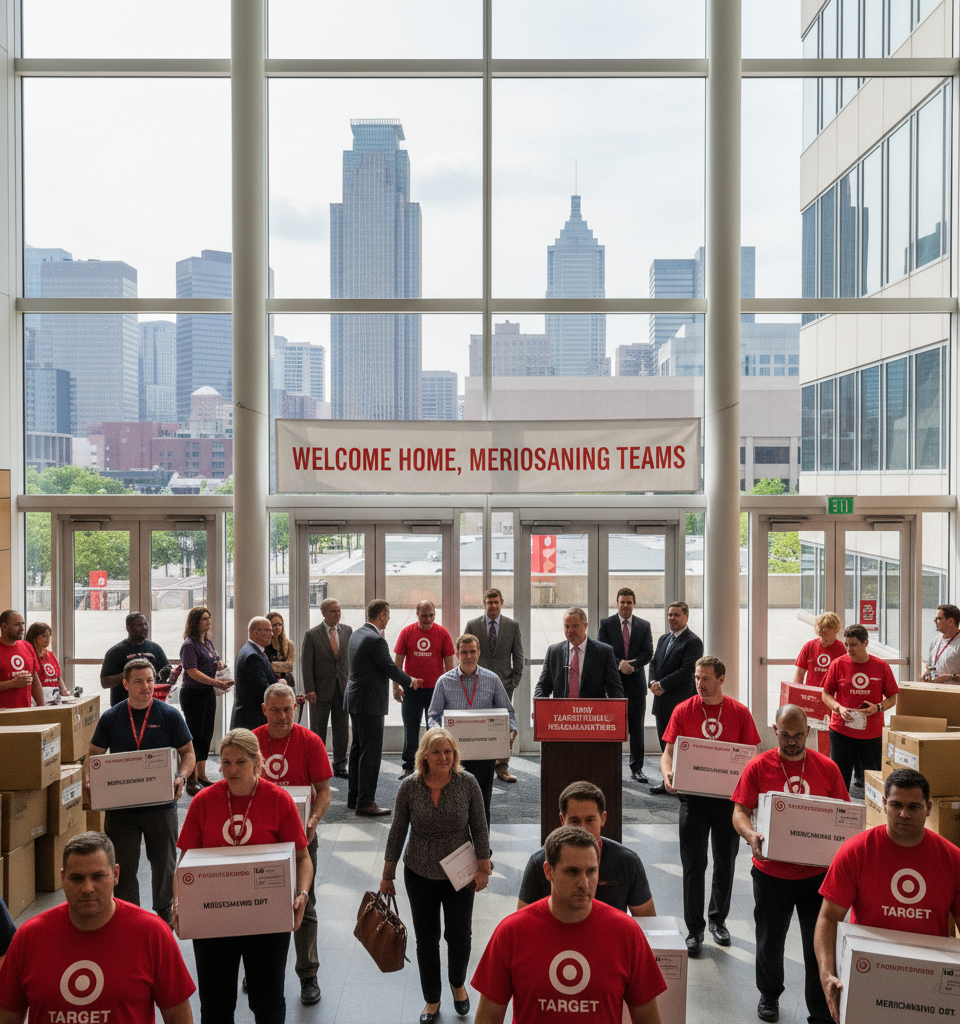
Target Corporation has issued a directive requiring a substantial segment of its merchandising teams, currently operating remotely, to relocate to the company's downtown Minneapolis headquarters. The mandate, effective in the coming months, represents the retail behemoth's most pronounced effort yet to consolidate its workforce back into physical office spaces, particularly for roles deemed critical to its product development and retail strategy.
Contextualizing the Shift
This decision arrives amidst a fluctuating corporate landscape grappling with optimal post-pandemic work models. For Target, merchandising is the lifeblood of its retail operations, dictating product assortment, pricing, and vendor relations across its more than 1,900 stores nationwide. The company has historically emphasized a collaborative, in-person environment for these roles, believing that direct interaction fosters creativity and efficiency in product development and market response. This latest move underscores a perceived need to revert to those established norms, potentially driven by a desire to reinvigorate corporate culture and accelerate decision-making processes.
Key Details of the Mandate While
Target has not disclosed the exact number of employees affected, sources indicate that the directive primarily targets remote workers within various merchandising divisions who are situated outside the immediate Minneapolis-St. Paul metropolitan area. The company is reportedly offering relocation packages and support to ease the transition for affected team members, though specifics on the scope and value of these packages remain undisclosed. A Target spokesperson, while confirming the general sentiment of increasing in-person collaboration, declined to provide exact figures or a detailed timeline for the relocations, emphasizing that the company is committed to supporting its team members through the process. This follows earlier, smaller-scale pushes by Target to bring certain teams back to the office, but this marks a significant expansion in scope and impact.
Broader Industry Implications
Target's move is poised to resonate across the retail and corporate sectors, where companies are still navigating the complexities of hybrid and remote work. Major retailers like Walmart and Amazon have also experimented with varying degrees of return-to-office mandates, often facing employee resistance and logistical challenges. Target's decision could signal a growing trend among large, established corporations to reclaim the perceived benefits of centralized operations, particularly for creative or strategically critical departments. This trend could exert pressure on employees in similar roles at competing companies, potentially shifting the power dynamic in favor of employers in the talent market.
Expert Perspectives on the Return
Industry analysts are weighing in on the potential ramifications. "Target's merchandising prowess is a cornerstone of its market differentiation," notes retail expert Dr. Sarah Jenkins of the University of Minnesota's Carlson School of Management. "Bringing these teams back together physically could foster greater synergy, lead to faster product cycles, and enhance their ability to respond to consumer trends more effectively. However, it also risks alienating some valuable talent who have come to value remote flexibility." Others suggest that the move is a bet on the long-term benefits of spontaneous collaboration and cultural cohesion that are often difficult to replicate in a fully remote setup. The cost implications, both for Target in terms of relocation support and for employees in terms of potential lifestyle changes, are significant considerations.
Looking Ahead: What's Next?
The coming months will be critical in observing the success and fallout of Target's mandate. The company will need to carefully manage the relocation process, ensuring adequate support for employees to minimize disruption to their personal and professional lives. The impact on employee morale, retention rates, and ultimately, Target's merchandising performance will be closely watched by competitors and market observers. Should this initiative prove successful in driving innovation and efficiency, it could serve as a blueprint for other retail giants contemplating similar comprehensive return-to-office strategies. Conversely, a rocky implementation could fuel further debate on the efficacy and fairness of such mandates in the modern workforce.