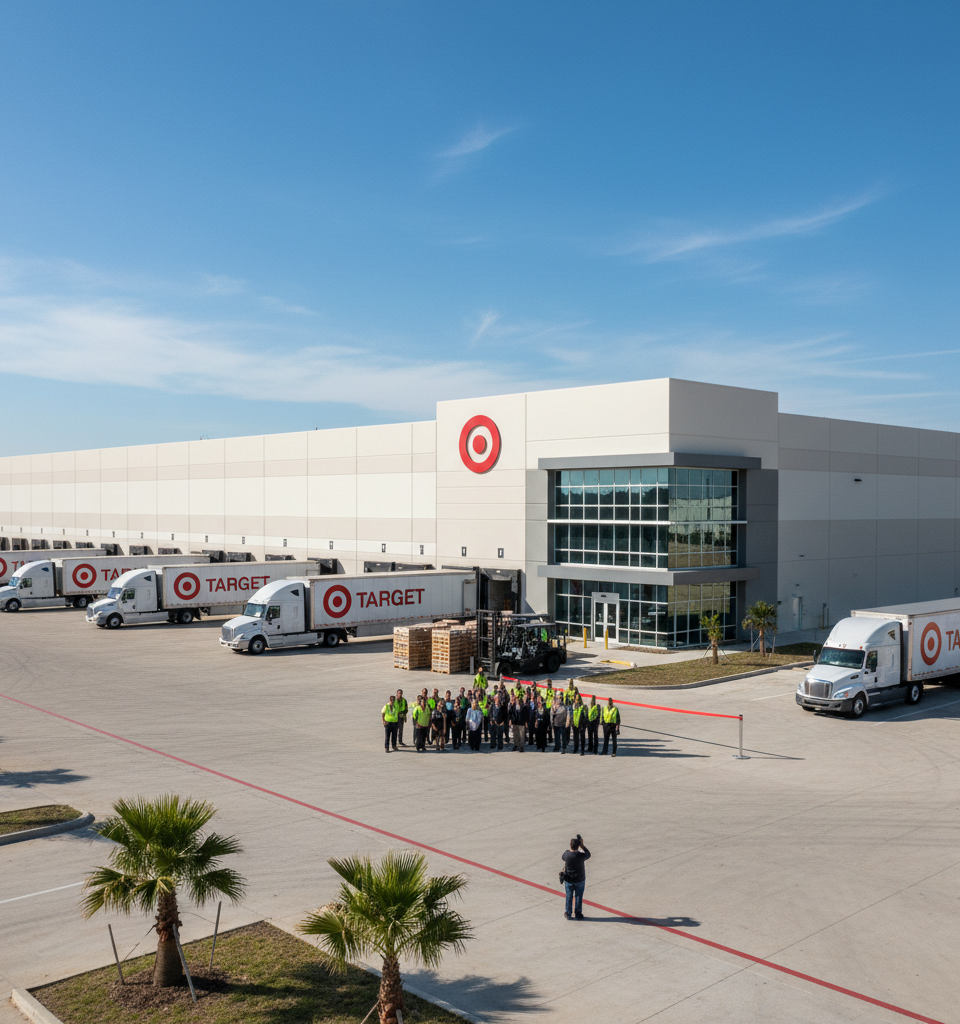
Target Corporation announced the grand opening of its Houston Receive Center (HRC), a new breed of supply chain facility aimed at optimizing inventory management and accelerating product distribution. Located in Houston, Texas, the 360,000-square-foot center began operations this month, serving as a critical intermediary point to process and temporarily store inbound merchandise before dispatching it to various downstream locations, including regional distribution centers, sortation centers, and directly to stores.
Context and Strategic Imperative
This initiative comes as retailers globally continue to grapple with the complexities of modern supply chains, exacerbated by recent disruptions and evolving consumer expectations for speed and availability. Target's investment in the HRC underscores its commitment to supply chain resilience and efficiency. Traditional retail supply chains often rely on a direct flow from vendor to distribution center, or in some cases, directly to stores. The HRC introduces an additional, strategic node designed to de-risk inventory flow, absorb fluctuations in product intake, and provide greater flexibility in upstream logistics. This model is particularly relevant for high-volume retailers like Target, which manage millions of SKUs and require seamless movement of goods to maintain customer satisfaction and competitive pricing.
Key Operational Details and Benefits
The Houston Receive Center is specifically engineered to augment Target's overall inventory-holding capacity. By creating an intelligent buffer, the HRC allows for more efficient consolidation of goods from various suppliers before onward movement. This reduces congestion at traditional distribution centers and optimizes freight movements, potentially leading to significant cost savings in transportation and labor. Initial estimates suggest the HRC will process a substantial volume of goods weekly, though specific figures were not immediately disclosed. The facility incorporates advanced logistics technologies, including automated sorting and tracking systems, to minimize handling times and maximize throughput. This strategic placement in a major transportation hub like Houston further leverages existing infrastructure for efficient inbound and outbound logistics.
Industry and Market Impact
The introduction of receive centers by a retail giant like Target could signal a broader trend in supply chain architecture. As e-commerce continues to grow and consumer demand for rapid fulfillment intensifies, retailers are pressured to innovate beyond conventional distribution models. The HRC model offers a blueprint for how large-scale retailers can manage inventory more dynamically, reducing stockouts and improving in-stock rates, which are crucial metrics in today's competitive retail landscape. This approach also allows for greater agility in responding to demand shifts or unexpected logistical bottlenecks, providing a competitive edge in a volatile market. Other major retailers may observe Target's success with this model and consider similar investments in their own networks.
Expert Perspectives
Supply chain analysts view Target's HRC as a prudent and forward-thinking investment. Dr. Emily Carter, a logistics expert at Retail Insights Group, commented, "Target is proactively addressing the challenges of inventory fluidity and supply chain resilience. The receive center concept creates a crucial pressure-release valve, allowing for better management of upstream variability and ensuring a more consistent flow downstream. This kind of strategic buffer is becoming indispensable for retailers navigating global supply chain complexities." She added that such facilities could lead to a measurable improvement in inventory turnover and reduction in carrying costs over the long term, ultimately benefiting the company's bottom line and shareholder value.
Future Implications and Expansion Potential
The Houston Receive Center is the first of its kind for Target, but the company has indicated that this model could be replicated in other key markets should it prove successful. This initial rollout marks a significant test case for a new component of Target's expansive supply chain network. Future developments could include the integration of artificial intelligence and machine learning to optimize inventory placement and flow within these receive centers, further enhancing efficiency. The success of the Houston facility will likely inform Target's decision-making on future capital expenditures in supply chain infrastructure, potentially leading to a nationwide network of such centers to support its growing omnichannel operations and ambitious growth targets.