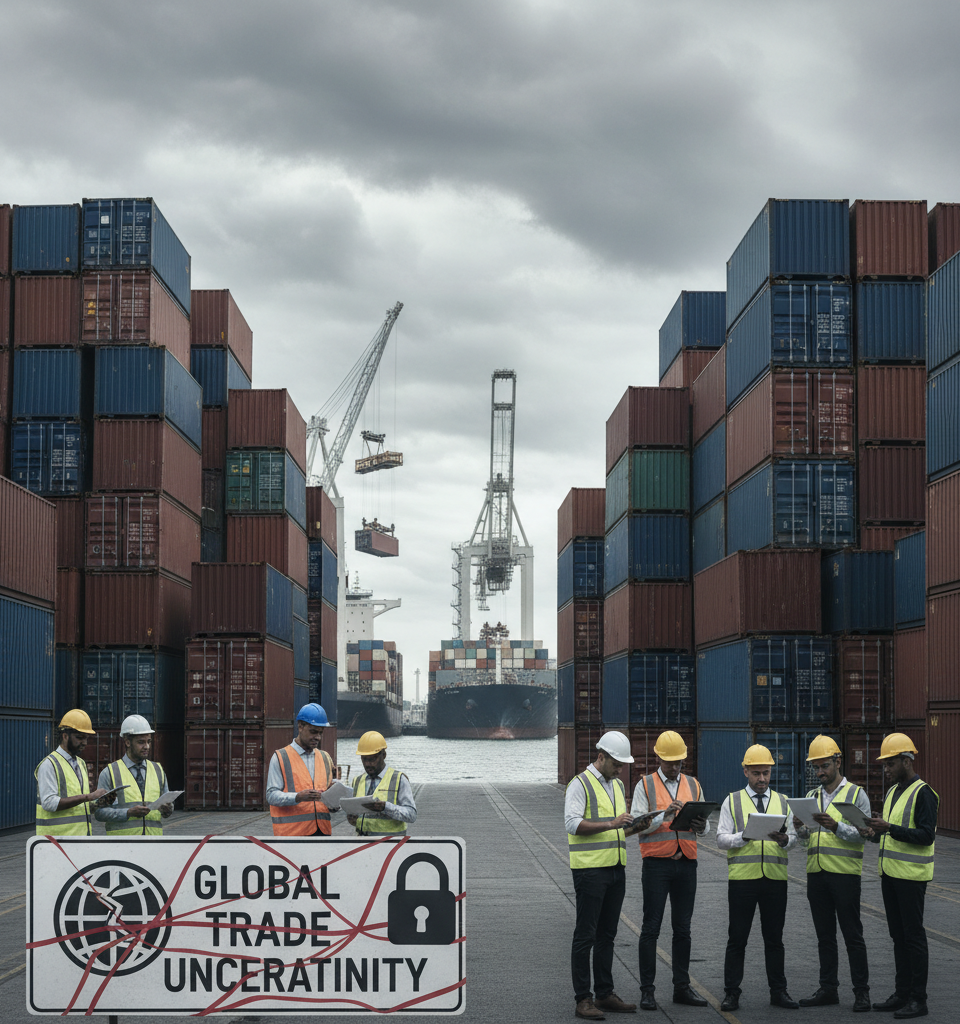
WASHINGTON D.C. — The repercussions of the previous administration's aggressive tariff policies continue to reverberate across global supply chains, presenting significant ongoing challenges for third-party logistics (3PL) providers and their clients. Despite the shift in presidential leadership, the frequently changing and substantial duties imposed on U.S. imports under the Trump administration have cemented a new era of trade volatility, forcing companies to continuously recalibrate strategies and absorb escalating costs. This persistent uncertainty, first ignited between 2018 and 2020, manifests today in unpredictable shipping routes, fluctuating material costs, and a heightened demand for flexible logistics solutions. The genesis of this sustained disruption dates back to the implementation of Section 232 and Section 301 tariffs, primarily targeting steel, aluminum, and a vast array of Chinese-made goods. These measures were designed to protect domestic industries and pressure foreign governments into fairer trade practices. However, their immediate effect was a dramatic realignment of established trade lanes, with companies scrambling to find alternative sourcing countries or absorbing the increased import costs. This period marked a fundamental shift from a relatively predictable global trade environment to one characterized by sudden policy changes and a constant need for contingency planning, a paradigm that logistics firms are still contending with. Key industry players and logistics reports consistently highlight the tariff impact. A recent survey by the Council of Supply Chain Management Professionals (CSCMP) indicated that over 60% of surveyed 3PLs reported tariffs as a significant driver of supply chain complexity in the last fiscal year. Major shipping lines have also documented this, with one executive from Maersk noting a 15-20% increase in lead times for certain product categories as clients diversify their manufacturing footprints away from traditionally affected regions. Furthermore, the American Association of Exporters and Importers (AAEI) estimated that U.S. businesses paid billions in additional duties, much of which was ultimately passed on to consumers or absorbed by businesses, impacting profitability. The broader economic landscape has felt these tremors acutely. Industries heavily reliant on imported components, such as electronics, automotive, and textiles, have seen their margins squeezed and production schedules altered. This has trickled down to demand for warehouse space in emerging trade hubs, changes in trucking routes as goods enter alternative ports, and increased investment in supply chain visibility technology to mitigate risks. The tariffs have also accelerated a trend towards regionalization of supply chains, as companies seek to reduce exposure to geopolitical swings and lengthy, vulnerable oceanic routes. Industry analysts widely concur that the tariff legacy has fundamentally altered strategic planning for both shippers and 3PLs. "The days of optimizing for cost alone are largely over," states Dr. Eleanor Vance, a trade economist at the University of Pennsylvania. "Companies now prioritize resilience and agility, even if it means higher operational expenses. 3PLs that can offer diversified networks, robust risk management, and cutting-edge technology are the ones winning business in this new environment." This expert consensus underlines a pivot from pure efficiency models to those emphasizing robustness against external shocks. Looking ahead, the future of tariffs remains a complex challenge. While the current administration has maintained many of the previous tariffs, citing strategic and national security concerns, there are ongoing discussions of targeted adjustments or potential bilateral agreements. This means that 3PLs and their clients cannot expect an immediate return to pre-tariff stability. Instead, they must continue to invest in dynamic forecasting models, embrace multi-sourcing strategies, and leverage advanced data analytics to anticipate and react to evolving trade policies. The landscape demands continuous adaptation, indicating that supply chain agility will remain a paramount competitive advantage for the foreseeable future. New legislation or renegotiated trade deals could introduce fresh hurdles or opportunities. For instance, discussions around the Indo-Pacific Economic Framework (IPEF) or potential shifts in U.S.-China trade relations could reshape tariff schedules once more. This necessitates 3PLs to maintain strong legislative monitoring capabilities and deep regional expertise to advise clients effectively. The long-term trend, however, suggests a shift towards a more fragmented and politically influenced global trade system, making expert logistics navigation indispensable. Ultimately, the enduring impact of tariff-driven volatility serves as a stark reminder that trade policy is a powerful and persistent force shaping global commerce. 3PLs, operating at the nexus of production and consumption, will continue to play a critical role in helping businesses navigate this intricate and unpredictable environment, transforming challenges into opportunities for those agile enough to adapt.
Tariff Turmoil Persists: 3PLs Grapple with Enduring Uncertainty in Global Trade
Key Takeaways
Read this first — then go as deep as you need.
Discussion
Loading comments...
Enjoying this article?
Get more like it delivered to your inbox — free.
This article was compiled by GlobalSell News from publicly available reporting and has been edited for clarity and length. For full details, read the original source.