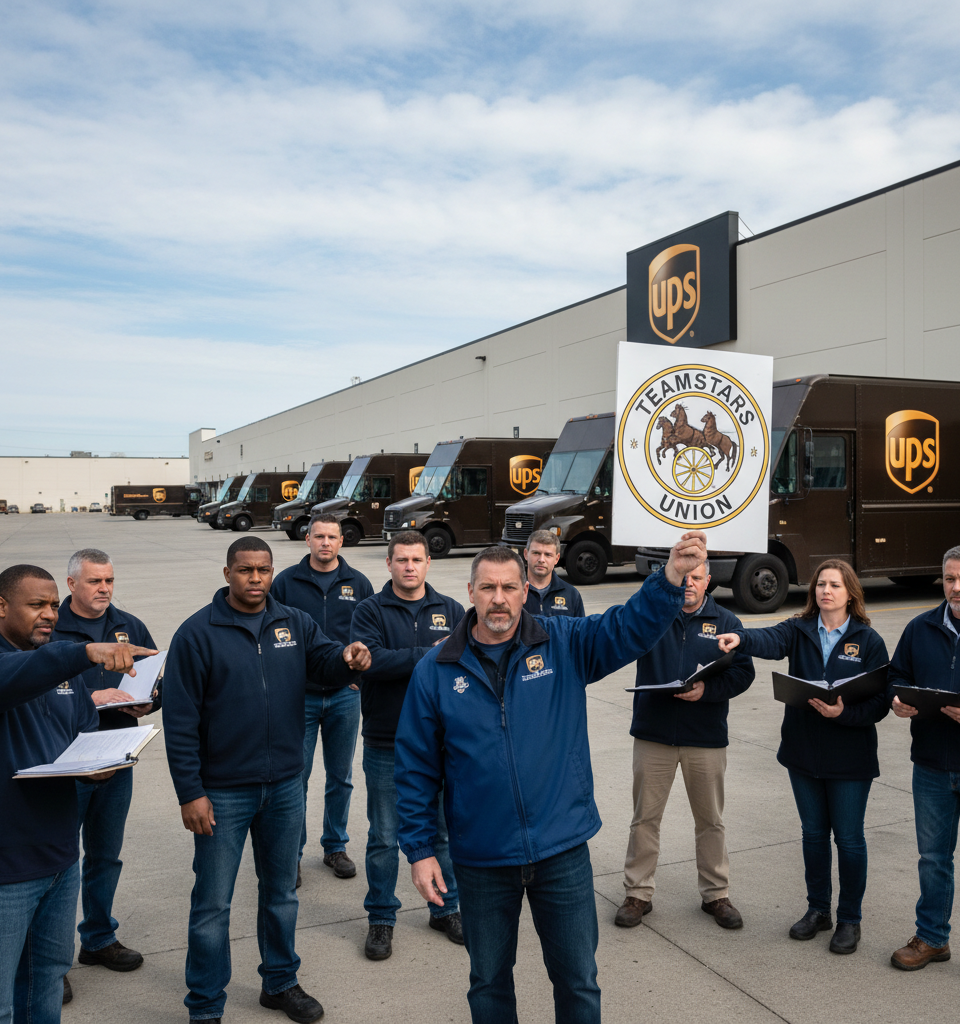
The International Brotherhood of Teamsters is poised to escalate its dispute with United Parcel Service (UPS), as the powerful union prepares to file a series of grievances alleging the company is deliberately diverting package delivery work to its subsidiary, Roadie. This strategic maneuver by UPS, according to the Teamsters, involves utilizing Roadie's network of less-expensive, non-union gig drivers, circumventing the robust union workforce that forms the backbone of UPS's traditional delivery operations. The impending grievances signal a significant challenge to UPS's operational strategies and could reignite labor tensions between the two entities.
The core of the Teamsters' objection lies in the perceived circumvention of their collective bargaining agreement. The union represents approximately 340,000 UPS workers, including drivers, package handlers, and other operational staff, whose wages, benefits, and working conditions are meticulously defined in their contract. The alleged shift of delivery volume to Roadie – a crowdsourced delivery platform acquired by UPS in 2021 – raises concerns that union jobs and the integrity of the collective bargaining agreement are being undermined. This development underscores the ongoing tension between traditional unionized labor models and the burgeoning gig economy, which often operates with different employment classifications and lower labor costs.
Historical Context and Rising Tensions
This impending conflict is set against a backdrop of historically contentious but ultimately productive negotiations between the Teamsters and UPS. The most recent contract, ratified in August 2023 after intense negotiations that nearly led to a strike, included significant wage increases, improved working conditions, and commitments regarding part-time employment. A key element of that agreement was a focus on protecting union jobs and ensuring that new technologies or operational shifts would not erode the union's standing. The Teamsters' current stance suggests they view the alleged use of Roadie as a direct challenge to the spirit and letter of that hard-won agreement.
Roadie, which operates on a model similar to other gig-economy platforms, allows individuals to sign up as independent contractors to deliver packages. While this offers flexibility and cost efficiencies for UPS, particularly for last-mile and same-day deliveries, the Teamsters argue that these are jobs that should rightfully be performed by their union members under the terms of their established contract. The union's leadership has consistently voiced concerns about the erosion of good-paying, full-time union jobs by non-union, often lower-wage, gig-based labor.
Potential Industry-Wide Implications
The outcome of these grievances could have far-reaching implications beyond just UPS and the Teamsters. It could set a precedent for how traditional unions engage with and challenge the expansion of the gig economy within established industries. Other major logistics and delivery companies often grapple with similar pressures to optimize costs and leverage new delivery models. A decisive win for the Teamsters could embolden other unions to pursue similar actions, potentially slowing the integration of gig-based services into core operations where unionized labor traditionally dominates. Conversely, if UPS successfully defends its use of Roadie, it could signal a new pathway for companies to incorporate flexible, non-union labor without direct union interference.
Market analysts will be closely watching the filings and subsequent proceedings. A protracted dispute could introduce uncertainty into UPS's operational efficiency and labor relations, potentially impacting its stock performance and long-term strategic planning. Investors typically favor labor stability, and any significant disruption or prolonged legal battle could be viewed negatively. The logistics sector, already navigating complex supply chain dynamics and evolving consumer demands, does not typically welcome additional labor instability.
The Path Forward: Grievances and Resolution
The Teamsters' initial step will be to formally file grievances, which will then trigger a contractual dispute resolution process. This process typically involves multiple stages, from local discussions to national-level negotiations and potentially arbitration. The union's objective will be to demonstrate that UPS is in breach of their collective bargaining agreement by improperly utilizing Roadie for work that falls under the union's jurisdiction. They will likely seek remedies that could include requiring UPS to cease the alleged practice, compensating union members for lost work, or incorporating Roadie drivers under the union contract.
UPS, for its part, is expected to argue that its use of Roadie falls outside the scope of the collective bargaining agreement, perhaps categorizing the subsidiary's operations as distinct or supplementary services not intended to replace traditional unionized deliveries. The company will likely emphasize the strategic benefits of Roadie in meeting specific customer demands and optimizing its broader delivery network. The legal and contractual interpretations will be critical, as both sides prepare for what could be a significant and defining battle over the future of labor in the logistics industry.