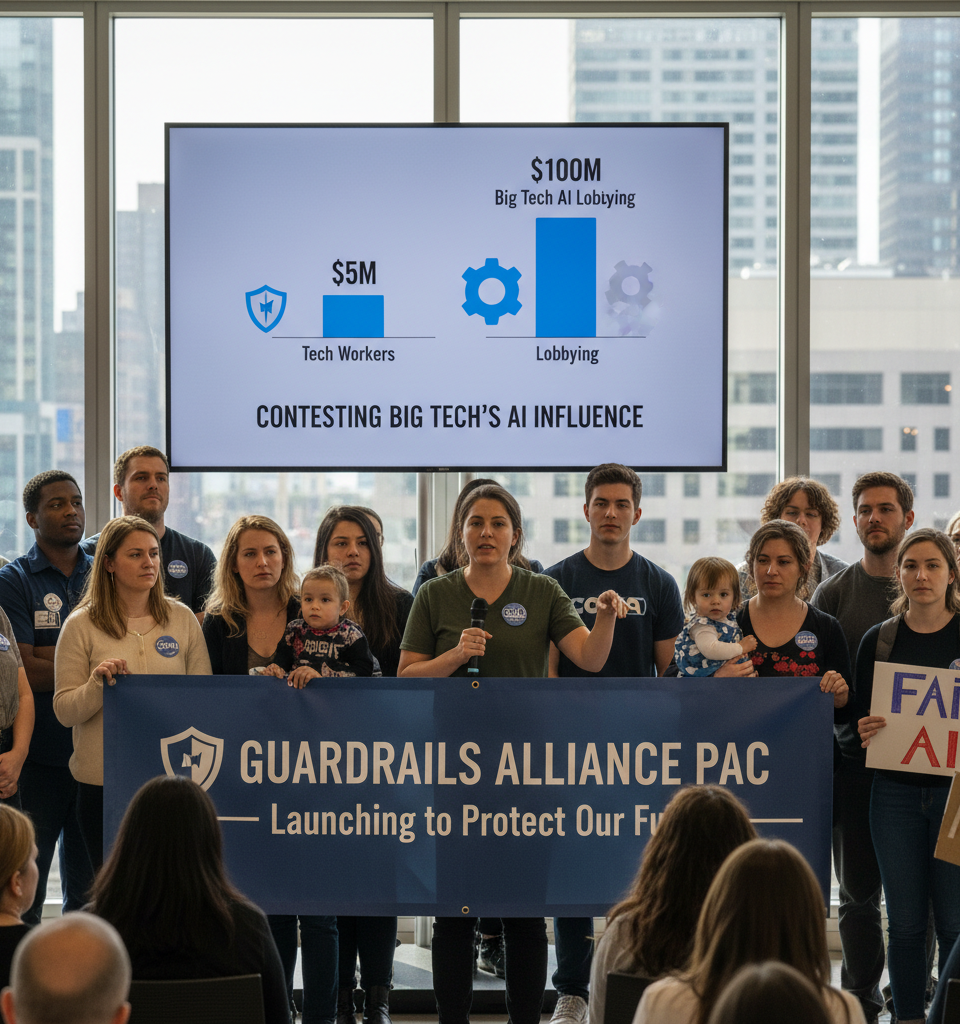
A new political action committee (PAC) is emerging to counter Big Tech's formidable lobbying efforts concerning artificial intelligence regulation. The Guardrails Alliance, a Super PAC advocating for robust AI oversight, officially launched on Thursday with an initial funding of $5 million. This unprecedented move is backed by an unusual coalition of tech employees, labor unions, and parents, signaling a growing divergence within and outside the tech industry regarding the future of AI governance. Democratic operatives Shaunna are noted as key figures behind this initiative.
The AI Regulatory Battleground
The formation of the Guardrails Alliance comes at a critical juncture as the debate over artificial intelligence regulation intensifies. Large technology companies are reportedly preparing to spend in excess of $100 million this election cycle to back political candidates who favor a hands-off approach to AI development and deployment. This substantial financial commitment underscores Big Tech's desire to minimize regulatory burdens, which they argue could stifle innovation. Conversely, proponents of regulation, including the Guardrails Alliance, contend that without proper safeguards, AI could pose significant societal risks, ranging from job displacement and algorithmic bias to national security concerns.
A Counter-Narrative Emerges
The $5 million raised by the Guardrails Alliance, while a fraction of Big Tech's anticipated spending, represents a significant grassroots effort to influence the political landscape. By uniting tech workers—many of whom are intimately familiar with the technology's capabilities and potential pitfalls—with organized labor and parent groups, the PAC aims to articulate a counter-narrative focusing on worker protections, ethical AI development, and the long-term well-being of future generations. This diverse funding base suggests a broad-based concern over the unfettered expansion of AI.
Impact on the Political Landscape
The emergence of the Guardrails Alliance could significantly shift the dynamics of political campaigning around technology policy. Historically, Big Tech has wielded considerable influence through direct lobbying and campaign contributions. The new PAC, however, introduces a more organized and vocal opposition from within the tech ecosystem itself, potentially empowering politicians who are willing to push for stricter AI regulations. This could lead to more nuanced discussions and potentially more rigorous legislative proposals than might otherwise be expected in an environment dominated by industry lobbying.
Future Implications for AI Policy
Looking ahead, the presence of the Guardrails Alliance is expected to inject new energy into the AI policy debate leading up to upcoming elections. Their efforts will likely focus on educating voters and endorsing candidates who commit to developing comprehensive regulatory frameworks for AI. This includes advocating for policies that address transparency in AI algorithms, accountability for AI-driven decisions, and support for workers impacted by AI automation. The battle for shaping AI's future will undoubtedly intensify, with both well-funded industry giants and newly mobilized advocacy groups vying for legislative influence. The trajectory of AI development and its societal integration hinges significantly on the outcome of these ongoing political contests.