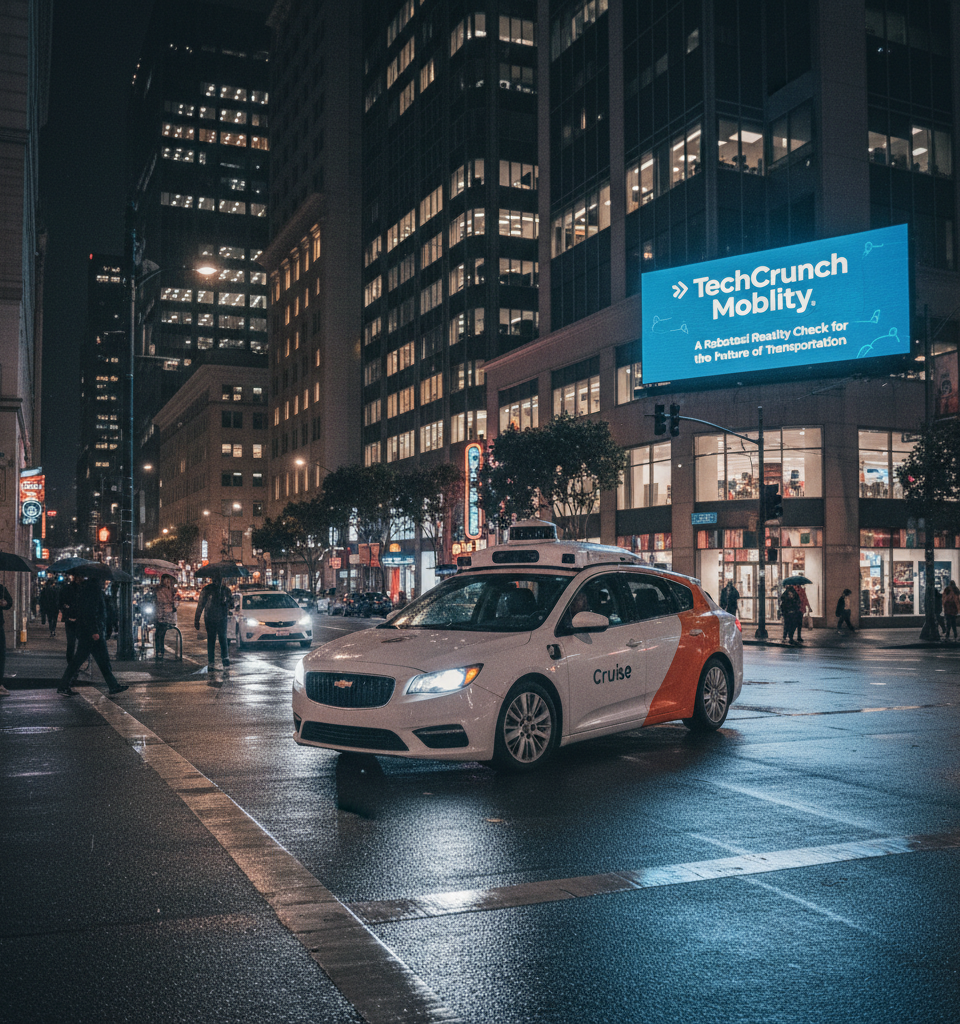
Welcome back to TechCrunch Mobility, the definitive source for news and analytical perspectives on the future of transportation. This week, our focus meticulously dissects the burgeoning robotaxi sector, providing a much-needed "reality check" on the promises and challenges inherent in autonomous vehicle deployment. As the industry advances, understanding the nuanced progress and persistent hurdles in robotaxi development becomes paramount for investors, innovators, and consumers alike.
The advent of autonomous vehicles, particularly in the ride-hailing sector, has long been touted as a transformative force for urban mobility and logistics. For years, headlines have been replete with projections of fully self-driving cars revolutionizing daily commutes and freight operations. However, the operational complexities, regulatory labyrinths, and technological refinements required for widespread adoption have proven more formidable than initially anticipated. This ongoing analysis from TechCrunch Mobility serves to contextualize these developments, tracing the journey from ambitious concepts to the current state of constrained, albeit expanding, real-world deployment.
Key Industry Dynamics
The robotaxi industry is characterized by intense competition among well-capitalized tech giants and nimble startups, each vying for a dominant position. While specific figures were not provided in this week's update, anecdotal evidence and industry reports consistently highlight significant investment in research and development, along with pilot programs in select urban environments. These programs often face scrutiny regarding safety protocols, operational efficiency, and the public's perception of autonomous technology. The core challenge remains scaling these limited deployments into economically viable, city-wide, or even regional services.
Market Impact and Challenges
The implications of successful robotaxi integration extend far beyond mere transportation convenience. They encompass potential shifts in urban planning, employment in the traditional taxi and ride-hailing sectors, and even environmental sustainability. However, the path to this future is fraught with obstacles. Regulatory frameworks often lag behind technological advancements, creating a patchwork of varying rules across jurisdictions. Furthermore, the technical challenges of navigating unpredictable urban environments, inclement weather conditions, and complex human behaviors continue to demand sophisticated engineering solutions and rigorous testing. The "reality check" underscores that while progress is undeniable, a truly ubiquitous robotaxi future requires overcoming these considerable hurdles.
Expert Perspectives
Industry analysts and transportation experts have consistently offered a mixed bag of optimism and caution regarding robotaxi timelines. While the long-term vision of fully autonomous fleets remains compelling, many now advocate for a more pragmatic, phased approach to development and deployment. This often involves geofenced operations, safety drivers in early stages, and gradual expansion as technology matures and public trust builds. The experts emphasize the importance of data-driven safety validation and transparent communication with regulators and the public to foster acceptance and facilitate scalable growth.
The Road Ahead
The immediate future of robotaxis will likely involve continued expansion in a controlled, iterative manner. Companies are expected to refine their autonomous driving systems, collect more operational data, and collaborate closely with municipal authorities to address regulatory concerns. Incremental advancements in sensor technology, AI algorithms, and mapping capabilities will be critical catalysts for broader deployment. The focus will remain on proving the reliability and safety of these systems in increasingly complex scenarios, paving the way for a more substantial presence in urban transit ecosystems. The journey to a fully autonomous mobility future is an ongoing marathon, not a sprint, and TechCrunch Mobility will continue to track its every significant stride.