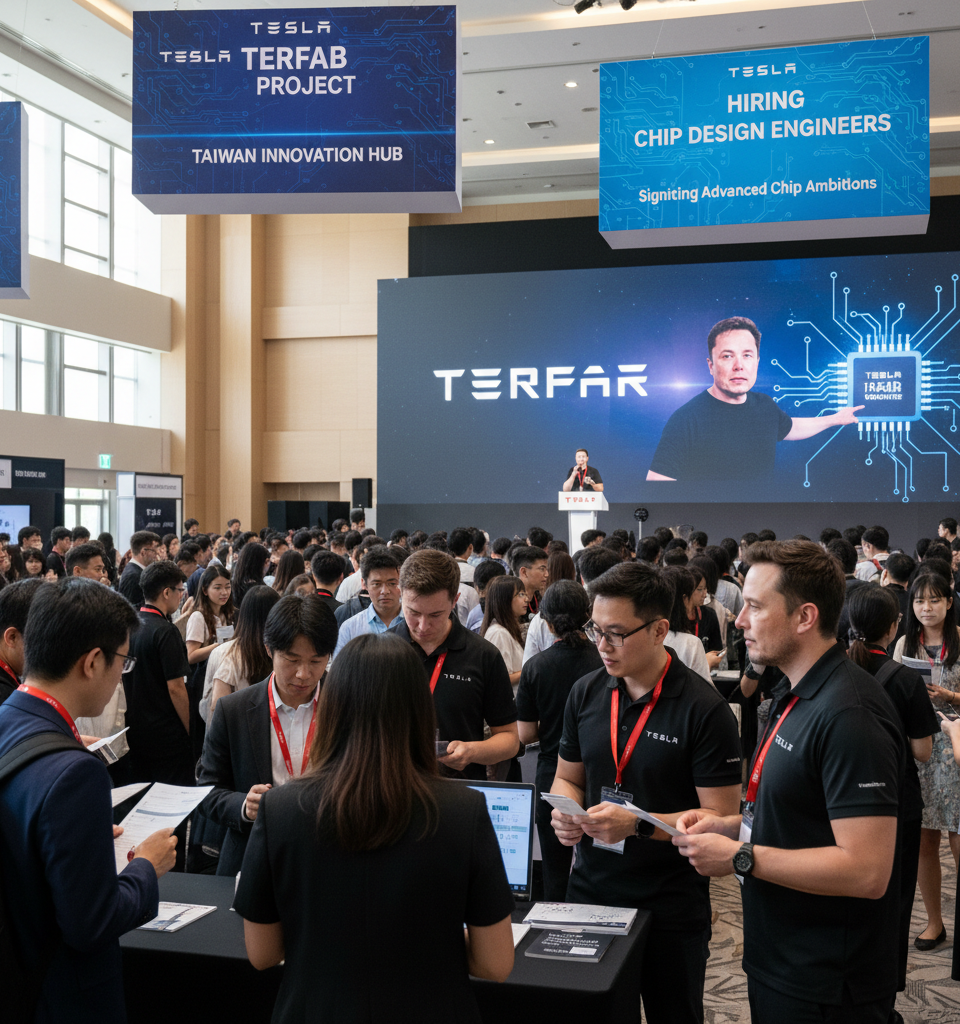
Taipei, Taiwan – Tesla, the electric vehicle and clean energy behemoth, has significantly escalated its recruitment efforts for chip design engineers in Taiwan, a clear indication of its accelerated focus on the groundbreaking 'Terafab' project. The company's targeted talent acquisition within Taiwan's semiconductor heartland highlights a strategic pivot towards greater vertical integration and in-house development of advanced microchips, crucial for its burgeoning AI, autonomous driving, and robotics initiatives. This concerted drive, which began to attract close attention in late 2023 and has intensified into early 2024, positions Tesla to tap directly into the island nation's deep reservoir of chip design and manufacturing proficiency.
This aggressive push for Taiwanese engineering talent is not merely about expanding headcount; it represents a foundational shift in Tesla's operational strategy. Historically, Tesla has sourced chips from external suppliers, but the 'Terafab' project, rumored to be a highly automated, hyper-efficient manufacturing system for a range of components, including advanced semiconductors, aims to bring critical production capabilities in-house. This move is emblematic of broader industry trends, where tech giants are increasingly seeking to exert greater control over their supply chains, particularly for high-value components like chips, to mitigate risks, optimize performance, and protect proprietary technologies.
Key to this recruitment drive are roles ranging from ASIC design engineers to verification specialists, particularly those with expertise in cutting-edge process nodes and AI-specific hardware acceleration. While specific salary figures were not publicly disclosed by Tesla, industry sources suggest packages are highly competitive, designed to attract top-tier talent from Taiwan's established tech giants like TSMC, MediaTek, and Realtek. Tesla's job postings on platforms like LinkedIn and local Taiwanese job boards explicitly mention the 'Terafab' initiative, signaling the high-priority nature of these positions and their direct contribution to the company's future technological backbone.
The impact of Tesla's intensified recruitment in Taiwan ripples across the global semiconductor and automotive industries. For Taiwan, it reinforces its undisputed status as the epicenter of advanced chip technology, attracting foreign direct investment and further solidifying its economic importance. For the automotive sector, Tesla's continued vertical integration pressures traditional automakers to reconsider their own chip strategies, potentially spurring more in-house development or closer partnerships with semiconductor firms. This trend could accelerate the automotive industry's digital transformation, leading to more sophisticated in-car systems and faster innovation cycles.
Industry analysts view Tesla's 'Terafab' push as a shrewd move to secure a competitive edge in a rapidly evolving technological landscape. Dr. Ming-Chi Kuo, a prominent analyst known for his insights into the tech supply chain, commented, "Tesla's direct engagement with Taiwan's chip talent pool is a strategic masterstroke. It ensures not only access to the best engineering minds but also closer collaboration with the manufacturing ecosystem, potentially shaving years off development cycles for their next-generation AI and autonomous platforms." Others highlight the geopolitical implications, noting that diversifying and strengthening internal chip capabilities reduces reliance on a volatile global supply chain.
Looking ahead, the success of Tesla's 'Terafab' project, underpinned by this Taiwanese recruitment, could redefine manufacturing paradigms. Should Tesla successfully implement its vision for highly automated, vertically integrated chip production, it could set a new standard for efficiency and innovation in hardware development. Future implications include potentially faster iteration cycles for new vehicle models, more robust AI capabilities, and a significant reduction in manufacturing costs. The coming months are expected to reveal more details about the scale and scope of the 'Terafab' facilities, as Tesla continues to assemble the specialized teams required to bring this ambitious vision to fruition, with Taiwan playing an increasingly pivotal role in its global strategy.