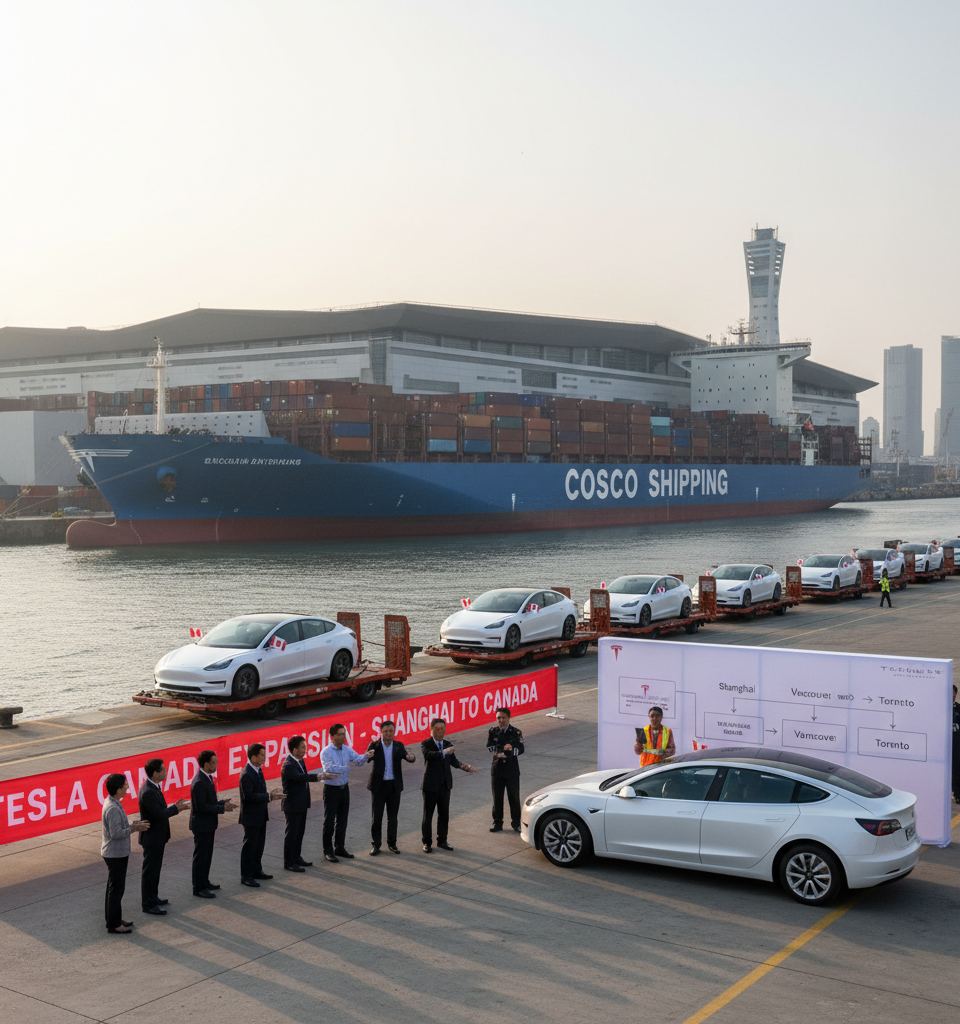
Tesla has initiated the sale of its Chinese-manufactured Model 3 sedans in Canada, marking a significant strategic shift designed to navigate the complex landscape of international trade tariffs. The introduction of the Giga Shanghai-produced Model 3 Premium RWD at an aggressive starting price of C$39,490 (approximately US$29,000) represents the lowest price point for the Model 3 ever offered in the Canadian market. This development, which emerged recently, allows Tesla to bypass the substantial import tariffs that have affected its cross-border operations between the U.S. and China.
Contextual Shift in Global Trade
This decision by Tesla underscores a broader trend of companies adapting their global supply chains in response to escalating trade tensions and tariff regimes. For several years, both the United States and China have imposed significant tariffs on various imported goods, including automobiles, impacting manufacturers like Tesla, which operates production facilities in both nations. Previously, the most affordable Model 3 available in Canada, just two months prior, was the Long Range AWD variant, manufactured at Tesla's U.S. facilities, which carried a considerably higher price tag. The strategic pivot to import from Giga Shanghai directly into Canada effectively reconfigures Tesla's North American distribution model, circumventing the U.S.-imposed tariffs that would apply if these vehicles were first routed through the U.S.
Market Repositioning and Pricing Strategy
The C$39,490 price point for the Chinese-made Model 3 Premium RWD is particularly notable. This pricing strategy not only makes the Model 3 more accessible to a wider segment of Canadian consumers but also positions it competitively against other electric vehicles and even some internal combustion engine (ICE) vehicles in the market. The move is expected to stimulate demand for Tesla in Canada, a market that has shown increasing appetite for electric vehicles, fueled by government incentives and a growing environmental consciousness. The Model 3's new price point could also qualify it for various provincial and federal EV rebates, further enhancing its affordability.
Broader Industry and Competitive Impact
Tesla's strategy is likely to send ripples through the broader automotive industry, particularly among EV manufacturers and traditional automakers with ambitious electric vehicle targets. Competitors like Hyundai, Kia, and General Motors, all vying for market share in the Canadian EV segment, will now face a more aggressively priced Tesla. This could force other manufacturers to re-evaluate their own pricing structures and production strategies, potentially leading to a more competitive and consumer-friendly EV market in Canada. The shift also highlights the increasing importance of global production hubs like Giga Shanghai, which are becoming critical in multinational corporations' efforts to optimize logistics and navigate protectionist trade policies.
Expert Analysis and Economic Implications
Industry analysts view Tesla's move as a pragmatic response to ongoing geopolitical and economic pressures. "This is a clever maneuver by Tesla to mitigate the financial impact of tariffs and capitalize on the robust production capabilities of their Shanghai factory," stated automotive sector analyst Dr. Eleanor Vance. "By directly supplying Canada from China, they're not only sidestepping U.S. tariffs but also potentially leveraging lower production costs from Giga Shanghai to achieve an unprecedented price point." Experts also suggest this strategy could further solidify Giga Shanghai's role as a primary export hub for Tesla, extending its reach beyond Asia and Europe to North American markets.
Future Implications and Supply Chain Dynamics
Looking ahead, this development could signal a long-term shift in Tesla's North American supply chain strategy. Should the U.S.-China trade relations remain strained, or even worsen, similar direct shipments from Giga Shanghai to other unaffected markets could become more prevalent. It also opens discussions about the resilience and adaptability of global manufacturing networks in an era of increasing trade protectionism. Tesla's ability to rapidly reorient its supply lines demonstrates a level of agility that could become a model for other global manufacturers facing similar tariff-related challenges. The long-term success of this strategy will depend on sustained demand in Canada and the continued cost-effectiveness of Giga Shanghai's operations and logistics.
Potential for Further Market Disruption
This aggressive pricing for the Model 3 could significantly disrupt the used EV market in Canada, as the cost of a new Model 3 approaches that of some used models. It might also accelerate the adoption of electric vehicles in Canada by lowering the entry barrier for many consumers who previously found Teslas to be out of reach. As other automakers ramp up their EV offerings, Tesla's move forces a new level of competition based on both innovation and pricing, ultimately benefiting Canadian consumers who are increasingly looking for affordable and sustainable transportation options.