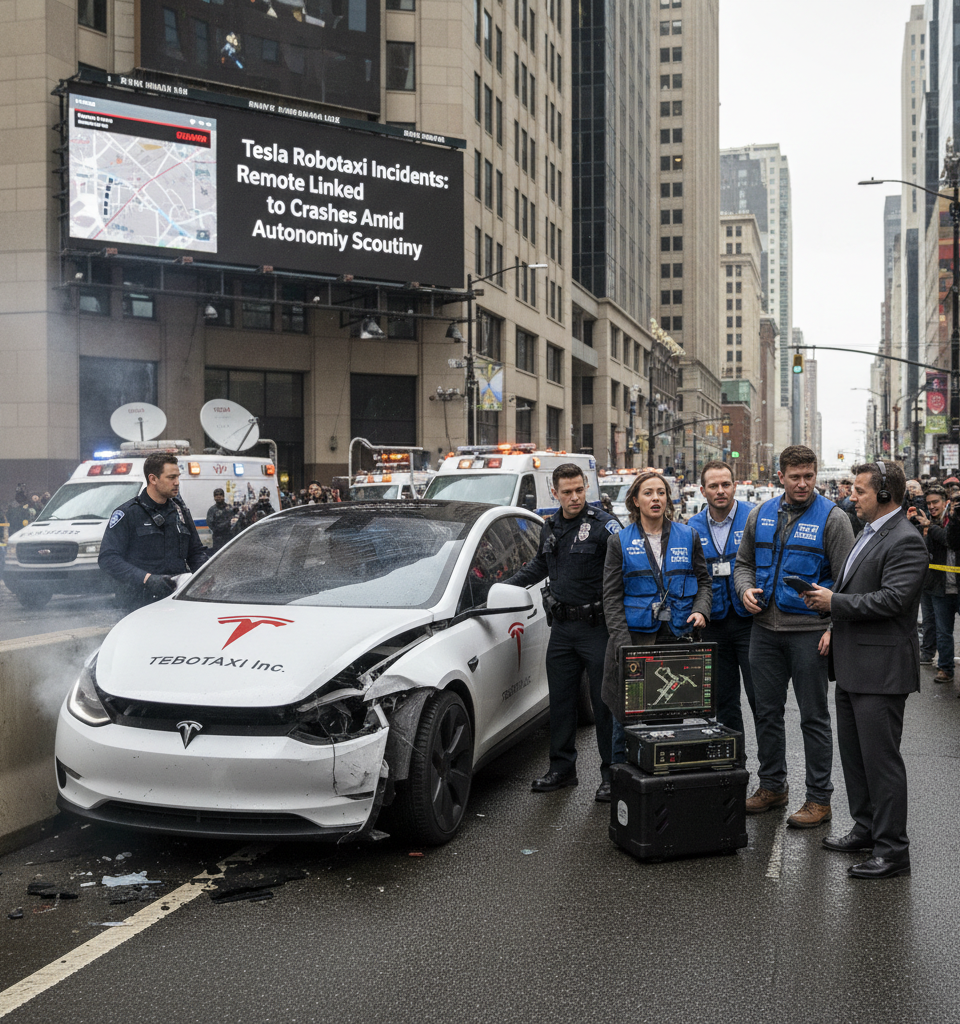
Tesla has shed new light on a pair of distinct robotaxi incidents, confirming that human remote operators, rather than the autonomous systems themselves, were responsible for minor collisions during tests. The incidents involved vehicles being driven (albeit slowly) into a metal fence and, separately, a construction barricade. These revelations, coming amid heightened public and regulatory attention on autonomous vehicle safety, underscore the complex interplay between advanced AI and human oversight in the nascent robotaxi sector.
Context and Industry Implications
The details emerge at a critical juncture for Tesla and the broader autonomous vehicle industry. While companies like Waymo and Cruise have faced their own challenges, Tesla's approach to self-driving, particularly its "Full Self-Driving" (FSD) beta software, has drawn significant scrutiny from lawmakers and safety advocates. The company’s long-standing promise of a fully autonomous robotaxi network remains largely unfulfilled, with these recent disclosures adding further complexity to public perception and investor confidence. The incidents, though minor in nature, highlight the persistent challenges in developing and deploying truly driverless technology, even with a human safety net in place.
Key Details and Company Response
According to Tesla's internal reports, the collisions occurred when remote operators—individuals monitoring and occasionally intervening in the vehicle's operation from a distant command center—were controlling the robotaxis. One incident involved a vehicle making contact with a metal fence, while another saw a slow-speed impact with a construction barricade. No injuries were reported in either event, and damage was described as minimal. These occurrences raise questions about the efficacy of remote operation as a safety buffer, especially when considering the potential for human error even in supervised environments. Tesla has historically maintained that its remote operators provide an essential layer of supervision, not just for safety but also for data collection and system improvement.
Broader Market Impact and Regulatory Scrutiny
These incidents inevitably contribute to the ongoing industry-wide debate about the safety and reliability of autonomous vehicles. Regulators, including the National Highway Traffic Safety Administration (NHTSA) in the U.S., have been increasingly vocal in their demands for transparency and accountability from AV developers. Competitors like Cruise have recently faced severe operational restrictions following more serious incidents, underscoring the delicate balance between innovation and public safety. Any negative news, even minor incidents, can have a ripple effect on market sentiment, potentially slowing down investment or leading to more stringent regulatory frameworks across the sector. Investors, already wary of the high development costs and long timelines for profitability in AVs, are likely watching these developments closely.
Expert Perspectives
Industry experts and analysts emphasize that while these incidents were caused by human remote operators and not the autonomous system itself, they still underscore the inherent challenges in achieving fully autonomous driving. Dr. Sarah Chen, an AI ethics researcher specializing in autonomous systems, noted, "Even with remote human intervention, the possibility of human error persists. This isn't just about the AI, but about the entire operational ecosystem designed to support it." Others point out that such incidents, though minor, can erode public trust, which is paramount for the widespread adoption of robotaxis. "Every fender bender involving an AV, regardless of the cause, becomes a headline that contributes to skepticism," commented automotive analyst Mark Thompson.
What's Next for Tesla and Robotaxis
Moving forward, Tesla is expected to continue its rigorous testing and development of its FSD software and robotaxi capabilities. The company has repeatedly stated its commitment to achieving full autonomy and plans to eventually launch a dedicated robotaxi service. However, these recent incidents will likely prompt an internal review of remote operator protocols and training, as well as a more cautious approach to public deployment. The industry as a whole will be under pressure to demonstrate quantifiable safety improvements, refine their human oversight mechanisms, and collaborate more effectively with regulators to build a robust and trustworthy autonomous transportation ecosystem. The timeline for true widespread robotaxi deployment remains uncertain, with safety and public acceptance being the primary determinants rather than technological capability alone.