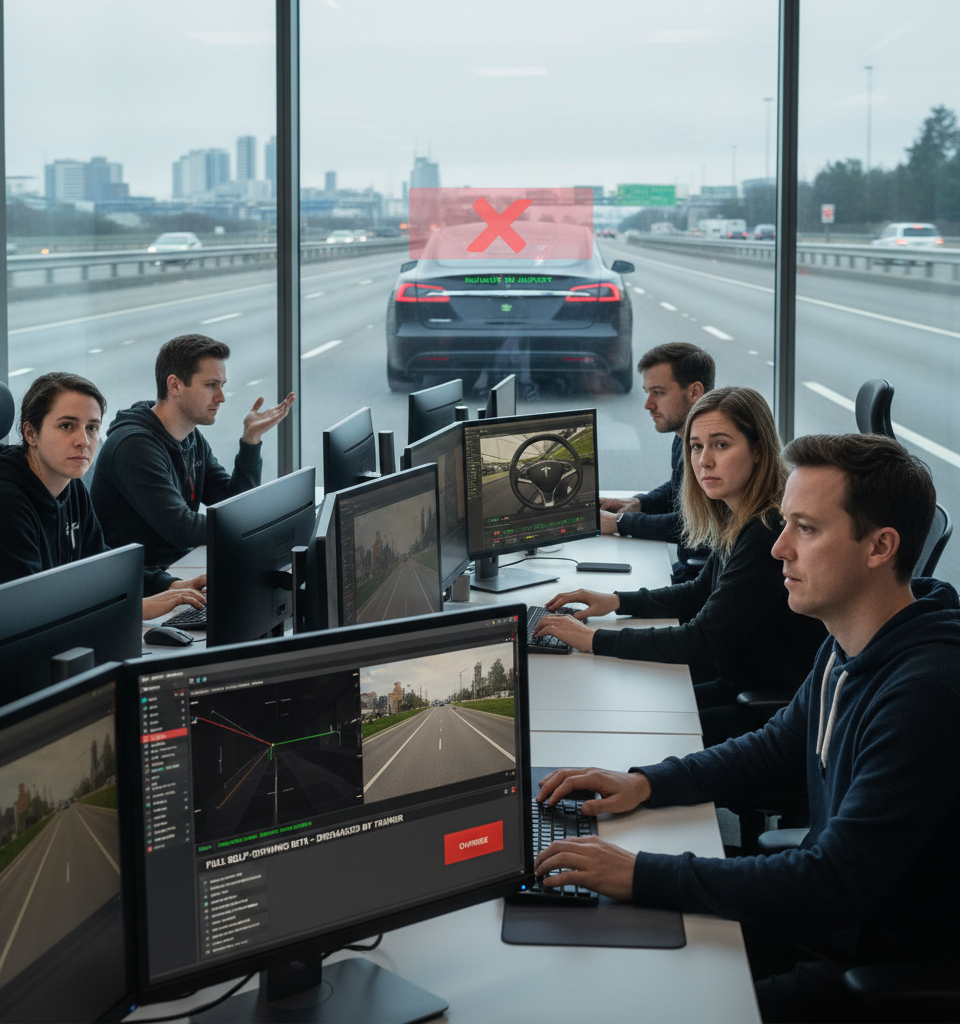
A significant majority of data specialists who were instrumental in training Tesla's Full Self-Driving (FSD) artificial intelligence have expressed profound apprehension about its current capabilities, with seven out of nine interviewed by Reuters stating they would not trust the system enough to ride in a vehicle utilizing it. This sentiment, revealed today, casts a shadow over the advanced driver-assistance system that Tesla aims to make ubiquitous and central to its future robotaxi ambitions.
The revelations from these former employees, including a former self-driving engineer, underscore a critical disconnect between the public perception of FSD and the intimate understanding of those who worked directly on its development. Their reluctance spotlights potential underlying issues with the system's current state, raising questions about its readiness for widespread deployment, particularly in a commercial robotaxi service.
Deep-Seated Distrust Among Developers
The Reuters investigation details interviews with nine former Tesla data labelers, the individuals responsible for categorizing and annotating vast amounts of real-world driving data used to refine FSD's algorithms. Seven of these nine specialists explicitly stated their unwillingness to ride in a Tesla operating under FSD. The level of distrust was further illuminated by one former labeler, who emphatically declared they would not ride in a Tesla robotaxi "if you f**king paid me." This stark rejection from those with firsthand knowledge of the training data and FSD's development process presents a significant challenge to Tesla's narrative of rapidly advancing autonomous capabilities.
The Role of Data Labelers
Data labelers are the unsung heroes of AI development, meticulously tagging objects, identifying driving scenarios, and marking potential hazards in collected video footage. Their work directly informs the AI's understanding of the world, making their skepticism particularly noteworthy. Their concerns likely stem from observing firsthand the system's limitations, errors, and the complexities of real-world driving that the AI still struggles to accurately interpret and respond to. The sentiment expressed by these former employees suggests that despite extensive training, the robustness and reliability required for true autonomy may still be elusive.
Broader Implications for Autonomous Driving
This sentiment from those closest to the FSD development process carries substantial implications not only for Tesla but for the entire autonomous vehicle industry. Public trust is paramount for the widespread adoption of self-driving technology. If even the individuals who spent countless hours refining these systems harbor such deep reservations, it could exacerbate existing public skepticism regarding the safety of autonomous vehicles. Regulators, who are already grappling with how to oversee and certify self-driving technologies, may view these internal doubts as further justification for cautious and stringent oversight.
Challenges to Tesla's Robotaxi Vision
Tesla’s long-term strategy heavily relies on the deployment of a vast network of autonomous robotaxis. The pronounced unwillingness of former AI trainers to ride in such a service directly challenges the viability and safety claims of this future vision. For a robotaxi service to succeed, it must inspire absolute confidence, not just among early adopters, but across the general public. The current findings suggest that, from an insider's perspective, FSD may not yet meet the fundamental safety thresholds necessary for such a service's ethical and successful launch.
The Path Forward
The insights from these former employees highlight the immense complexities involved in achieving truly autonomous driving. While Tesla continues to push updates and advancements to its FSD system, these testimonials suggest that significant hurdles remain in ensuring the reliability and safety that would instill confidence even in its former developers. The company will likely need to address these internal doubts, either through substantial technological breakthroughs or by more transparently acknowledging the system's current limitations, to rebuild trust among those who know the technology best and, by extension, the broader public.
The journey towards fully autonomous vehicles, particularly those operating without human supervision, appears to be a more protracted and challenging endeavor than often portrayed. This report serves as a critical indicator of the ongoing struggle and the high stakes involved in autonomous vehicle development.