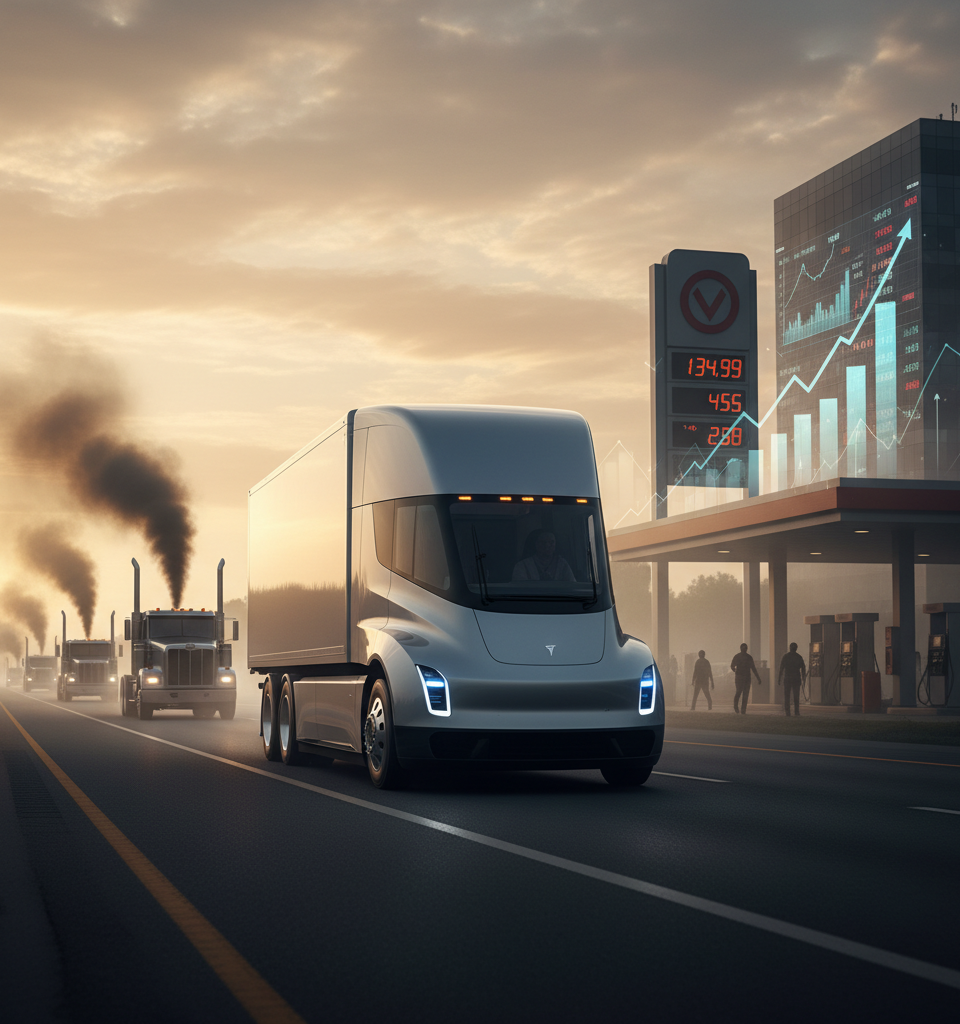
Global supply chains and cross-border logistics could see significant cost reductions if electric heavy-duty transport becomes viable at scale. This shift would directly impact the operational expenses for businesses moving goods internationally, offering a potential hedge against volatile fuel markets.
Tesla is poised to significantly ramp up production and deployment of its long-anticipated Semi electric truck. This strategic move could revolutionize the trucking industry, allowing the electric vehicle (EV) giant to capitalize on persistently high diesel fuel prices. The potential impact of the Semi's broader introduction has been highlighted by analysts at Morgan Stanley, who see a substantial opportunity for Tesla.
Background and Market Context
The trucking sector remains a critical backbone of global commerce, relying heavily on diesel-powered vehicles for freight transport. However, this reliance exposes the industry to fluctuating and often elevated fuel costs, which directly affect transportation budgets and, consequently, consumer prices. The shift towards electrification in heavy-duty transport has been slower than in passenger vehicles due to technological challenges, range anxiety, and charging infrastructure requirements. Tesla's Semi has been in development for several years, facing delays common with ambitious technological undertakings.
Key Opportunity and Analyst Outlook
Morgan Stanley's analysis underscores the immense potential for Tesla's Semi to disrupt this traditional landscape. The core of this opportunity lies in the Semi's ability to offer a compelling alternative to diesel trucks, especially when fuel prices are elevated. For trucking companies, fuel is one of the largest operational expenditures. An electric truck that can significantly reduce or eliminate this cost, while offering competitive performance, could drive widespread adoption.
Industry Impact and Transformation
The widespread deployment of Tesla Semis could fundamentally alter the economics of freight transportation. Trucking fleets might see substantial savings on fuel and maintenance, which traditionally are significant operational burdens. This could lead to a more predictable cost structure for logistics providers and, by extension, for businesses that rely on shipping goods. Beyond cost, the adoption of electric trucks would also contribute to reduced emissions in the logistics sector, aligning with global sustainability goals and regulatory pressures for cleaner transport.
Future Implications
As Tesla aims to shift the Semi into "high gear," the coming period will be critical for demonstrating its real-world capabilities and economic advantages. Successful deployment and performance could pressure traditional truck manufacturers to accelerate their own electric truck programs, intensifying competition in the heavy-duty EV segment. The availability of charging infrastructure specifically designed for electric semi-trucks will also be a key factor in how quickly and broadly this transformation takes hold. Tesla's progress with the Semi will be closely watched as a bellwether for the broader electrification of commercial transport.