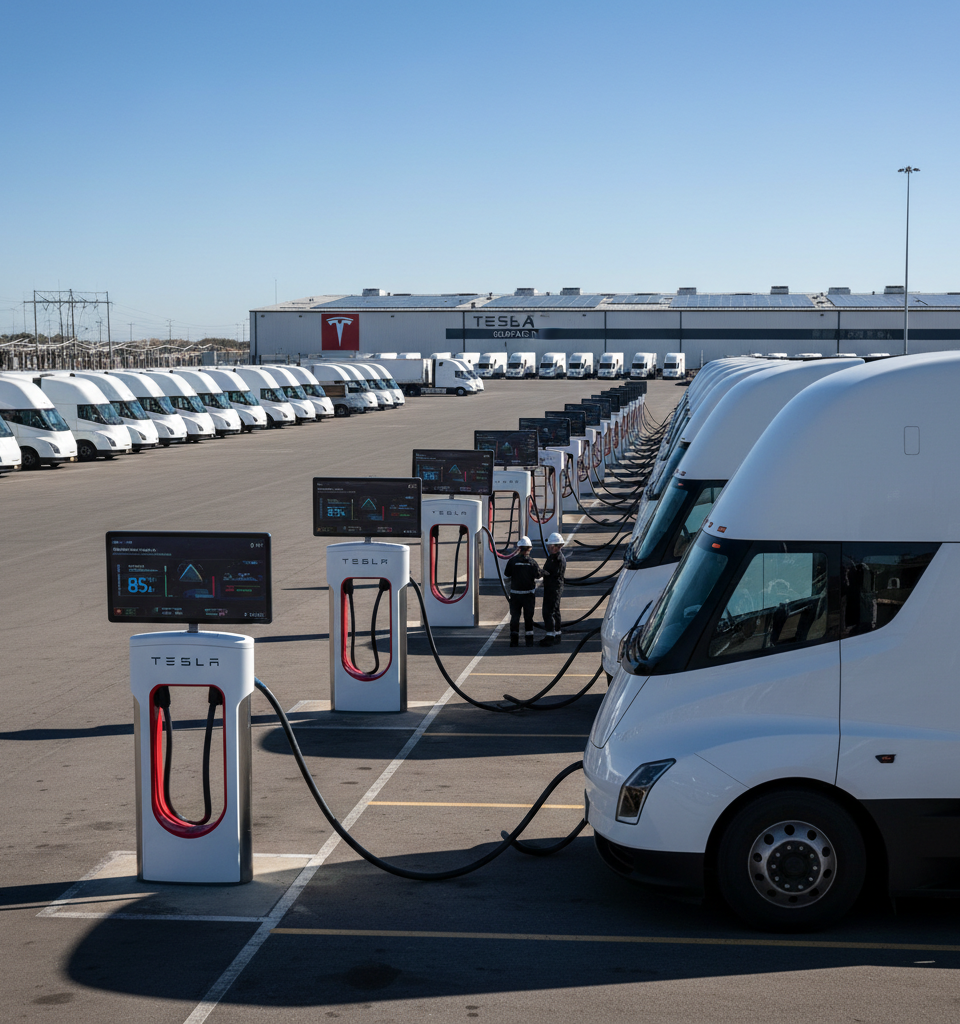
Tesla is signaling a robust acceleration in its electric commercial vehicle ambitions, projecting the production of “many thousands” of its Semi trucks annually by 2026. This aggressive forecast, disclosed recently, underlines the company's commitment to infiltrating the heavy-duty trucking sector. Crucially, this manufacturing push is being coupled with a concerted effort to facilitate widespread adoption by addressing a primary industry concern: charging infrastructure. Tesla plans to offer industrial-scale, low-cost charging solutions directly to trucking companies, aiming to dismantle barriers to entry for potential customers.
Shifting Gears in the Commercial Vehicle Landscape
This announcement arrives at a pivotal moment for the commercial transportation industry, which is under increasing pressure to decarbonize. Diesel trucks are significant contributors to greenhouse gas emissions, and electric alternatives like the Tesla Semi offer a pathway to cleaner logistics. Initially unveiled in 2017, the Semi has faced production delays and skepticism regarding its viability and charging ecosystem. Tesla's current strategy directly confronts these challenges, recognizing that simply producing electric trucks is insufficient without a robust supporting infrastructure. The company’s integrated approach, combining truck manufacturing with charging solutions, seeks to replicate its success in the passenger electric vehicle market.
Unpacking Tesla's Strategic Pillars
The “many thousands” production target represents a substantial increase from current output, which has been concentrated at a pilot facility in Nevada. While specific production facility expansions were not detailed, the sheer scale of the 2026 goal implies significant capital expenditure and manufacturing optimization. Central to the demand generation strategy is the offering of charging equipment. This is not merely about selling chargers; it's about providing a comprehensive, cost-effective energy solution that integrates seamlessly into a carrier's operational framework. By potentially subsidizing or streamlining the acquisition of Megachargers—Tesla's high-power charging standard for the Semi—the company aims to lower the total cost of ownership for fleet operators, making the electric transition more economically appealing.
Broader Industry Implications and Competition
Tesla's aggressive stance is set to intensify competition within the nascent electric truck market. Traditional truck manufacturers like Daimler Truck, Volvo, and Traton, along with startups such as Nikola and Rivian, are also developing and deploying their own electric heavy-duty vehicles. Each competitor faces similar challenges related to battery technology, range anxiety, payload capacity, and, critically, charging infrastructure. Tesla's vertically integrated approach, controlling both vehicle manufacturing and energy solutions, could provide a significant competitive advantage. This move may also pressure other manufacturers to partner more aggressively on charging networks or develop their in-house solutions to remain competitive.
Expert Analysis on Market Readiness
Industry analysts view Tesla's projected ramp-up with a mix of optimism and caution. “Tesla’s ability to scale manufacturing, particularly with a novel product like the Semi, is undeniable based on their history with passenger vehicles,” commented one logistics analyst, who requested anonymity due to ongoing client engagements. “However, the commercial trucking market is vastly different, with complex operational demands and a more conservative adoption curve. The charging infrastructure push is absolutely critical and could be a game-changer if executed effectively. The cost of electricity and charger deployment will be key determinants of success.” Another expert highlighted the importance of demonstrating real-world operational savings and reliability to skeptical fleet managers.
The Road Ahead: Overcoming Hurdles
Looking forward, the execution of Tesla’s strategy will involve several key areas. The company must prove its ability to mass-produce the Semi reliably and efficiently, meeting anticipated performance metrics, particularly range and payload. Simultaneously, the distribution and installation of industrial charging equipment will require significant logistical coordination and potential partnerships with utilities and energy providers. Regulatory incentives, such as federal and state tax credits for electric vehicles and charging infrastructure, will also play a crucial role in reducing upfront costs for carriers. The next two years will be critical in demonstrating whether Tesla can translate its ambitious projections into tangible market penetration and reshape the future of freight transportation.
Impact on Freight and Logistics Sector
The successful deployment of thousands of Tesla Semis, supported by a robust charging network, could profoundly impact the freight and logistics sector. Reduced fuel costs, lower maintenance requirements for electric powertrains, and the potential for new operational efficiencies could fundamentally alter business models for trucking companies. This shift would also contribute significantly to corporate sustainability goals for major retailers and distributors who rely on efficient supply chains. The environmental benefits, including reduced tailpipe emissions and noise pollution, particularly in urban areas, present a compelling case for accelerating electric truck adoption across industries.