Industry and Market Impact
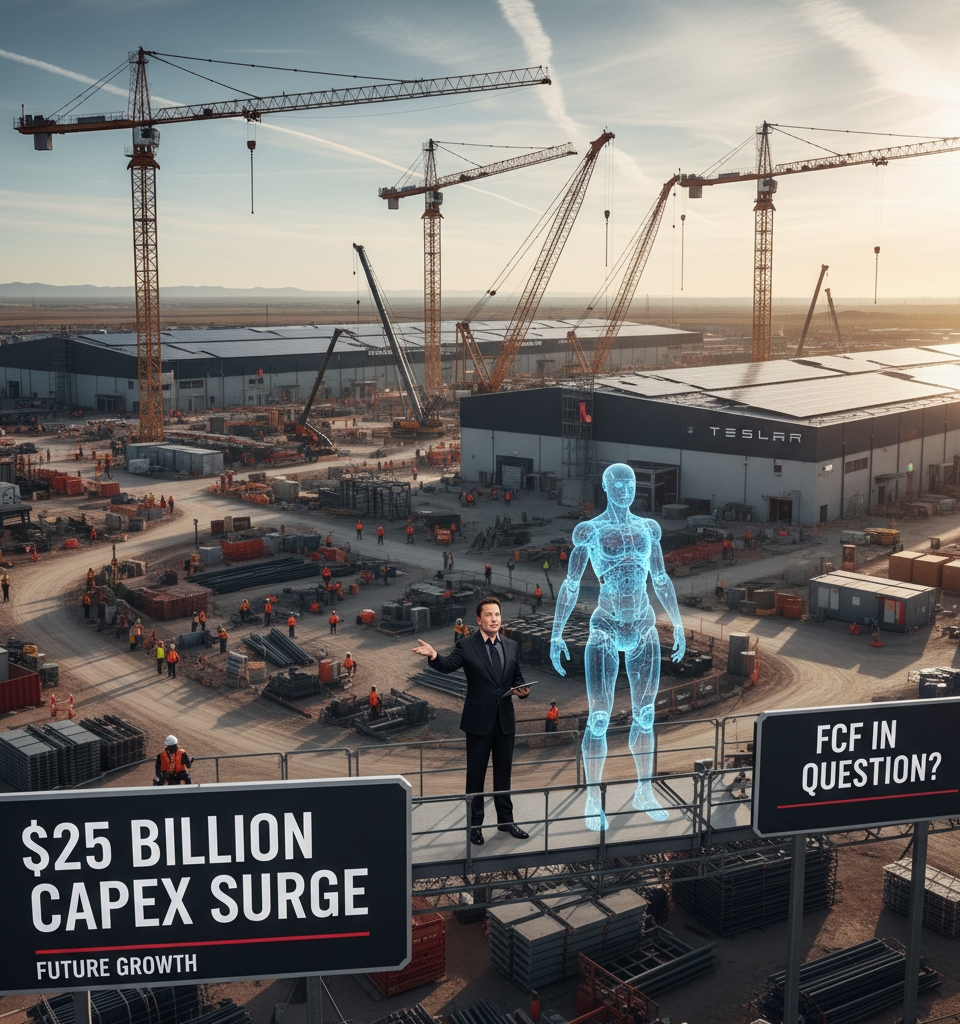
Tesla's multi-billion dollar capex plan sends a powerful ripple through the automotive and technology sectors. For competitors in the EV space, ranging from legacy automakers like General Motors and Volkswagen to burgeoning rivals such as比亚迪 and Rivian, this move escalates the arms race for market dominance. It signals Tesla's intent to not merely maintain but significantly expand its lead in manufacturing scale, technological innovation, and vertical integration. The investment in AI and robotics, in particular, could redefine manufacturing efficiency and automation standards across industries. Moreover, the focus on diversified energy solutions reinforces Tesla's ambition to be a comprehensive clean energy provider, potentially impacting traditional utility companies and energy storage innovators.
Expert Perspectives Financial analysts and industry experts are offering mixed, yet largely optimistic, assessments of
Tesla's move. "This isn't just about building more cars; it's about building the future," commented automotive analyst Sarah Jenkins of AutoInsights Research. "While the immediate negative free cash flow is a concern, if these investments pay off in terms of new product lines like Optimus and massively scaled EV production, the long-term returns could be astronomical." However, some caution that the sheer magnitude of the investment carries significant execution risk. "Tesla has a history of ambitious targets," noted market strategist Michael Chen from Global Equity Partners. "The challenge will be efficient allocation of this capital and ensuring these projects deliver ROI within reasonable timeframes, especially as competition intensifies and consumer demand for EVs faces headwinds."
What's Next: Future Implications
The immediate future for Tesla will involve meticulously managing this unprecedented capital deployment. Investors will be keenly watching upcoming quarterly reports for details on how the expenditure is translating into tangible progress on Gigafactory construction, Optimus development milestones, and FSD advancements. The success of this strategy hinges on Tesla's ability to maintain high production quality, achieve cost efficiencies through advanced manufacturing, and effectively commercialize new technologies. Furthermore, the company's ability to fund this expansion without excessive dilution or taking on substantial debt will be a key factor in how the market perceives the sustainability of this aggressive growth trajectory. The next two to three years will be critical in determining whether this $25 billion bet solidifies Tesla's position as a global technology powerhouse or strains its financial resilience. The market will be closely scrutinizing Tesla's Q3 results for any initial indications of capital deployment and its impact on the bottom line.