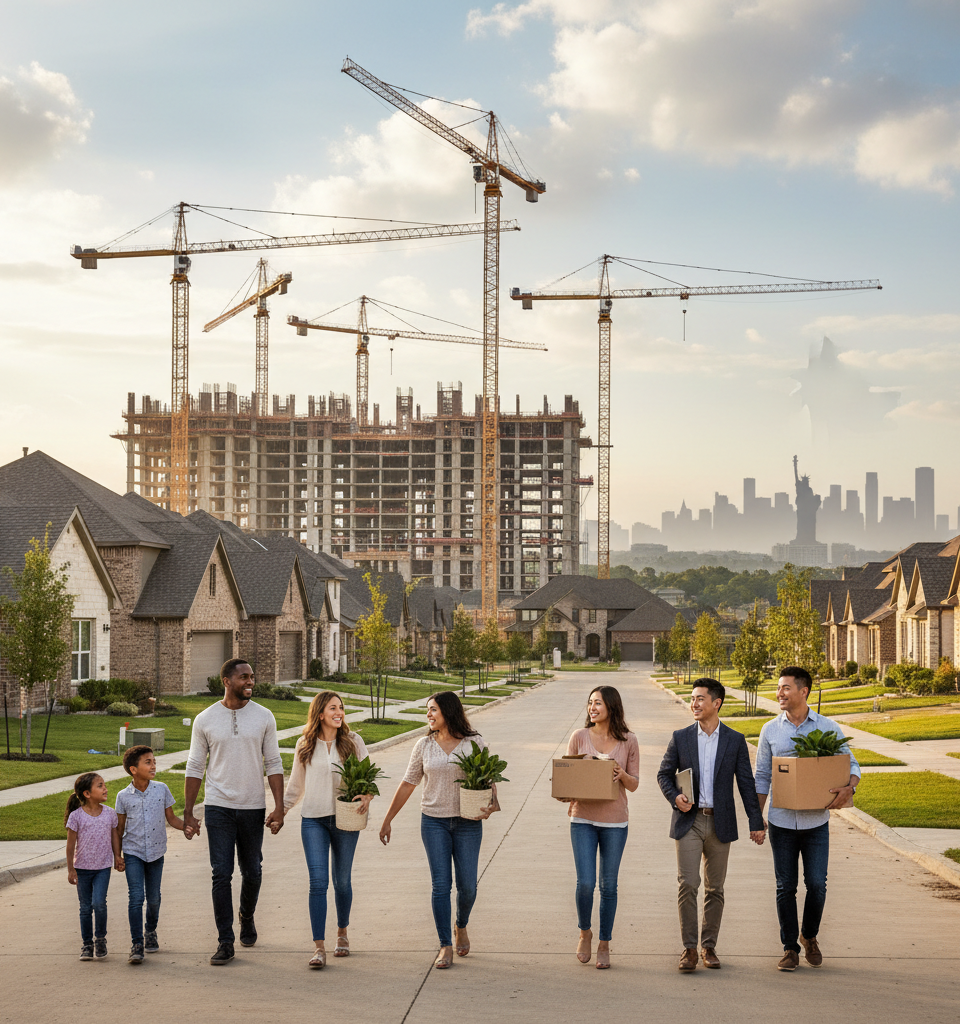
The latest U.S. Census Bureau data reveals a compelling narrative of demographic transformation across the United States, placing Texas at the forefront of national population growth. All five of the fastest-growing cities in the nation, by percentage change from July 1, 2022, to July 1, 2023, are situated in the Lone Star State. This remarkable trend is led by Celina, Texas, which recorded an astounding 24.6% population surge, underscoring a broader migration toward mid-sized suburbs and away from established metropolitan hubs, a pattern starkly contrasted by continued population decline in major cities like New York.
Context and Background
This demographic pivot is not an isolated event but rather the culmination of several ongoing societal and economic trends exacerbated by recent global events. The COVID-19 pandemic significantly accelerated desires for more space, lower costs of living, and remote work flexibility, prompting many Americans to reconsider their residential choices. Texas, with its typically lower housing costs, business-friendly environment, and lack of state income tax, has emerged as a prime destination. Historically, major coastal cities like New York and Los Angeles dominated population inflows, but the current data suggests a reversal of this long-standing pattern, marking a new era of suburbanization, particularly within thriving regional economies.
Key Details and Figures
Beyond Celina's 24.6% growth, the other top four fastest-growing cities are equally indicative of this regional ascendancy: Fulshear (22.2%), Princeton (21.1%), Anna (16.9%), and Prosper (15.4%). These cities, primarily located within the rapidly expanding Dallas-Fort Worth and Houston metropolitan areas, have collectively added tens of thousands of new residents in just one year. For context, while Celina added approximately 14,000 residents to reach a total population of over 70,000, New York City experienced a net outflow of residents, continuing a trend observed in recent years. This disparity highlights a significant internal migration pattern, favoring Sun Belt states and their burgeoning suburban communities.
Industry and Market Impact
This rapid population influx in Texas has profound implications across various industries. The real estate market, in particular, is experiencing considerable pressure, with demand for housing far outstripping supply in many of these growth areas, driving up property values and rents. Infrastructure development, including roads, schools, and utilities, is struggling to keep pace with the exponential growth, leading to significant investment in public works projects. Furthermore, the retail and service sectors are expanding rapidly to cater to the burgeoning consumer base, attracting new businesses and creating jobs, thereby reinforcing a virtuous cycle of economic expansion. The increased demand for labor across sectors, from construction to technology, is also reshaping regional employment landscapes.
Expert Perspective
Demographers and urban planners attribute this shift to a confluence of factors. Dr. Eleanor Vance, a senior demographer at the Population Studies Center, notes, "The allure of affordability combined with expanding economic opportunities, particularly in tech and logistics, has made areas around Dallas and Houston magnets for internal migration. People are trading the high cost of living in traditional urban centers for a better quality of life and more space in these fast-growing Texas suburbs." She adds that the rise of remote work has diminished the necessity of living directly within expensive city centers, giving individuals and families greater flexibility to choose locations based on lifestyle preferences rather than just proximity to employment.
What's Next?
The trajectory of these Texas cities suggests continued robust growth in the near to medium term. State and local governments are grappling with the challenges and opportunities presented by such rapid expansion, focusing on sustainable development, enhancing public services, and managing traffic congestion. The competitive advantage of Texas, stemming from its favorable economic policies and lower cost of living, is likely to persist, drawing further residents and businesses from other states.
However, long-term success will hinge on effective planning and investment in infrastructure to avoid overburdening existing resources and ensuring that growth benefits all residents. The ongoing monitoring of housing affordability, water resources, and educational capacity will be critical indicators of these cities' enduring appeal and sustainability. The narrative of American demography is clearly shifting, and Texas is currently writing its most prominent chapter.