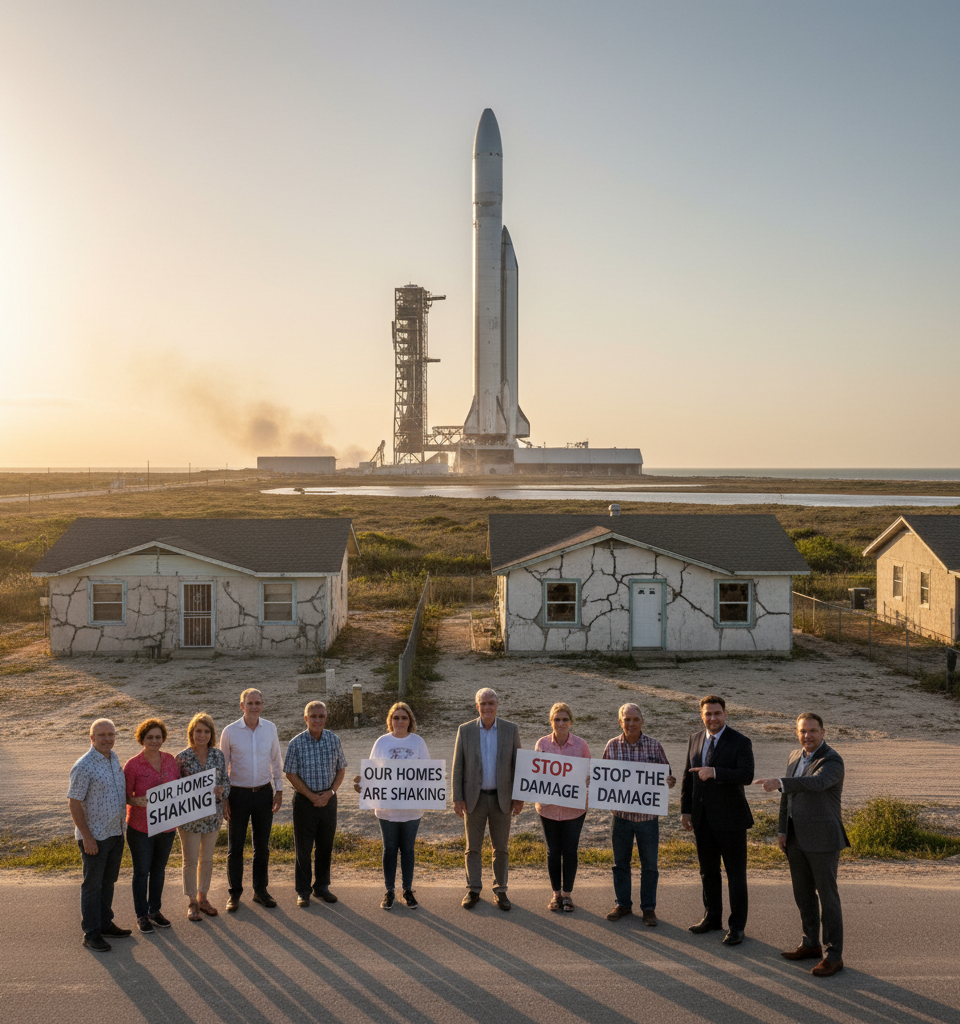
Eighty residents from towns surrounding SpaceX’s Starbase facility in South Texas have collectively filed a class-action lawsuit, asserting that persistent rocket launch activities are directly responsible for the physical destruction of their homes. Filed on 2026-06-13, the legal action specifically accuses SpaceX of negligence, gross negligence, and trespass, making its claims under the framework of the Commercial Space Launch Act of 1984.
Background to the Allegations
The lawsuit represents a significant escalation in tensions between the burgeoning private space industry and local communities. SpaceX’s Starbase, located in Boca Chica, Texas, has become a focal point for the development and testing of its Starship rocket, a massive launch vehicle intended for interplanetary travel. While the economic activity and technological advancements brought by SpaceX are often hailed, the proximity of such endeavors to residential areas has raised concerns about noise, environmental impact, and, as this lawsuit highlights, structural integrity. The Commercial Space Launch Act of 1984, cited in the lawsuit, governs commercial space launch and reentry activities and outlines responsibilities and liability in the event of damage.
Specific Claims of Damage
Among the plaintiffs, residents have presented evidence of the alleged damage. One plaintiff, whose home is in Port Isabel, demonstrated to Reuters the extent of the impact on her property. The legal filing would likely detail a range of damages, potentially including cracked foundations, shattered windows, or compromised structural elements, all attributed to the concussive forces and vibrations generated by the powerful rocket launches. The lawsuit's emphasis on negligence and gross negligence suggests that the plaintiffs believe SpaceX has either failed to take reasonable precautions to prevent damage or has acted with a reckless disregard for the potential harm to nearby properties.
Broader Implications for the Space Industry
This lawsuit carries substantial implications not just for SpaceX, but for the entire commercial space industry. As private companies like SpaceX continue to expand operations and increase the frequency of launches, ensuring community safety and property protection will become an even more critical aspect of their operations. The outcome of this case could set a precedent for how commercial space companies manage their relationships with neighboring communities and their accountability for the collateral effects of their activities. It also highlights the regulatory challenges faced by authorities in balancing technological advancement with local residents' rights.
Legal Precedents and Future Outlook
The legal battle is expected to be a complex one, potentially involving extensive expert testimony on structural engineering, acoustics, and the physics of rocket launches. The interpretation of the Commercial Space Launch Act of 1984 will be crucial, as it defines the legal landscape for such disputes. Should the plaintiffs succeed, it could lead to significant financial liabilities for SpaceX and potentially prompt a re-evaluation of launch site selection and operational protocols across the industry. Conversely, a favorable outcome for SpaceX might reinforce existing practices, though public scrutiny would likely remain high.
Path Forward for Residents and SpaceX
For the eighty residents involved, the lawsuit represents a quest for restitution and a demand for operational changes that mitigate future damage. For SpaceX, navigating this legal challenge will be vital for maintaining its social license to operate and continuing its ambitious launch schedule. The company will likely need to present a robust defense, potentially arguing that damages are unrelated to launches or that all reasonable precautions have been taken. The court proceedings will unfold over the coming months, with significant implications for both the affected communities and the future of commercial space exploration. The broader industry will be closely watching the developments, as this case could shape future operational standards and community engagement strategies for space launch providers globally.