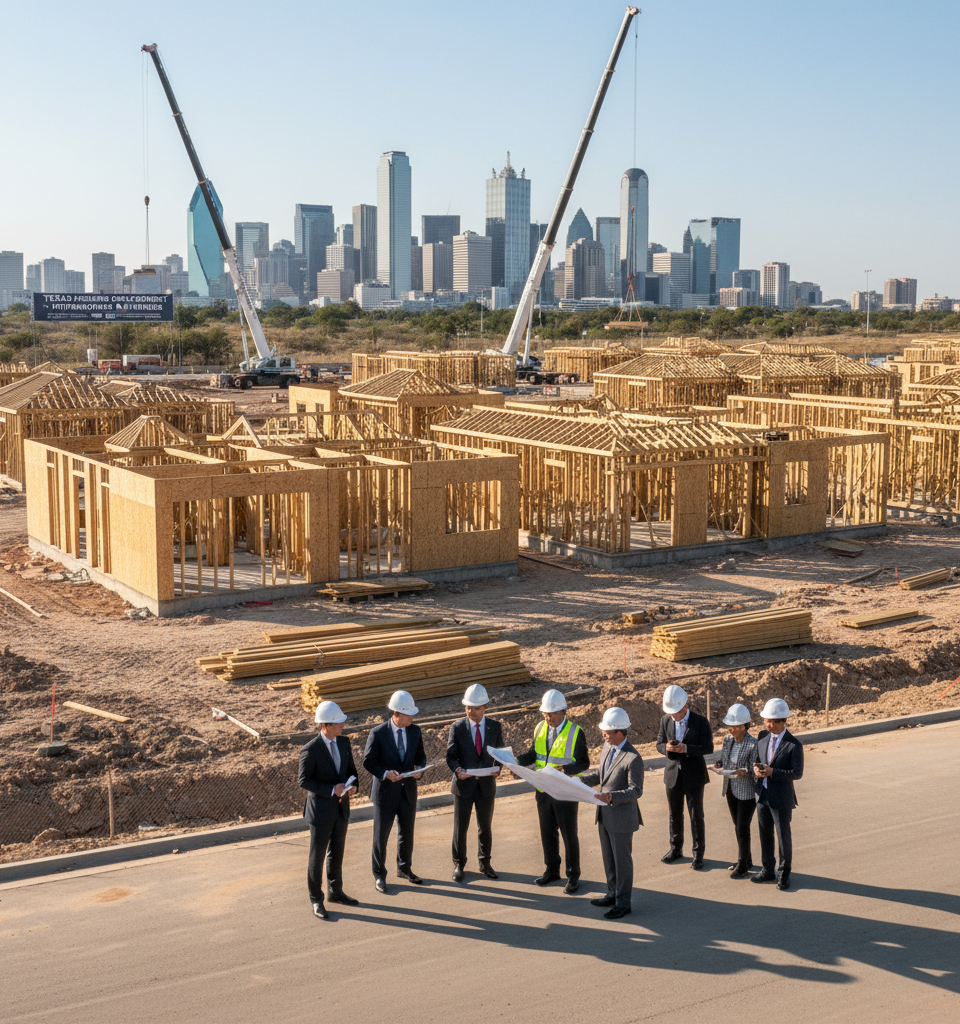
AUSTIN, TX – May 19, 2026 – The structural dynamics of the Texas homebuilding industry, particularly concerning its access to and reliance on foreign capital, have undergone a profound transformation following the implementation of Texas Senate Bill 17. The legislation appears to be hastening a pre-existing trend where America's most prominent homebuilders are not merely constructing subdivisions but are actively consolidating their market power. This shift underscores a new era in which scale has become the paramount advantage, land is increasingly viewed as the primary currency, and the very structure of ownership models is being fundamentally reimagined within the state's residential construction sector.
The Shifting Sands of Homebuilding Finance
For decades, foreign capital, often in the form of direct investment or joint ventures, played a substantial role in financing the ambitious and rapidly expanding homebuilding projects across Texas. This inflow of capital contributed significantly to the state's remarkable growth and its ability to meet escalating housing demands. However, SB 17, while specific details of its provisions are not elaborated in the provided context, is clearly impacting this established financial pipeline. The underlying premise is that the bill introduces constraints or disincentives that make foreign investment less attractive or more complex, thereby forcing a redirection of capital sources and ownership strategies.
Industry insiders suggest that larger domestic homebuilders are poised to benefit most from this legislative change. Their existing capital reserves, access to diverse funding mechanisms, and sheer operational scale grant them a significant competitive edge. As foreign capital ostensibly recedes from its previously prominent position, these larger players are better positioned to fill the void, further cementing their dominance. This trend could lead to a less fragmented market, where fewer, larger entities control a greater share of housing development, from land acquisition to final construction.
Land as the New Strategic Asset
Within this evolving environment, land has undeniably become the new strategic currency. With foreign capital seemingly less accessible or desirable, the ability of homebuilders to secure and hold vast tracts of undeveloped or partially developed land is critical. Land banks represent not just future projects but also a hedge against market volatility and a strategic advantage in a competitive environment. Companies with substantial land holdings will be better equipped to control their supply chains, manage project timelines, and dictate development costs, factors that are becoming increasingly important in a tightening market.
This emphasis on land accumulation also highlights a potential barrier to entry for smaller, independent builders who may not possess the capital or the long-term planning capabilities to compete for prime land parcels. The consolidation of land ownership in the hands of large, often publicly traded, homebuilders could reshape the demographic and economic characteristics of new residential developments across Texas. The long-term implications for housing affordability and diversity in architectural styles and community planning remain subjects of considerable interest and analysis.
Ownership Structures Under Review
The most profound, though perhaps less immediately visible, impact of SB 17 is on the ownership structure within the homebuilding industry. If foreign entities are being curtailed or discouraged, domestic ownership, whether corporate or individual, will naturally become more prevalent. This isn't just about who owns the companies; it's about the financial instruments, corporate governance, and risk assessments that underpin these ownership models. For example, some foreign investments came with particular joint venture agreements or specific types of equity financing that may now need to be replaced with domestic equivalents or entirely new models.
This re-evaluation of ownership could also catalyze innovations in financing. While foreign direct investment might be constrained, other forms of capital, such as private equity from U.S. firms, institutional investments, or even more creative public-private partnerships, could gain traction. The industry is effectively being compelled to innovate its financial architecture to sustain growth and meet demand, all while operating under new regulatory parameters set by SB 17. The coming months will likely reveal the ingenuity of large-scale homebuilders in navigating this transformed capital landscape and solidifying their market positions further.