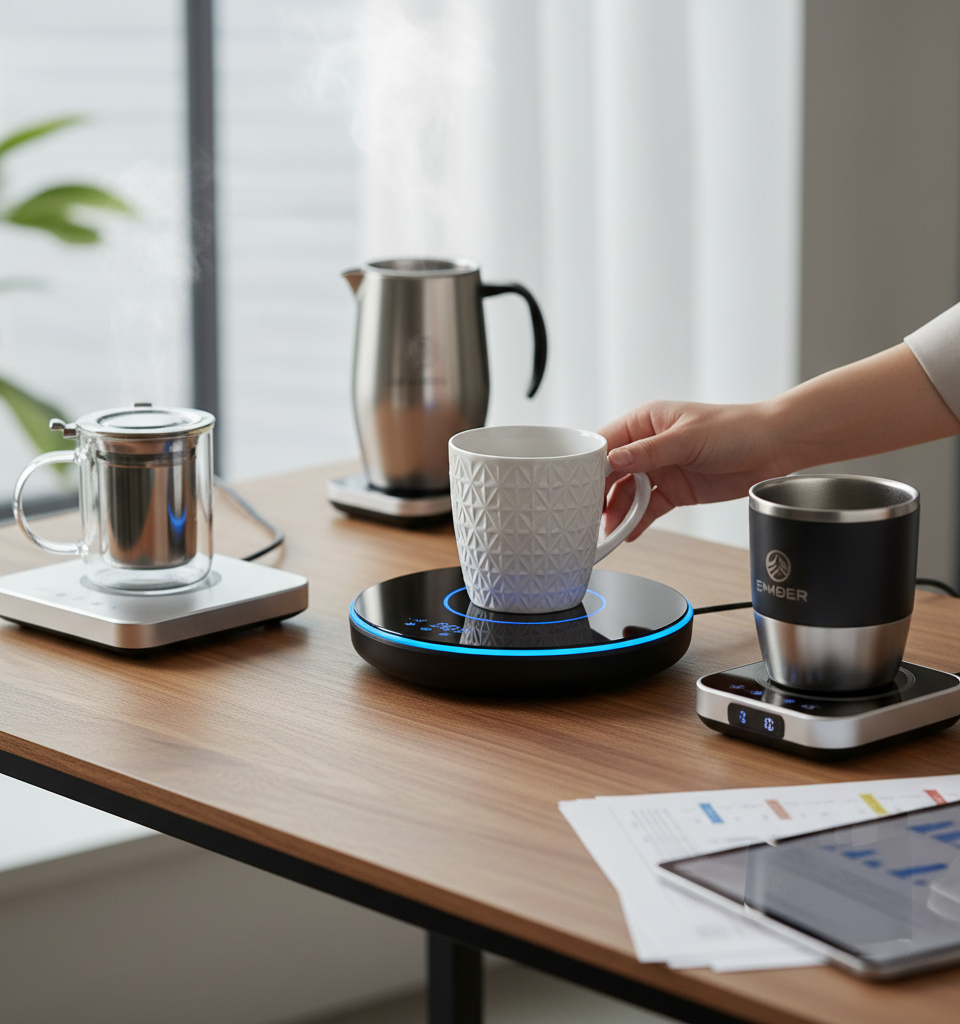
The persistent demand for perfectly warm beverages has propelled the mug warmer market into a highly competitive landscape. As of 2026, a rigorous, multi-year evaluation process has identified three standout coffee warmers lauded for their ability to consistently maintain optimal beverage temperatures. These devices are poised to challenge — and in some cases, potentially surpass — the perceived dominance of premium smart mugs like the Ember, offering consumers a range of effective alternatives for their daily coffee and tea rituals.
The premise is simple yet profound: the enjoyment of a hot beverage is directly proportional to its sustained warmth. This fundamental consumer need has driven innovation within the small appliance sector, leading to a proliferation of products designed to prevent the age-old problem of lukewarm coffee. The current market is bifurcated, with high-tech, app-enabled smart mugs on one end, and more traditional, often simpler, warming plates and coasters on the other. The emergence of these three top performers suggests a maturing of the latter category, indicating that sophisticated temperature control no longer requires an integrated, battery-powered mug.
The Evolution of Beverage Temperature Technology
For years, the Ember mug has largely set the standard for personal beverage temperature control, leveraging integrated heating elements and smart technology to keep drinks at a user-specified temperature. Its success highlighted a significant market gap and consumer willingness to invest in a superior drinking experience. However, the ongoing development in complementary warming devices signifies a strategic shift. These newer, highly-rated mug warmers present a compelling value proposition, often at a lower price point than their smart mug counterparts, by focusing purely on the warming function rather than integrating the heating element directly into the vessel.
The intensive testing methodology behind the selection of these three devices reportedly involved weeks, and in some cases, years of continuous real-world use and laboratory assessment. This prolonged evaluation period allowed testers to scrutinize durability, temperature consistency across various beverage types and volumes, energy efficiency, and overall user experience. The criteria were stringent, focusing on the core promise: to keep coffee (or any hot beverage) at an enjoyable temperature for extended periods, without degradation of flavor or excessive power consumption.
Market Implications and Consumer Choices
The ascendance of these top-tier mug warmers carries significant implications for the broader small appliance market. It suggests a potential democratization of premium beverage temperature maintenance, making advanced warming capabilities accessible to a wider consumer base without the need to replace existing beloved mugs. This trend could put pressure on manufacturers of integrated smart mugs to innovate further, reduce costs, or differentiate their offerings beyond mere temperature control, perhaps by emphasizing smart home integration or advanced personalization features.
Consumers stand to benefit from this heightened competition, gaining more choices that cater to diverse needs and budgets. Those who prefer the tactile experience of a traditional mug but desire sustained warmth now have robust options. Conversely, it provides an interesting dynamic for the Ember brand, which may need to recalibrate its market positioning in light of these more traditional, yet highly effective, challengers. The question for consumers becomes whether the integrated, all-in-one solution of a smart mug outweighs the flexibility and potential cost savings of a standalone warming device paired with any mug of their choosing.
The Future of Warm Beverages
Looking ahead, the development of mug warmers is likely to continue focusing on enhanced energy efficiency, sleeker designs that integrate seamlessly into various home and office aesthetics, and potentially even smart features that allow for remote activation or temperature adjustments via smartphone applications. While the specifics of these three top-performing models remain under wraps for a detailed product launch, their identified superiority indicates a significant step forward in consumer-centric product development within this niche. The focus remains steadfast: ensuring that the first rule of coffee – that it must stay hot – is not just met, but exceeded, through innovative and reliable technology.