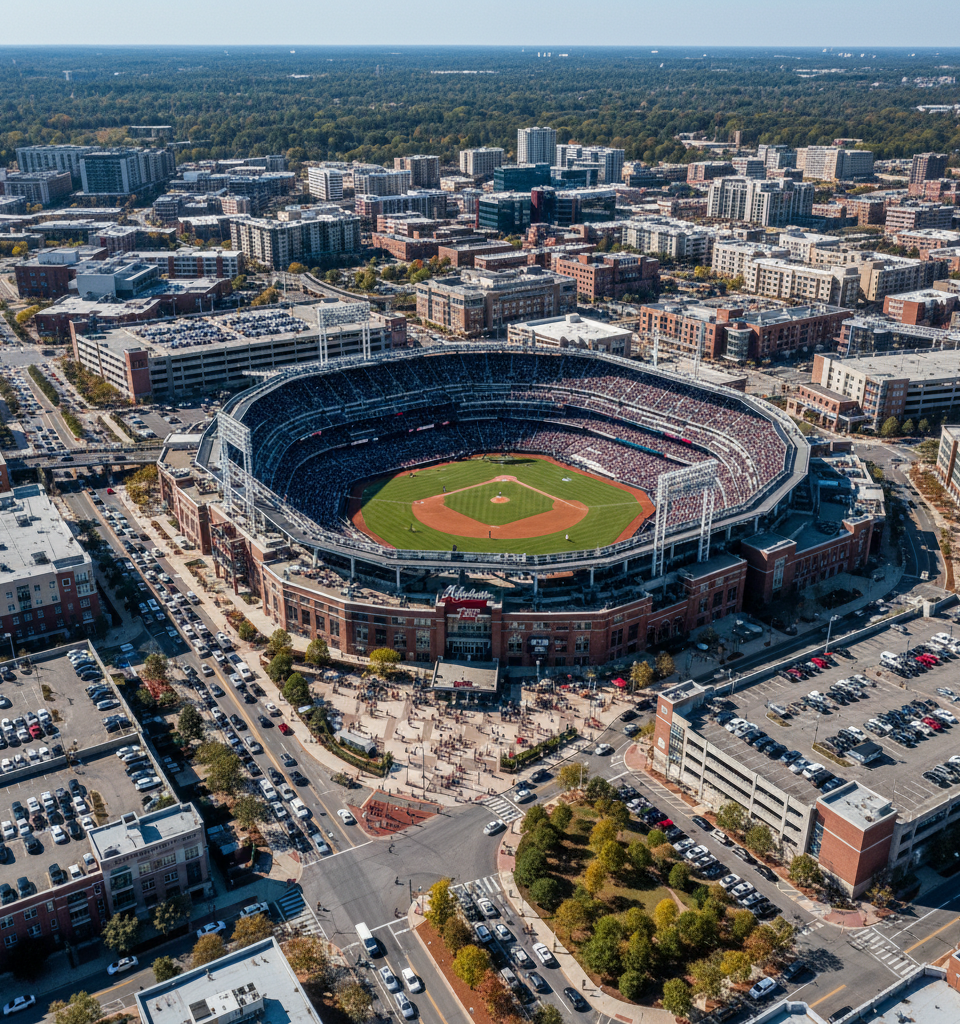
The groundbreaking success of The Battery Atlanta, the mixed-use development co-located with Truist Park, home of the Atlanta Braves, has ignited a fervent desire among sports franchises and real estate developers to replicate its winning formula. This innovative model, which seamlessly integrates retail, residential, office, and entertainment spaces around a professional sports venue, has redefined how teams monetize their assets and engage with their fan base, prompting widespread interest across North American sports leagues.
The Genesis of a Game-Changer
Historically, sports stadiums were isolated entities, designed primarily for game-day experiences and often surrounded by vast swaths of parking. The Battery Atlanta, opened in 2017, marked a pivotal departure. It transformed the area around Truist Park into a vibrant, year-round destination, positioning the Braves not just as a baseball team but as a major real estate developer and lifestyle brand. This strategy was born out of the team's move from downtown Atlanta to Cobb County, a decision that allowed them significantly more control over the surrounding land and its development. By owning and operating the real estate, the Braves created additional revenue streams far beyond ticket sales and concessions, including rent from commercial tenants and income from events held outside of baseball games.
Unpacking The Battery's Success
The Battery Atlanta boasts an impressive array of statistics that underscore its impact. It features over 600,000 square feet of office space, 500,000 square feet of retail and restaurant space, and more than 500 residential units. Annual foot traffic consistently exceeds that of game days, showcasing its appeal as a broader entertainment hub. Critically, the development is estimated to contribute hundreds of millions of dollars annually to the local economy and provides a significant ancillary revenue stream for the Braves' parent company, Liberty Media. This financial performance, coupled with enhanced fan engagement and a dynamic urban environment, positions it as a gold standard for sports-anchored developments.
Broad Industry Implications
The reverberations of The Battery's success are being felt across professional sports. Leagues like MLB, NFL, NBA, and NHL are actively encouraging teams to explore similar mixed-use developments to diversify revenue, enhance fan experience, and create community assets. This shift signals a broader evolution in sports business, moving teams beyond being mere event organizers to becoming significant urban developers. The trend is driving collaboration between franchise ownership, real estate giants, and local municipalities, all seeking to tap into the proven economic benefits demonstrated by the Braves' model.
The Challenge of Replication
Despite the allure, industry experts caution against underestimating the complexities of replicating The Battery's success. "What the Braves achieved was a perfect storm of circumstances — favorable land acquisition, a strategic location in a growing market, and a significant investment capacity," states Dr. Michael Lewis, a sports business economist. "Many teams lack one or more of these critical elements." Key hurdles include securing large parcels of developable land near existing stadiums, navigating complex zoning regulations, attracting diverse commercial tenants, and securing substantial capital. The initial investment for The Battery itself was well over $1 billion. Furthermore, the economic dynamics of different metropolitan areas and the existing urban fabric around many older stadiums present unique, often insurmountable, challenges.
Future Prospects and Evolving Models
While a direct copy of The Battery may be elusive for many, its influence is undeniable. Future developments are likely to adopt elements of its mixed-use strategy, scaled to their specific contexts. For instance, teams in dense urban environments might focus on vertical integration or repurposing existing structures, rather than ground-up new construction. "We're seeing a shift towards 'placemaking' around sports venues," adds Sarah Jenkins, a commercial real estate analyst. "It might not always be the full-scale, ground-up development like The Battery, but the principle of creating vibrant, multi-functional districts will certainly endure and evolve."
Upcoming projects, such as the Los Angeles Clippers' Intuit Dome campus or discussions around new stadia for teams like the Chicago Bears, are clearly drawing inspiration from The Battery. However, each will present its own unique financial and logistical hurdles, underscoring that while The Battery has provided a powerful blueprint, its true "copy-paste" remains exceptionally difficult.