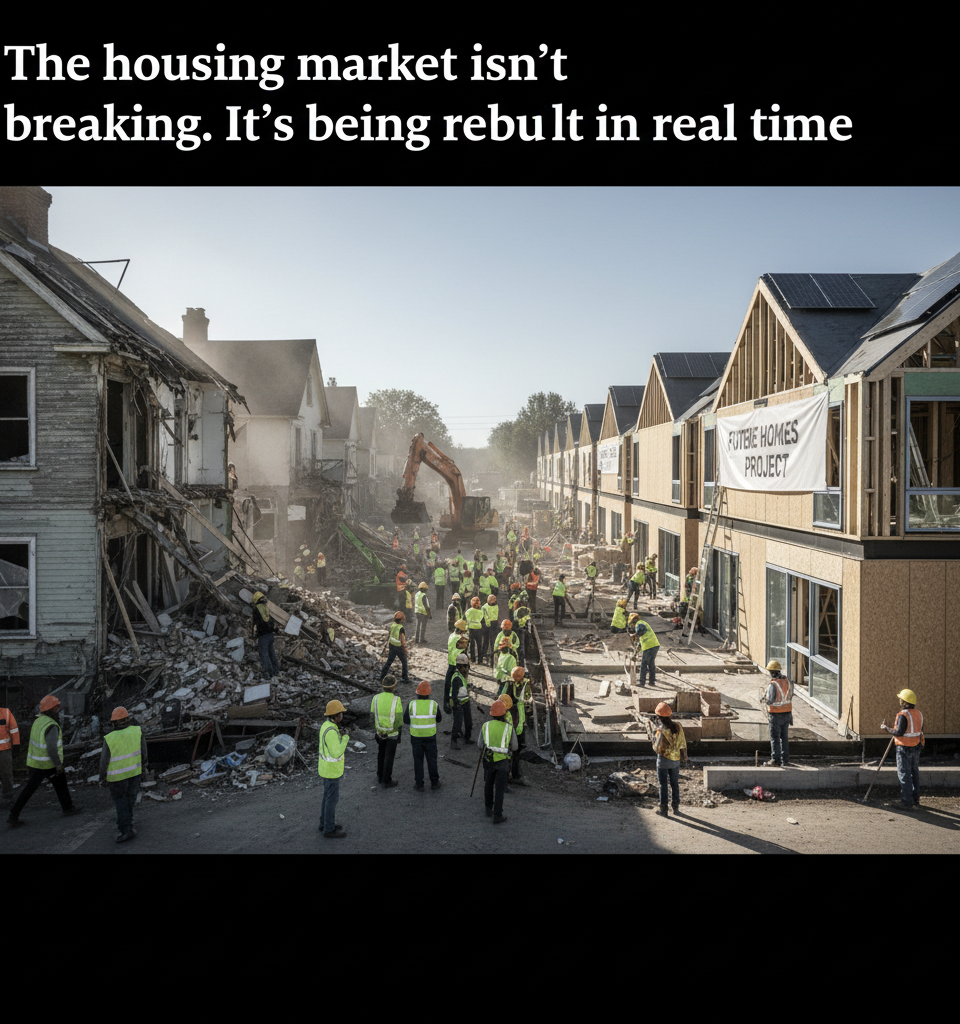
The housing market is currently experiencing a fundamental transformation, rather than a mere downturn, according to recent analysis from contributor Deb Siefkin. This evolving landscape suggests a significant re-architecture of market structures and the very mechanisms by which consumers acquire homes, transcending discussions around immediate market exposure.
This evolving scenario holds profound implications for all participants in the housing ecosystem, from large institutional investors to individual homebuyers and sellers. The conventional wisdom surrounding market cycles and recovery timelines may no longer apply, as the underlying framework of the housing industry itself is being redrawn. Such systemic shifts are rare, making the current period a critical juncture for understanding future trends and adaptations.
While the broader industry narrative has often focused on assessing financial exposure and short-term volatility, Siefkin's perspective highlights a more deep-seated recalibration. This re-evaluation extends beyond immediate economic indicators, delving into the foundational elements of real estate transactions, financing models, and consumer search behaviors. The ongoing changes suggest a future housing market that may operate on significantly different principles than those observed in previous decades.
Reshaping Market Dynamics and Acquisition Pathways
The most significant aspect of this transformation lies in the reshaping of market dynamics and the fundamental pathways through which buyers are finding homes. Traditional models, which have long dictated how properties are listed, discovered, and transacted, are being challenged and, in many cases, superseded by new paradigms. This extends to the role of technology, evolving consumer preferences for digital platforms, and the increasing complexity of securing financing in a fluid economic environment.
This structural overhaul is prompting participants across the entire housing value chain to re-strategize. Real estate brokerages, technology providers, lenders, and construction firms are all navigating an environment where established norms are in flux. The ability to adapt to these new structures and to innovate within them will likely differentiate market leaders from those who struggle to keep pace.
Implications for Industry Stakeholders
For industry stakeholders, the stakes are exceptionally high. Traditional real estate agents, for example, are confronting a market where the value proposition of their services is being re-evaluated against the backdrop of increased digital accessibility and direct-to-consumer platforms. Similarly, lending institutions are having to recalibrate their risk assessments and product offerings to align with new market realities and borrower profiles.
The re-engineering of the housing market also carries significant long-term implications for housing affordability and accessibility. As the structure of the market evolves, it will inevitably impact how supply meets demand, how prices are formed, and the ease with which diverse segments of the population can achieve homeownership. Understanding these structural shifts is paramount to developing effective housing policies and industry strategies moving forward.
The Road Ahead: Adaptation and Innovation
The immediate future will likely be characterized by continued adaptation and innovation within the housing sector. Companies and individuals who recognize that the market is being fundamentally rebuilt, rather than simply undergoing a temporary adjustment, will be better positioned to navigate these changes successfully. This includes investing in new technologies, developing flexible business models, and deeply understanding the evolving needs and behaviors of both buyers and sellers.
As the industry works through these transformative changes, the broader impact on the economy and social fabric will become increasingly clear. The ongoing architectural shift promises a housing market that, while potentially more aligned with contemporary technological and societal trends, will also demand a proactive and informed approach from all involved parties to ensure stability and equitable access in the years to come. The process of "rebuilding in real time" suggests an ongoing, dynamic evolution rather than a finite project with a clear end point, underscoring the continuous need for vigilance and strategic repositioning.