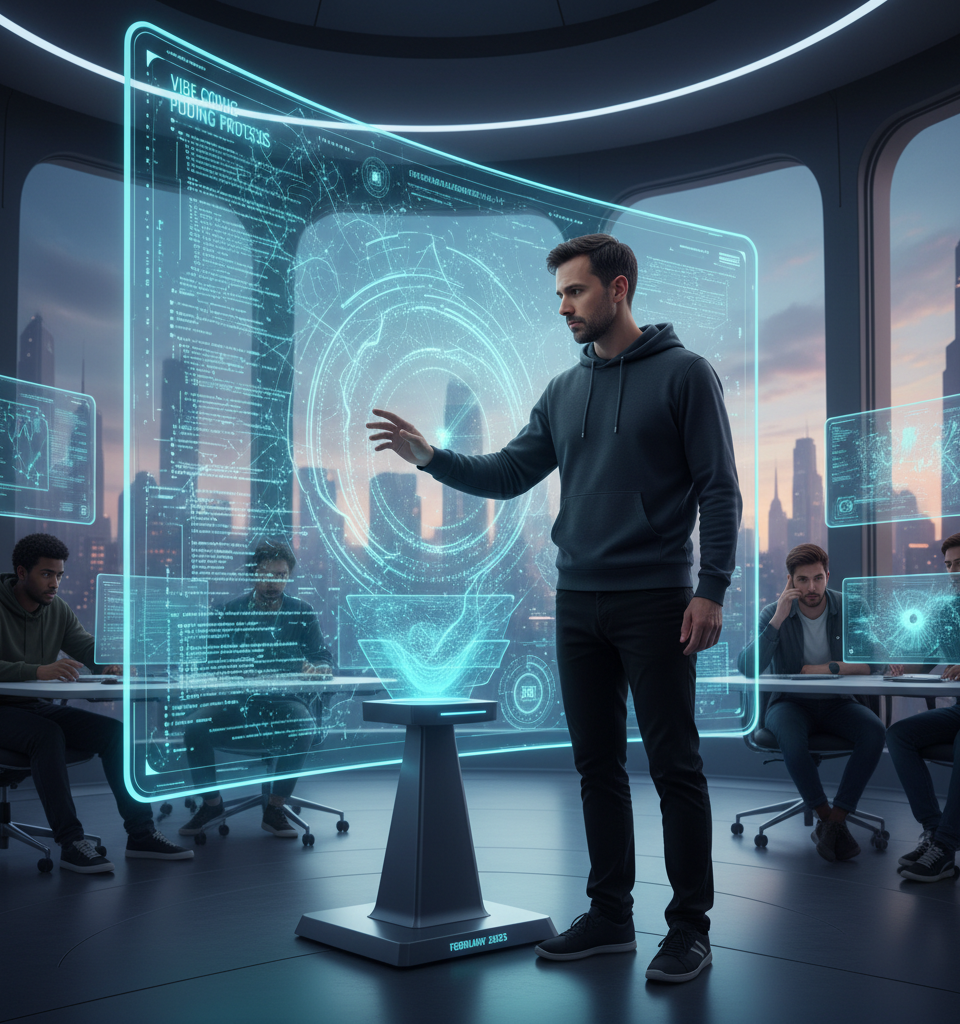
The burgeoning phenomenon of 'vibe coding,' a term coined by OpenAI co-founder Andrej Karpathy in February 2025, is rapidly reshaping the landscape of software development, introducing both unprecedented efficiencies and formidable challenges for businesses. This novel approach, characterized by users leveraging AI tools like Claude to translate natural language instructions into functional code, has moved beyond experimental curiosity into mainstream application, prompting a critical re-evaluation of organizational development strategies and risk management protocols.
At its core, vibe coding represents a democratization of software creation, enabling individuals with minimal programming expertise to generate complex applications ranging from simple websites to interactive games. This paradigm shift, driven by advancements in large language models (LLMs), promises to significantly reduce development cycles and costs, making custom software potentially accessible to a wider array of businesses. However, the rapid adoption of this technology also brings forth a spectrum of hidden risks, including potential intellectual property infringements, the introduction of security vulnerabilities, and an over-reliance on AI-generated solutions that may lack human oversight or strategic alignment.
The mechanics of vibe coding are deceptively simple: a user describes their desired software functionality in plain language, and the AI, drawing upon vast datasets, crafts the corresponding code. While tools like GitHub Copilot and other AI-powered coding assistants have long augmented human programmers, vibe coding takes this a step further, aiming to autonomously generate complete software components or even entire applications. Early adopters report productivity gains of up to 40% in routine coding tasks, with some experimental projects demonstrating functional web applications built within minutes rather than days or weeks. However, the quality, security, and originality of this AI-generated code remain paramount concerns.
The widespread integration of vibe coding is poised to send ripples across the entire technology sector. Software development firms face pressure to incorporate AI-driven tools to remain competitive, while enterprises across all industries are exploring its potential to streamline internal processes and accelerate digital transformation initiatives. This could lead to a significant reshuffling of talent demands, with a greater emphasis on prompt engineering, AI model management, and code auditing rather than traditional hand-coding. The market for AI-as-a-service (AIaaS) supporting coding functions is projected to grow substantially, with estimates suggesting a multi-billion dollar market by 2030, driven by enterprises seeking to leverage these new capabilities.
Leading industry experts and analysts are urging caution alongside enthusiasm. Dr. Anya Sharma, a principal analyst at TechInsight Partners, noted in a recent report, "While the allure of rapid development is strong, organizations must establish stringent governance frameworks. The 'black box' nature of some AI models means understanding the provenance and potential biases of generated code is critical. Companies need clear policies on IP ownership for AI-generated code, robust security audits, and human-in-the-loop validation processes to prevent costly errors or legal liabilities." Concerns also revolve around data privacy, especially if proprietary information is used as input for public or semi-public AI models.
To mitigate these emergent risks, organizations are advised to implement a four-pronged protection strategy. Firstly, establishing clear intellectual property guidelines for AI-generated code is essential – determining ownership, usage rights, and liability. Secondly, robust security scanning and auditing tools must be integrated into the development pipeline, specifically tailored to identify vulnerabilities often overlooked by AI. Thirdly, a structured human oversight process is imperative, where experienced developers review AI-generated code for quality, efficiency, accuracy, and strategic alignment before deployment. Finally, investing in internal prompt engineering expertise and AI literacy training for development teams will empower them to maximize AI's benefits while understanding its limitations and risks.
The future of software development will undoubtedly involve a symbiotic relationship between human developers and AI. While vibe coding promises to unlock unprecedented levels of productivity and innovation, its full potential can only be realized through a pragmatic and disciplined approach. Companies that proactively address the hidden risks with comprehensive strategies for governance, security, and human oversight will be best positioned to harness the transformative power of AI in coding, ensuring both agility and resilience in an increasingly AI-driven world. Failure to do so could expose them to unforeseen technical debt, security breaches, and legal challenges that could severely impede progress.