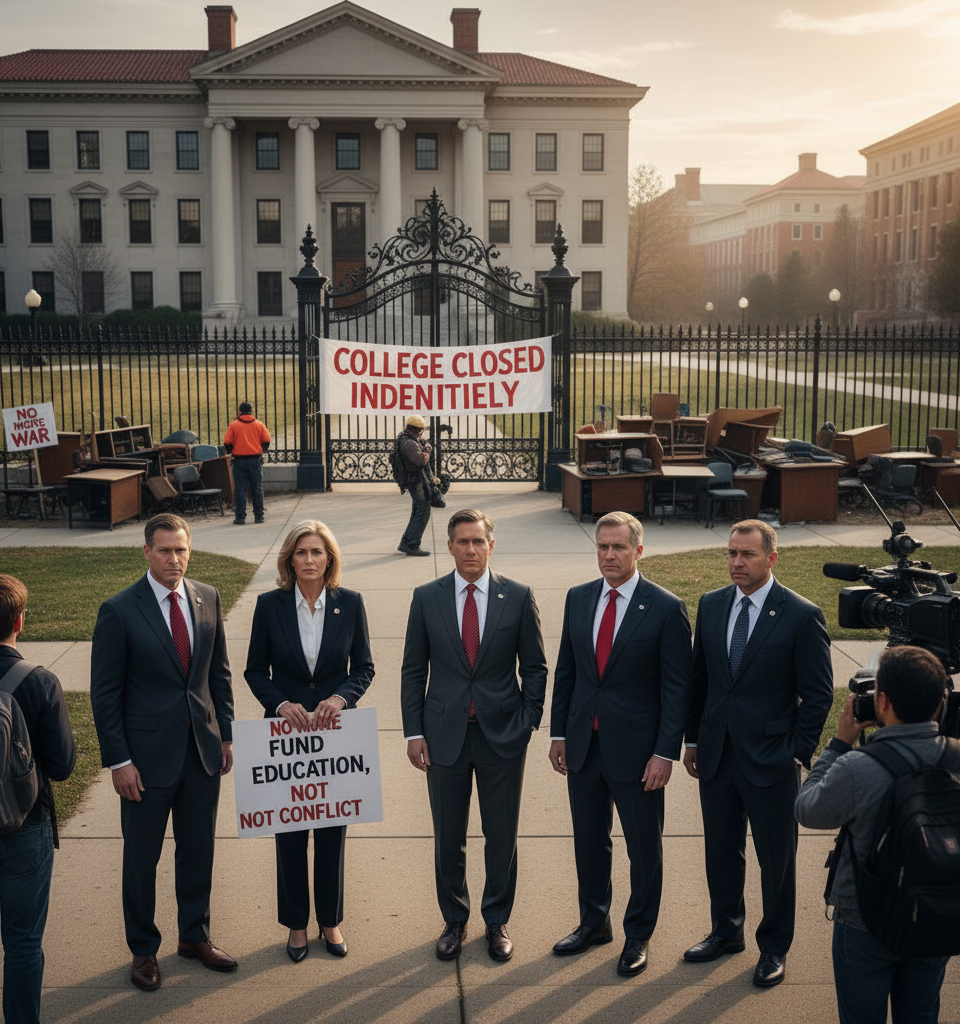
Washington D.C. finds itself grappling with a multifaceted landscape of domestic and international pressures this spring. A growing number of Republican lawmakers and strategists are openly voicing their dissatisfaction with a protracted military engagement, creating a discernible fissure within the party's foreign policy consensus. This internal debate coincides with a burgeoning crisis in American higher education, characterized by a significant wave of college closures that threaten to reshape the academic landscape and impact thousands of students and faculty.
The dissent among Republicans regarding the ongoing war is a critical development, challenging the traditional hawkish stance often associated with the party. While the specifics of their disapproval—whether related to strategy, cost, duration, or objectives—remain nuanced, the emergence of this faction signals potential shifts in future legislative priorities and electoral platforms. This internal conflict could complicate bipartisan efforts on national security and defense spending, forcing a re-evaluation of the nation's military commitments abroad.
Higher Education Faces Significant Contraction
Simultaneously, the higher education sector is experiencing a period of intense contraction. A wave of college closures is sweeping across the United States, driven by a confluence of factors including declining enrollment, increased operational costs, shifts in student demographics, and evolving economic models for learning. These closures are not isolated incidents but rather indicative of systemic pressures on smaller institutions and those with less robust endowments. The repercussions extend beyond the immediate loss of educational facilities, impacting local economies, exacerbating educational access disparities, and potentially leaving thousands of students in limbo regarding their academic futures.
The closures highlight a broader challenge within higher education: the need for institutions to adapt to a rapidly changing educational market. Many colleges, especially those with limited resources, have struggled to innovate or attract sufficient student bodies in an era of increasing skepticism about the value and cost of a traditional four-year degree. The closures are expected to disproportionately affect rural communities and urban areas reliant on these institutions as major employers and cultural centers.
World Cup Sparks Tourism Speculation
Against this backdrop, the upcoming World Cup is generating considerable anticipation, particularly concerning its potential economic impact on the United States. Forecasts are currently being analyzed to determine if the global sporting event will indeed bring tourists back to the U.S. in significant numbers. After a period of disrupted international travel and fluctuating economic conditions, the World Cup is seen as a major opportunity to revitalize the tourism sector, generate substantial revenue, and showcase American cities to a global audience.
The influx of international visitors, if it materializes as hoped, would provide a much-needed boost to hotels, restaurants, transportation services, and retail across host cities. However, the exact scale of this revitalization remains a subject of careful assessment, with analysts weighing factors such as global economic stability, visa policies, and the overall appeal of the U.S. as a travel destination. The event's success in attracting tourists will serve as a crucial barometer for the post-pandemic recovery of the American travel industry.
Implications for Policy and Economy
The convergence of these issues presents a complex policy challenge for the current administration and lawmakers. Addressing the growing Republican discontent over foreign policy will require deft diplomatic and political maneuvering. Similarly, mitigating the fallout from widespread college closures will necessitate policy responses aimed at supporting displaced students and faculty, as well as considering the long-term health of the higher education system.
The potential economic windfall from the World Cup, if realized, could offer a strategic advantage, partially offsetting some of the other economic strains. However, policymakers will need to ensure that the benefits are widely distributed and that infrastructure is adequately prepared for such an event. The coming months are poised to be a critical period for navigating these intertwined challenges and opportunities, shaping the domestic political landscape and international standing of the United States.