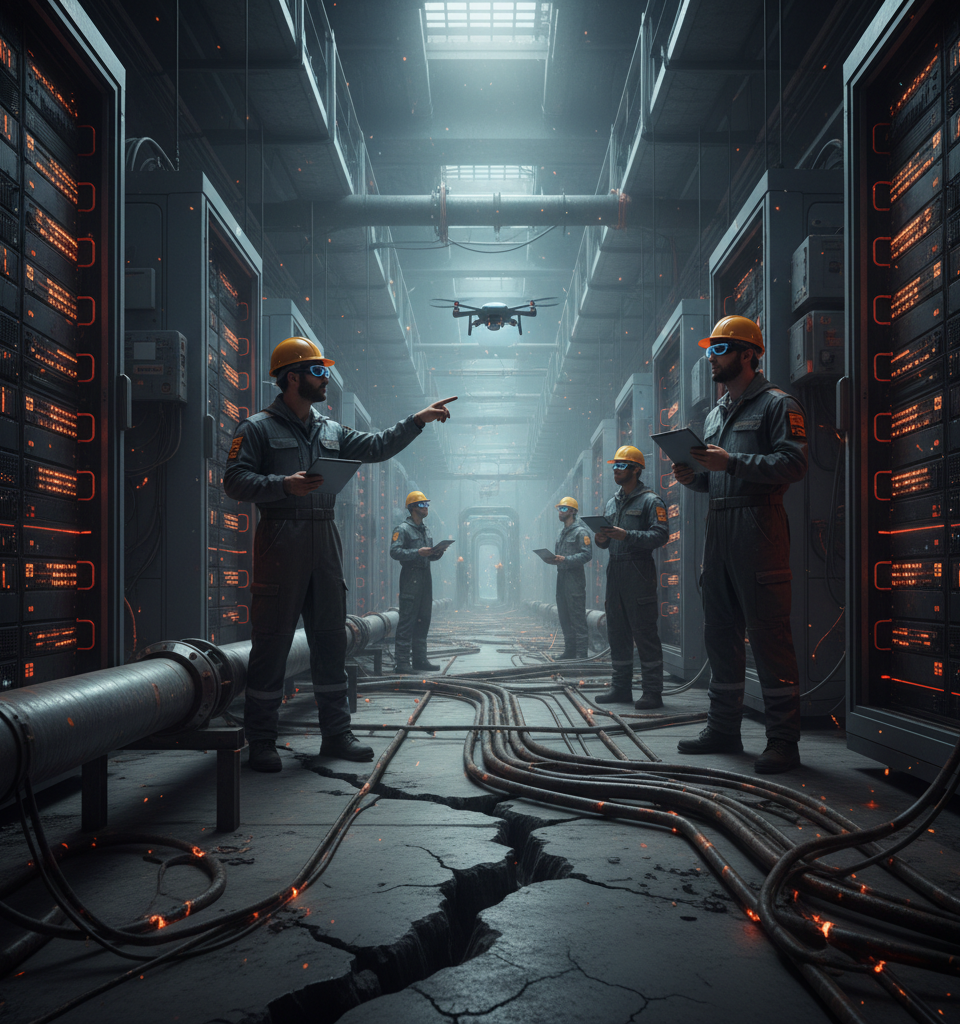
The burgeoning artificial intelligence industry is confronting a silent, yet potentially crippling, financial challenge: the staggering recurring costs associated with maintaining its complex infrastructure. While recent earnings calls from hyperscalers have provided granular detail on capital outlays for GPU procurement, power purchase agreements, and real estate footprints, a critical vocabulary for the ongoing operational expenses post-deployment is conspicuously absent. This oversight masks a future multi-trillion-dollar problem that a lone engineer is reportedly endeavoring to solve.
The Unspoken Burden of AI Operations
For the past eight quarters, the financial reporting of major cloud providers and AI infrastructure developers has meticulously detailed the upfront investment required to construct the foundational elements of artificial intelligence. From the acquisition of specialized graphics processing units (GPUs) to secure massive power purchase agreements and establish expansive data center facilities, the financial community and the public have gained a precise understanding of the initial capital expenditures. However, the subsequent, continuous expenditure necessary to keep these intricate AI clusters operational, optimized, and healthy on a recurring basis has remained largely undiscussed and unaudited. This lack of transparency points to a fundamental gap in understanding the true total cost of ownership for AI at scale.
A Trillion-Dollar Maintenance Gap
Industry analysts and insiders are beginning to highlight that the recurring operational costs for AI infrastructure, once fully understood and accounted for, could easily dwarf initial capital investments over time, potentially reaching into the trillions of dollars. These costs encompass a wide array of activities, including sophisticated cooling systems, specialized technical staff for monitoring and maintenance, sophisticated software licenses for orchestration and management, continuous hardware upgrades and replacements, and the energy consumption required for sustained operation. The sheer scale of these clustered computational environments means that even marginal efficiencies or inefficiencies can translate into billions of dollars over fiscal cycles. The current focus on procurement budgets may be obscuring an even larger, ongoing financial commitment.
The Engineer at the Forefront
Amidst this backdrop, a single engineer is bringing this critical, overlooked problem to the forefront and actively working towards solutions. While specifics regarding the engineer's identity or the exact nature of their proposed solutions remain undisclosed, their undertaking underscores the gravity of the challenge. The initiative highlights a growing recognition within the technical community that the lifecycle cost of AI extends far beyond the initial build-out, requiring dedicated attention to operational sustainability. Their work could potentially set new industry standards for how AI infrastructure is managed and financed over its operational lifespan.
Industry Repercussions and Future Outlook
Addressing this multi-trillion-dollar infrastructure maintenance problem is not merely an accounting exercise; it is crucial for the sustainable growth of the entire AI sector. Without effective solutions for recurring operational costs, companies might face unforeseen budgetary crises, hindering further innovation and deployment. The industry may need to develop new financial models, operational best practices, and technological advancements specifically aimed at reducing the long-term cost burden. This includes exploring novel approaches to energy efficiency, automated maintenance, and more resilient hardware architectures. The implications extend to every company leveraging AI, from tech giants to specialized startups, all of whom rely on these robust, yet costly, computational backbones.
What Lies Ahead
As the conversation around AI matures, the focus is inevitably shifting from purely capability-driven discussions to questions of economic viability and operational sustainability. The efforts of this engineer, and likely others who will follow, mark a significant turning point in how the AI industry approaches its foundational infrastructure. We can expect future earnings calls and industry dialogues to increasingly incorporate metrics related to recurring operational expenditures, maintenance efficiencies, and overall total cost of ownership.
The resolution of this maintenance problem is not just an technical challenge, but a strategic imperative that will shape the future landscape of artificial intelligence development and deployment. The industry is on the cusp of a paradigm shift towards holistic infrastructure management, moving beyond initial procurement to embrace the full scope of lifecycle costs.