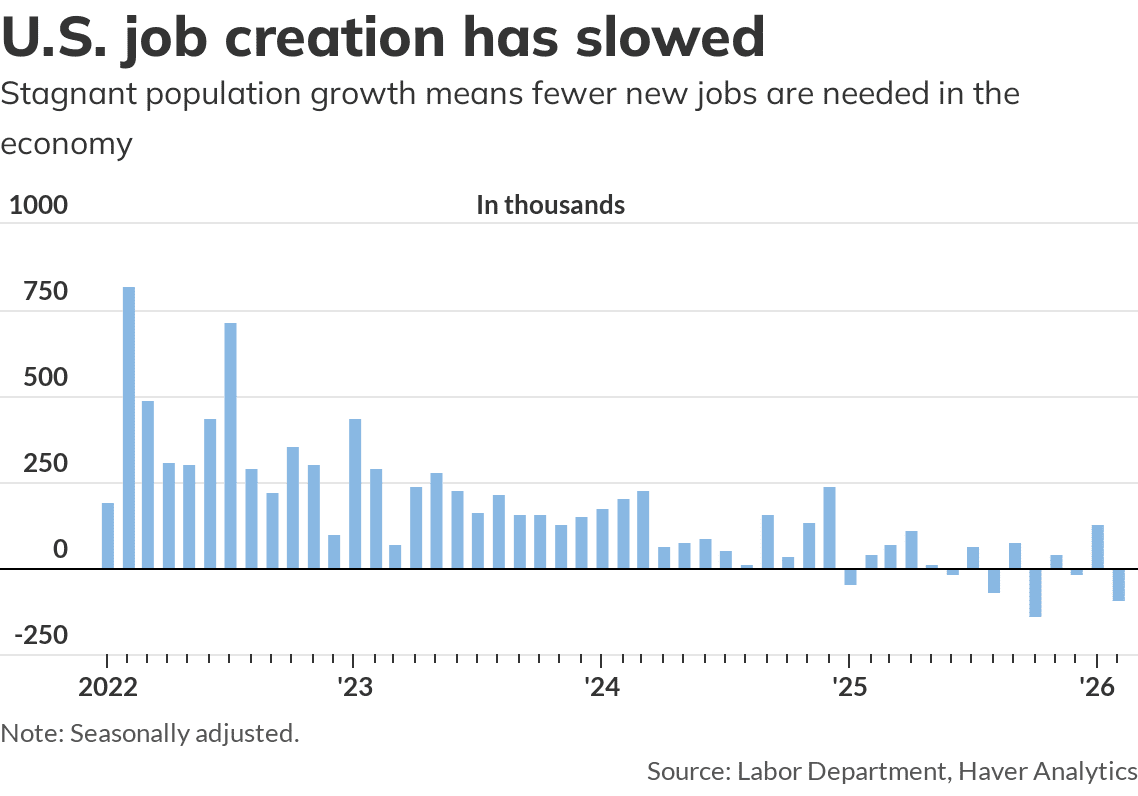
The United States is grappling with a significant deceleration in job creation, a trend that the forthcoming March jobs report is widely expected to reinforce rather than reverse. The national economy has been caught in an unsettling cycle for nearly a year, characterized by an alternating pattern of employment expansion and contraction, creating a climate of uncertainty for workers, businesses, and policymakers alike. This oscillating streak, which has now extended over ten consecutive months, represents a stark departure from periods of robust and consistent labor market growth, signaling potential underlying structural shifts or a deceleration in economic momentum.
A Decade-Long Stagnation in Employment Growth
This prolonged period of seesaw job numbers underscores a broader concern regarding the health and dynamism of the American labor market. Historically, consistent job growth has been a hallmark of economic recovery and expansion. The current intermittent nature of job additions suggests that the economy may be struggling to generate sustained employment opportunities at the pace seen in previous boom cycles. Businesses appear to be hesitant in making long-term hiring commitments, possibly due to evolving economic forecasts, geopolitical instabilities, or domestic policy uncertainties. This reluctance translates directly into a more stagnant labor market, where gains made in one month are partially or entirely offset by reversals in the next.
The implications of this persistent volatility extend far beyond mere statistical aggregates. For individual workers, it translates into increased job insecurity and potentially stunted wage growth. Industries that traditionally rely on a steady influx of new talent may find their pipelines drying up or becoming unpredictable. The retail and hospitality sectors, often bellwethers of consumer confidence and spending, are particularly susceptible to such fluctuations, as they tend to react quickly to perceived shifts in economic sentiment. Manufacturing, another key sector, also faces challenges in planning and investment when the labor market offers such inconsistent signals.
Broader Economic Impact and Market Reactions
The financial markets are keenly observing these employment trends, as job numbers are a critical indicator for inflation, consumer spending, and ultimately, corporate earnings. A sustained period of weak or erratic job creation could dampen investor confidence and lead to increased market volatility. Furthermore, without a robust labor market, the Federal Reserve's future monetary policy decisions become more complex. While a cooling labor market might alleviate inflationary pressures, a prolonged period of stagnation could also signal an impending slowdown or even recession, presenting a difficult balancing act for central bankers.
Economists have voiced concerns that this trend might indicate a maturation of the post-pandemic recovery cycle, where the easily recoupable jobs have already been added back to the economy. What remains now might be a more challenging environment for sustained growth, requiring deeper structural adjustments or more significant policy interventions. Some analysts point to technological advancements and automation as potential factors contributing to a fundamentally altered demand for labor, while others highlight demographic shifts and skill mismatches between available jobs and the workforce as compounding issues.
What Lies Ahead: Anticipating the March Report
All eyes are on the upcoming March jobs report, which market watchers anticipate will largely mirror the preceding months' irregular pattern. This report will be crucial in confirming whether the economy is indeed settling into a new normal of low, inconsistent job growth, or if these past ten months are merely a long plateau before a potential rebound. Should the report confirm the expected trend of alternating gains and losses, it will likely deepen discussions among economists and policymakers regarding the necessity of targeted interventions aimed at stimulating more reliable employment generation.
Looking ahead, the resilience of the U.S. economy hinges significantly on its ability to transition from this volatile employment cycle to a more stable and upward trajectory. Without a clearer path to consistent job creation, anxieties regarding economic stability and future prosperity are likely to intensify. The March jobs report, therefore, is not just a snapshot of the labor market; it is a critical data point influencing strategy across all sectors, from corporate hiring plans to government economic policy.