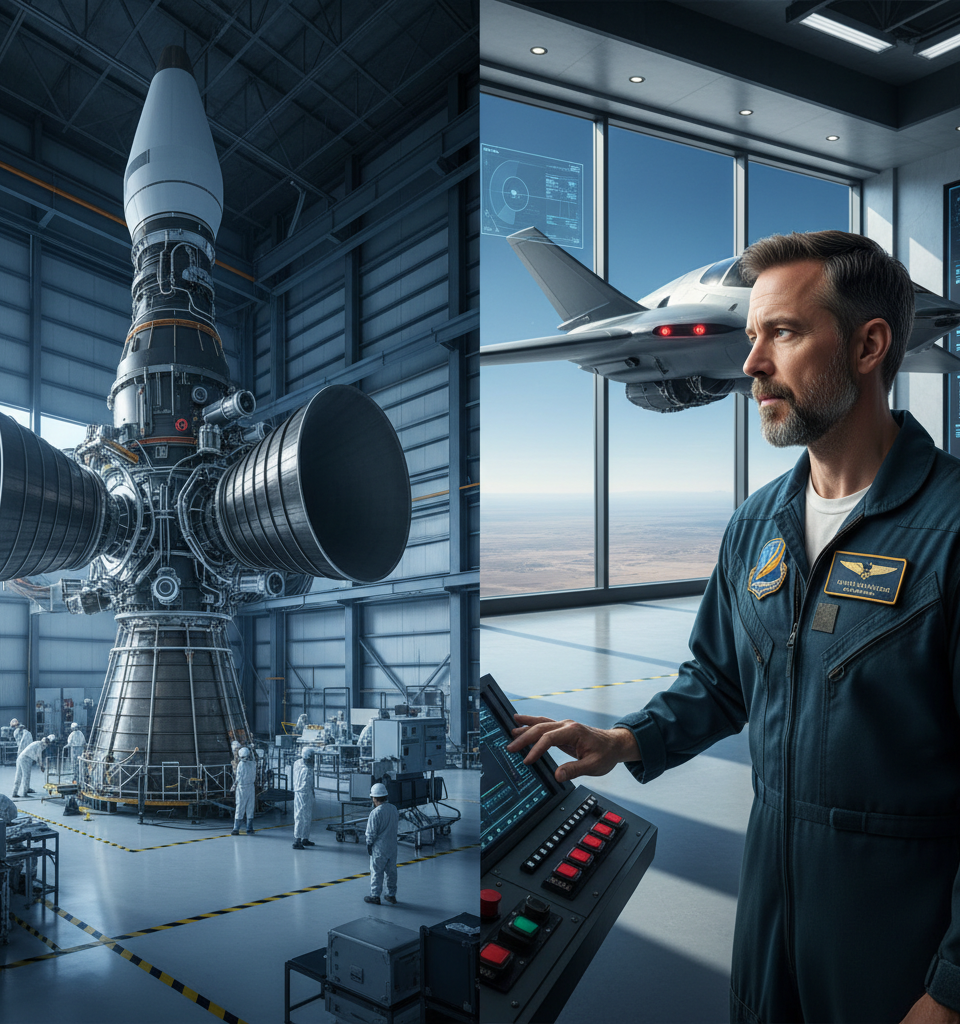
A veteran engineer instrumental in the development of SpaceX's most potent rocket engine is now at the forefront of a groundbreaking initiative, aiming to construct what is described as a "fighter jet for orbit." This ambitious project centers on a novel rocket engine design that could deliver unprecedented agility and performance in the space domain, with significant implications for national security. The venture seeks to capitalize on advanced propulsion concepts to create a highly maneuverable spacecraft, potentially offering a critical advantage in an increasingly contested orbital environment.
The genesis of this endeavor lies in the founder's extensive experience with high-performance rocket systems, having contributed to the engineering marvels at SpaceX. His work on some of the world's most powerful engines provided a deep understanding of the complexities and possibilities within advanced propulsion. This background is now being channeled into developing a new class of space vehicle, one that prioritizes rapid responsiveness and tactical maneuverability – characteristics previously unattainable in orbital platforms. The strategic relevance of such a capability is underscored by ongoing global developments in space technology and the growing emphasis on space as a critical theater for defense.
The Technical Vision: A Novel Engine's Potential
At the core of this innovative company is its proprietary rocket engine technology. While specific technical details remain largely under wraps, the description suggests a significant departure from conventional designs, emphasizing efficiency, power density, and perhaps rapid throttling or restart capabilities. These attributes are crucial for a vehicle intended to perform complex orbital maneuvers, akin to an aerial combatant. The development is not merely an incremental improvement but a fundamental rethinking of how spacecraft can move and operate in Earth's orbit. Such an engine could enable mission profiles that are currently impossible or prohibitively expensive.
Impact on U.S. Military Capabilities
The potential impact of this technology on the U.S. military's space operations is a central theme of this new venture. The founder's vision of an "orbital fighter jet" directly addresses the Department of Defense's increasing focus on space resilience, deterrence, and superiority. A spacecraft with superior maneuverability could provide critical capabilities for intelligence, surveillance, reconnaissance (ISR), and potentially for enhancing the longevity or defensive posture of existing space assets. It could also offer a rapid-response platform for various unforeseen contingencies, strengthening the nation's capacity to protect its interests in orbit.
The strategic landscape of space is evolving rapidly, with a growing number of state and non-state actors pursuing advanced capabilities. In this environment, the ability to quickly reposition, intercept, or defend space infrastructure becomes paramount. This new rocket engine and the spacecraft it powers are being designed with these dynamic requirements in mind. Such a system could provide the tactical flexibility needed to operate effectively within a complex and potentially hostile orbital domain, enhancing overall national security posture.
Future Prospects and Market Disruption
Looking ahead, the successful development and deployment of this technology could represent a significant disruption not only for military applications but also for the broader space industry. Enhanced maneuverability and propulsion efficiency could drive down operational costs for commercial satellite operators, enabling more dynamic missions and reducing the reliance on static orbital slots. The implications extend to satellite servicing, in-orbit manufacturing, and even potential breakthroughs in deep-space exploration, should the technology prove scalable.
The company is likely to attract substantial investment, given the founder's pedigree and the strategic importance of the technology. Early collaborations with government agencies, particularly those focused on defense and advanced research, are also probable as the project progresses from conceptualization to engineering and testing phases. The coming months and years will be critical in demonstrating the engine's capabilities and validating its potential to transform space operations. The convergence of a proven founder, a revolutionary technology, and a clear strategic need positions this venture as a significant player in the future of space exploration and defense.
While the path from concept to fully operational orbital craft is long and fraught with technical challenges, the foundation laid by an individual with such deep expertise in high-performance rocket engines provides a compelling starting point. The successful realization of this "fighter jet for orbit" could usher in a new era of space maneuverability, fundamentally altering the way nations approach their presence and capabilities in the final frontier.