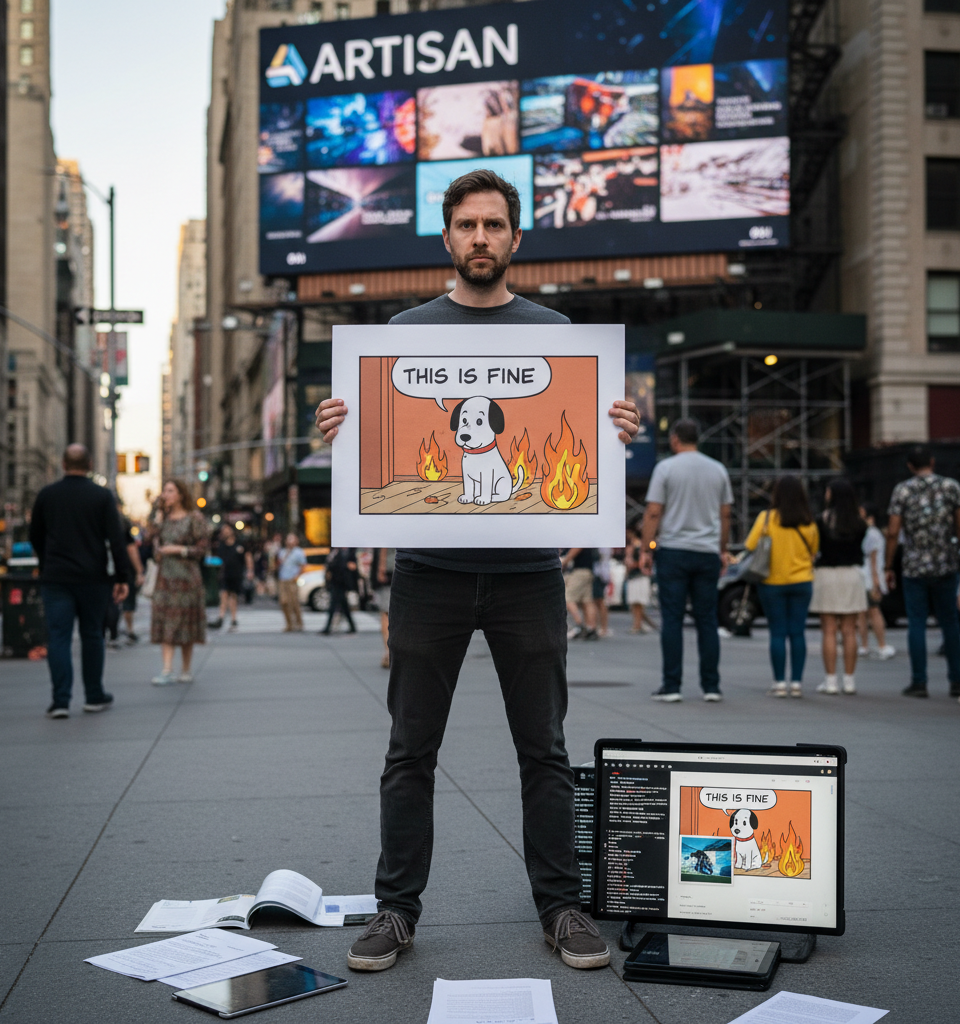
The creator of the globally recognized ‘This Is Fine’ meme, artist KC Green, has publicly alleged that the artificial intelligence startup Artisan unlawfully appropriated his intellectual property. The accusation stems from Artisan’s use of imagery strikingly similar to Green's copyrighted work in recent advertising campaigns. The incident, which gained traction on social media platforms this week, casts a critical light on the ethical boundaries and intellectual property practices within the burgeoning AI industry, specifically targeting companies that are pushing for accelerated adoption of AI-driven solutions to replace human labor.
This development comes amidst a contentious backdrop of AI companies facing increasing scrutiny over their training data and content generation methodologies. Artisan, a startup that has drawn attention for its provocative billboards urging businesses to “stop hiring humans,” finds itself at the center of a fresh controversy that underscores the deep-seated anxieties artists and creators harbor regarding AI's impact on their livelihoods and proprietary works. The 'This Is Fine' meme, depicting a dog calmly accepting its fiery surroundings, has become a cultural touchstone symbolizing resignation in the face of chaos, and its unauthorized use has sparked widespread outrage within creative communities.
Green's allegations detail that Artisan’s promotional content features imagery that directly emulates the style, composition, and core elements of his well-known webcomic panel. While specific financial damages or legal actions have not yet been formally announced, the artist’s public statements have ignited a widespread discussion. Representatives for Artisan have not yet issued a comprehensive public response to Green's specific claims, though the company’s aggressive marketing strategy, centered on efficiency and human displacement, has only amplified the public relations challenge. The core of the dispute revolves around whether Artisan's use constitutes fair use, parody, or a direct copyright infringement – a legal distinction that is still largely undefined in the context of AI-generated or AI-influenced content.
The broader industry implications of this incident are significant. The debate over AI copyright infringement is intensifying, with numerous lawsuits already pending against major AI developers for allegedly scraping vast quantities of copyrighted material from the internet to train their models. This includes high-profile cases involving authors, artists, and news organizations. The Artisan controversy illustrates how even startups, in their zeal to market and scale, can stumble into legal and ethical minefields, potentially exposing them to significant legal liabilities and reputational damage. It highlights a critical need for transparent sourcing and ethical guidelines for AI development and deployment, particularly as AI tools become more sophisticated in mimicking human creativity.
Legal experts and intellectual property attorneys are closely watching these developments. Dr. Evelyn Reed, a leading IP law professor at Stanford University, commenting on the general trend, stated, “The ‘move fast and break things’ ethos of Silicon Valley is colliding head-on with established copyright law. We are in uncharted waters, and every high-profile case like this helps to shape the emerging legal framework for AI and creative works. Companies must prioritize due diligence regarding their data sources or face substantial punitive measures.” Analysts suggest that without clearer regulations or industry-wide best practices, such disputes could deter investment in AI startups and slow adoption among risk-averse enterprises.
Looking ahead, this incident could precipitate increased pressure for regulatory bodies to establish clearer guidelines for AI content generation and the use of source materials. It may also encourage AI companies to invest in more robust licensing agreements with creators or to develop AI models that are transparent about their training data. For artists like Green, the fight is not just about individual compensation but about preserving the integrity of creative work in an era dominated by artificial intelligence. The outcome of this particular dispute with Artisan, whether resolved through negotiation or litigation, will likely serve as a precedent, further defining the boundaries of intellectual property in the age of AI and shaping how creators and AI companies coexist.