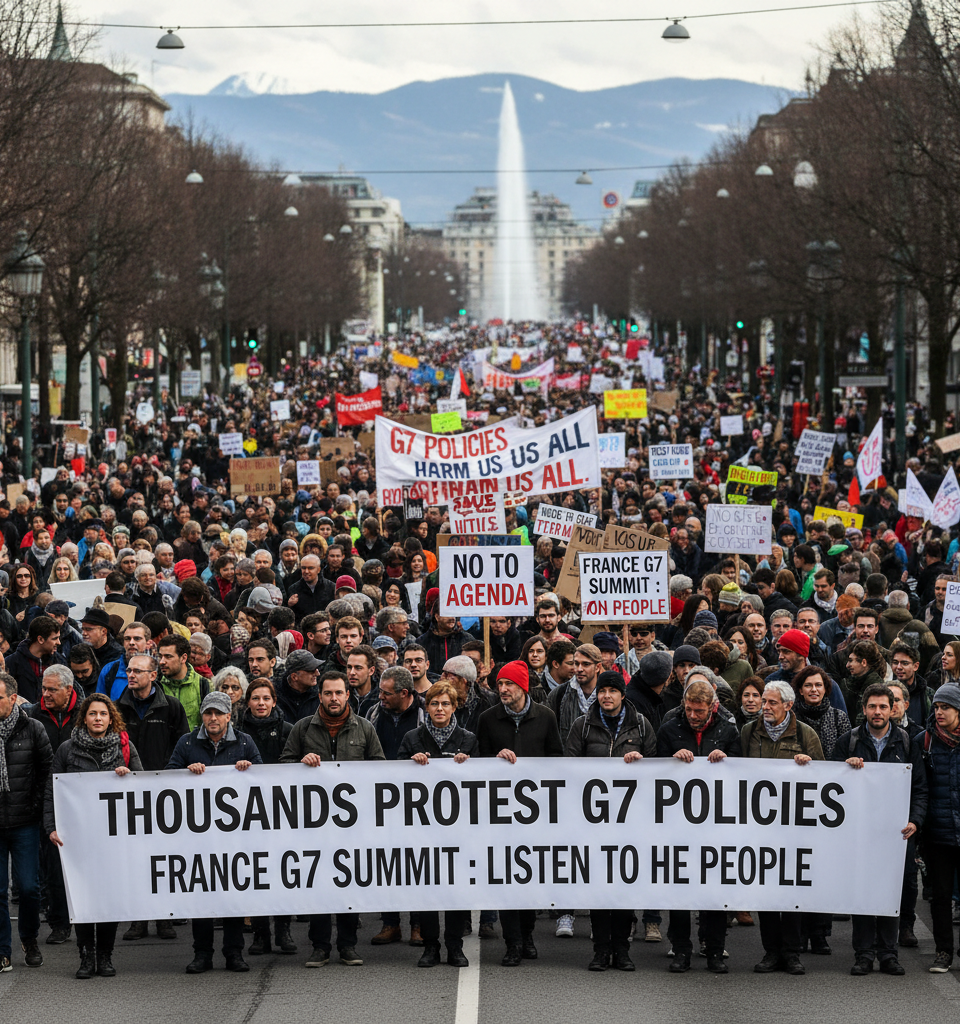
Thousands of activists are currently rallying in Geneva, Switzerland, to denounce the multifaceted policies of the Group of Seven (G7) countries. These protests are unfolding just ahead of the G7's annual leadership summit, which is scheduled to take place this week in France. The demonstrations signify increasing public scrutiny and dissatisfaction with the economic, environmental, and social governance strategies advocated by the world's leading industrial nations.
Context and Background
The G7, comprising Canada, France, Germany, Italy, Japan, the United Kingdom, and the United States, represents a significant portion of global economic power. Its annual summits serve as a crucial platform for these nations to coordinate policies on pressing international issues, ranging from climate change and global health to economic development and security. However, these gatherings have also historically been magnets for protest, with various civil society organizations and activist groups using the occasion to draw attention to perceived shortcomings or harmful impacts of G7 decisions. The current protests in Geneva echo a long tradition of grassroots movements challenging the top-down approach of powerful international bodies.
Key Details of the Protests
The Geneva demonstrations have seen a diverse coalition of activists participating, including environmental groups, anti-globalization proponents, and human rights advocates. Their collective message centers on the belief that G7 policies often exacerbate global inequalities, contribute to climate degradation, and fail to adequately address the needs of developing nations. While specific demands from the protestors vary, common themes include calls for more equitable trade practices, accelerated action on climate commitments, and a greater emphasis on social justice in international policy-making. The sheer volume of participants underscores a palpable sense of urgency among these groups.
Industry and Market Impact
While the direct impact of these protests on financial markets or specific industries is often indirect, they can influence the discourse surrounding G7 policy decisions. For instance, heightened public pressure on environmental issues could compel G7 leaders to adopt more stringent climate targets, potentially affecting industries reliant on fossil fuels or those in sectors vulnerable to new regulations. Similarly, calls for fairer trade practices could influence future negotiations and trade agreements, impacting global supply chains and established market dynamics. Companies with significant international operations closely monitor such demonstrations for early indicators of shifting policy landscapes.
What's Next
With the G7 summit in France mere days away, the Geneva protests are expected to intensify pressure on the attending world leaders. It is anticipated that the issues highlighted by the activists will feature prominently in public commentary and potentially even in the closed-door discussions among the G7 nations. The outcome of the summit, particularly regarding commitments on climate change, economic governance, and international aid, will be closely scrutinized by these same activist groups, who are likely to continue their advocacy efforts beyond the current protests. The international community will be watching to see if the G7 leaders acknowledge and respond to these growing public demands.