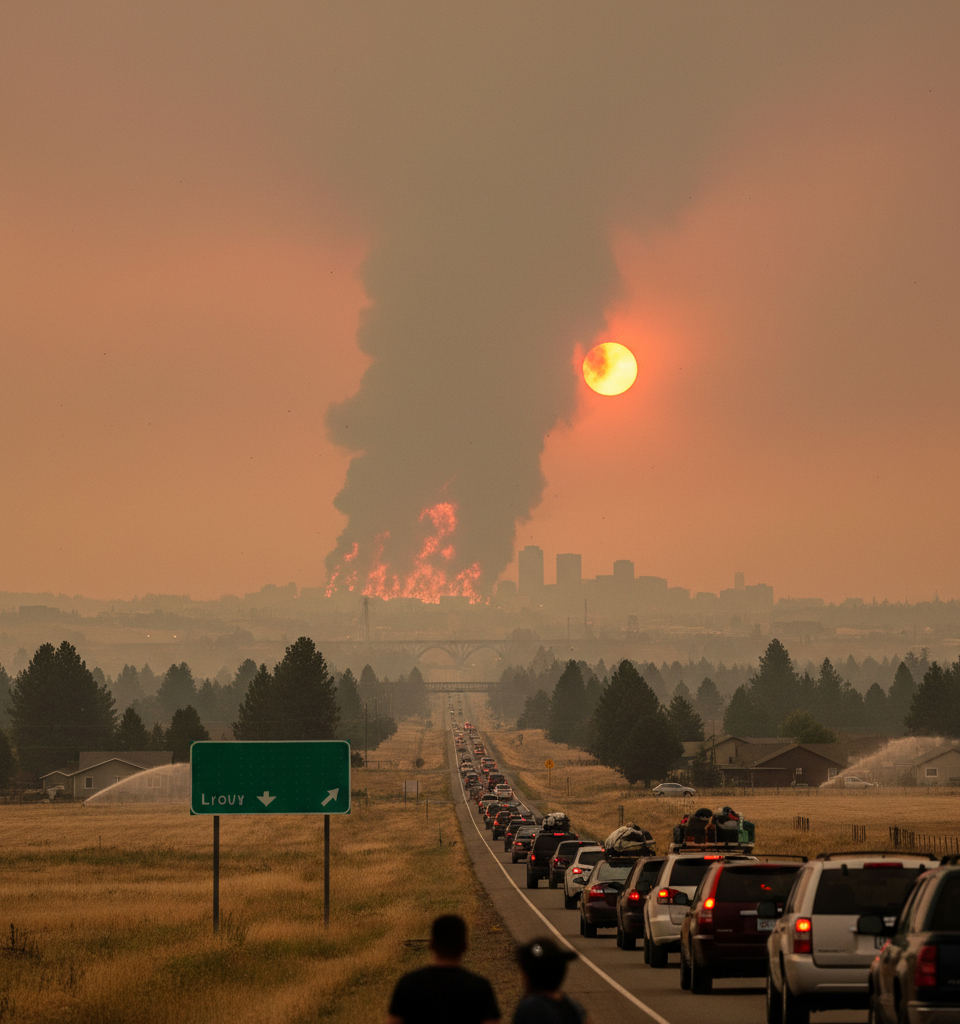
The economic ripple effects of natural disasters, particularly those impacting urban centers, can be substantial, disrupting supply chains, impacting local businesses, and potentially straining regional insurance markets. The ongoing situation in Spokane highlights the vulnerability of infrastructure and commerce to environmental crises, necessitating immediate assessment of potential long-term recovery costs and business continuity strategies.
Urgent Evacuation Orders Issued as Wildfires Engulf Spokane
Spokane, Washington, is grappling with a severe wildfire crisis as multiple blazes rage across the city and its surrounding areas, prompting urgent Level 3 evacuation orders for significant portions of the populace. As of August 21, 2026, emergency services are battling actively spreading fires, leading to critical warnings for residents to evacuate immediately, with officials emphasizing, "Leave NOW! This may be your only notice."
The rapidly deteriorating situation has thrown the metropolitan area into disarray, challenging local authorities and emergency responders as they work to contain the blazes and ensure public safety. The swift escalation of the fires has necessitated proactive measures, with Level 3 orders representing the highest alert level, indicating an immediate and grave threat to life and property.
Context of Western Wildfire Challenges
This incident in Spokane is unfolding against a backdrop of increasing wildfire activity across the Western United States, a trend attributed by many to a combination of prolonged drought conditions, climate change, and forest management practices. While the immediate cause of the Spokane fires has not been disclosed, the region has experienced a hotter, drier summer, creating conditions highly conducive to rapid fire spread. The proximity of these fires to a major urban hub like Spokane underscores the growing challenge of managing wildland-urban interface fires.
Critical Public Safety Directives
Local fire departments and law enforcement agencies are coordinating extensive evacuation efforts, guiding residents away from areas under immediate threat. The "Leave NOW!" directive signifies that residents should not delay their departure, as roads may quickly become impassable due to smoke or fire, and emergency services may be unable to provide assistance once conditions deteriorate. The immediate priority remains the safety of human lives, with extensive resources being deployed to mitigate risks and respond to emergencies.
Potential Economic and Infrastructural Impact
The impact on Spokane's economy and infrastructure is anticipated to be considerable. Beyond the immediate threat to homes and businesses, disruptions to transportation routes, utilities, and local commerce are likely. Businesses forced to close or whose employees are under evacuation orders will face operational challenges, and the long-term recovery effort could involve significant financial outlays for rebuilding and environmental restoration. The agricultural sector, a key component of the regional economy, also faces potential risks from smoke and fire damage.
Looking Ahead: Containment Efforts and Recovery Planning
Authorities are focused on immediate containment strategies and providing essential services to evacuated residents. Emergency shelters have been established to accommodate those displaced by the fires, and additional resources from state and federal agencies are expected to be mobilized to assist with the response. The coming days will be critical for assessing the full extent of the damage, establishing more secure perimeters around the blazes, and beginning the arduous process of planning for recovery and rebuilding. The prolonged nature of these events often requires sustained effort and collaboration across multiple levels of government and community organizations.