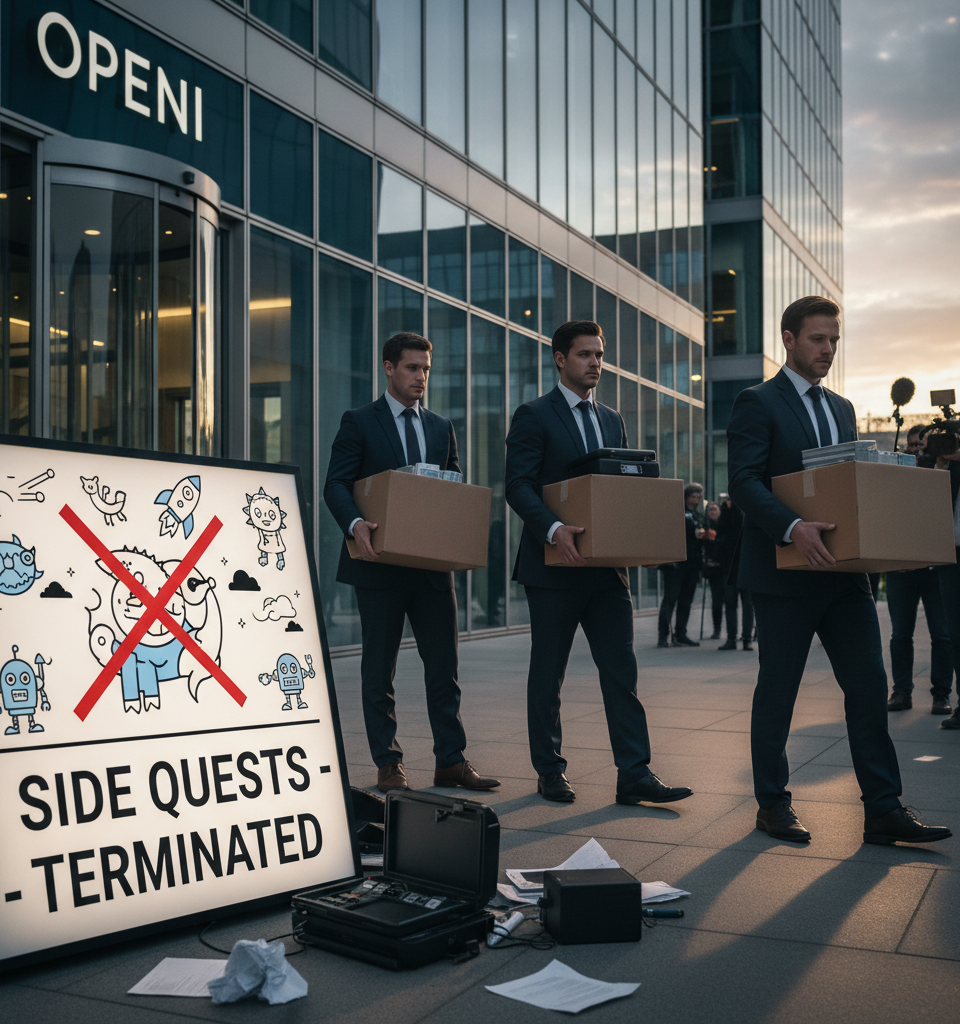
OpenAI, the vanguard of generative artificial intelligence, is experiencing a notable leadership exodus alongside a strategic shift, with three prominent executives confirming their departures. Kevin Weil, former Chief Product Officer; Bill Peebles, head of the groundbreaking Sora text-to-video model; and Srinivas Narayanan, Enterprise Chief Technology Officer, all exited the company simultaneously. Their departures were confirmed on the same day OpenAI announced the discontinuation of its 'side quests' initiative, a program designed to foster exploratory AI projects. This confluence of events indicates a decisive move by the Sam Altman-led organization to consolidate its focus on core product development and market commercialization, potentially in response to internal pressures and an increasingly competitive landscape.
This latest round of high-profile departures follows a series of executive and researcher exits that have periodically roiled OpenAI since last year's dramatic ousting and subsequent reinstatement of CEO Sam Altman. The continuity in leadership and strategic vision has been a recurring concern for observers of the company. The departure of individuals central to product strategy (Weil), cutting-edge research (Peebles, a key figure behind Sora), and enterprise solutions (Narayanan) raises questions about the immediate trajectory and internal stability of OpenAI as it navigates its next phase of growth and product deployment. The company has yet to issue a comprehensive official statement regarding the broader implications of these exits or the strategic rationale behind them.
Shifting Priorities and Internal Dynamics
The specifics of the executives' departures remain somewhat veiled, although reports suggest they were not directly related to the 'side quests' program's cessation. However, the timing is undeniably significant, painting a picture of a company undergoing a substantial internal recalibration. The 'side quests' program, while not extensively publicized, was an internal incubator for innovative, often experimental, AI applications and research. Its disbandment, coupled with the loss of key personnel steering innovative projects like Sora and crucial enterprise initiatives, implies a strategic consolidation of resources and talent towards established, income-generating products such as ChatGPT Enterprise and its foundational large language models (LLMs).
Industry analysts are interpreting these moves as a clear signal that OpenAI is prioritizing profitability and scalable enterprise solutions over exploratory research in the immediate term. The pressure to monetize its cutting-edge research and justify its multi-billion-dollar valuation, particularly from major investors like Microsoft, is immense. Competitors like Google, Anthropic, and a burgeoning open-source AI community are rapidly closing the gap, intensifying the need for OpenAI to maintain a lean, efficient operation focused on its most impactful initiatives. This strategic narrowing could be seen as an attempt to streamline operations and accelerate the path to sustainable revenue streams.
Broader Market Impact and Competitive Landscape
The implications of OpenAI's strategic shift and executive departures extend beyond the company itself, resonating across the entire AI industry. The exit of Bill Peebles, a lead on Sora, is particularly noteworthy given the model's significant potential and the intense interest it generated. While Sora's development continues, the departure of a key architect could marginally impact its future trajectory or release timeline. More broadly, the emphasis on enterprise solutions aligns with a growing trend among leading AI firms to cater to business use cases, offering a more direct route to revenue compared to consumer-facing applications.
Experts such as Sarah Guo of Conviction Ventures have frequently highlighted the intense talent war within AI and the challenges of retaining top researchers and engineers in a rapidly evolving field. The allure of founding new ventures or joining competitors with different research agendas is always present. "OpenAI's situation reflects the broader market's maturity," says one leading AI venture capitalist, who requested anonymity to speak frankly. "Companies are moving past pure research exploration into the hard grind of productization and commercialization. Not everyone fits or wants to be part of that phase."
What Lies Ahead for OpenAI
In the near term, OpenAI's focus will unequivocally be on solidifying its core product offerings, deepening its enterprise engagements, and ensuring the successful deployment of new models like GPT-4o and the continued development of Sora. The company will likely seek to reassure its partners and investors that these leadership changes will not derail its strategic objectives, emphasizing continuity in its product roadmap and its commitment to advancing artificial general intelligence (AGI) responsibly. The company's ability to attract and retain top talent, despite these recent departures, will be a critical indicator of its long-term health and competitiveness.
With these strategic adjustments, OpenAI is betting on a streamlined approach to maintain its leadership position. The discontinuation of 'side quests' suggests a move away from distributed, potentially unaligned, internal projects towards a more centralized and commercially driven product pipeline. The coming months will be crucial in observing how these organizational changes impact product innovation, market share, and ultimately, OpenAI's trajectory in the fiercely competitive AI race. The industry will be closely watching for new appointments and further strategic announcements that clarify the company's path forward in this rapidly evolving technological frontier.