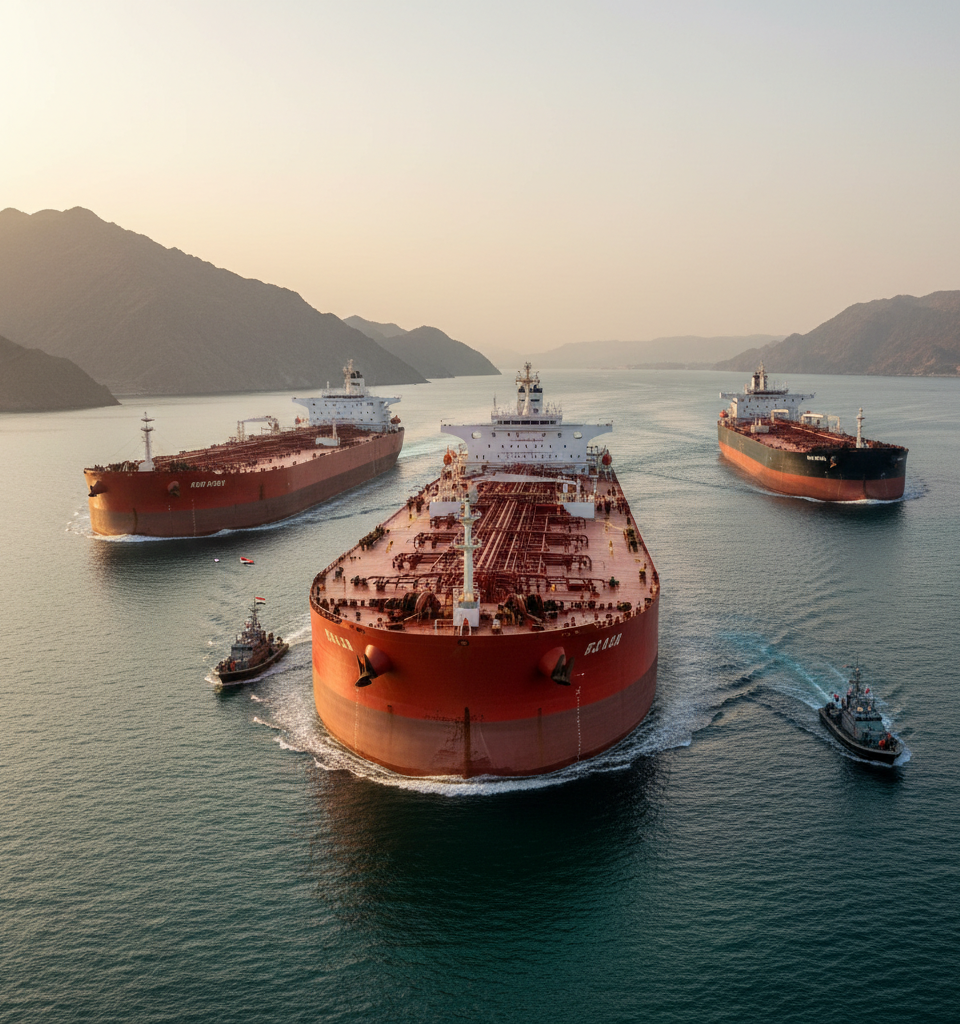
Three oil supertankers are reportedly positioned to transit the Strait of Hormuz, a move keenly observed by global markets and geopolitical analysts. If these three vessels successfully navigate the strategic chokepoint on Saturday, it would represent the largest daily volume of crude exits through Hormuz since early March, a period marked by significant disruptions to maritime traffic following the outbreak of hostilities.
This potential surge in oil exports comes at a critical juncture for the global energy market, still grappling with volatility stemming from ongoing conflicts and supply chain pressures. The Strait of Hormuz, a narrow passage between the Persian Gulf and the Arabian Sea, is arguably the world's most important oil transit chokepoint, with approximately one-fifth of the world's total oil consumption passing through it. Any significant alteration to its traffic flow, whether an increase or decrease, inevitably sends ripples across international energy prices and geopolitical relations.
Historical Context and Recent Disruptions
The significance of this potential transit cannot be overstated, particularly when viewed against the backdrop of recent history. The earlier halt in traffic through the waterway at the beginning of March, directly attributed to war-related events, underscored the vulnerability of global energy supplies to regional instabilities. That period saw a drastic reduction in the free movement of tankers, creating uncertainty and contributing to price hikes in anticipation of supply shortages. The successful passage of multiple supertankers now would signal a potential, albeit cautious, return to pre-conflict levels of activity, or at least a significant step towards normalizing transit volumes after a period of severe constraint.
The logistical and security challenges associated with navigating the Strait of Hormuz have only amplified in recent months. The presence of naval forces from various nations, coupled with heightened regional tensions, necessitates meticulous planning and coordination for such large-scale movements. Supertankers, by their very nature, require specific navigational conditions and security protocols, making their synchronized passage a complex undertaking that speaks volumes about the current operational environment within the Strait.
Market Implications and Future Outlook
For the global oil market, the departure of three fully laden supertankers would ease some immediate supply concerns, potentially placing downward pressure on spot crude prices. However, the longer-term impact would depend on the sustained nature of these transits and whether they represent a one-off event or the beginning of a more consistent flow. Analysts will be closely watching whether shipping insurance premiums for vessels transiting the Strait adjust, as these costs are a direct reflection of perceived risk and materially impact the economics of oil transportation.
Energy commodity traders will be parsing satellite data and shipping manifests in the coming days to confirm the passage and ascertain the destinations of these vessels. The volume of oil these three supertankers collectively carry could represent several days' worth of national consumption for some major importing nations, highlighting the substantial impact of such a movement on daily supply metrics. This event is not merely about transportation; it is a barometer for broader regional stability and the operational capabilities of oil-producing nations.
Geopolitical Undercurrents
Beyond the economic implications, the successful navigation of these vessels carries significant geopolitical weight. It could be interpreted as a demonstration of ongoing efforts to maintain the flow of international commerce despite regional conflicts, or as a strategic move to reassert control over critical maritime routes. The eyes of global powers, particularly those reliant on oil imports from the Middle East, will be fixed on the Strait, assessing the implications of this development for regional security and energy security.
The coming days will be crucial in determining whether this potential uptick in traffic signifies a durable trend or merely a temporary reprieve. Should these three supertankers complete their journey without incident, it is expected to provide a measure of relief to the global energy markets, affirming the resilience of the international oil supply chain even amidst considerable geopolitical pressures. However, the inherent volatility of the region means that such positive developments are often subject to rapid change, keeping market participants and policymakers on high alert.