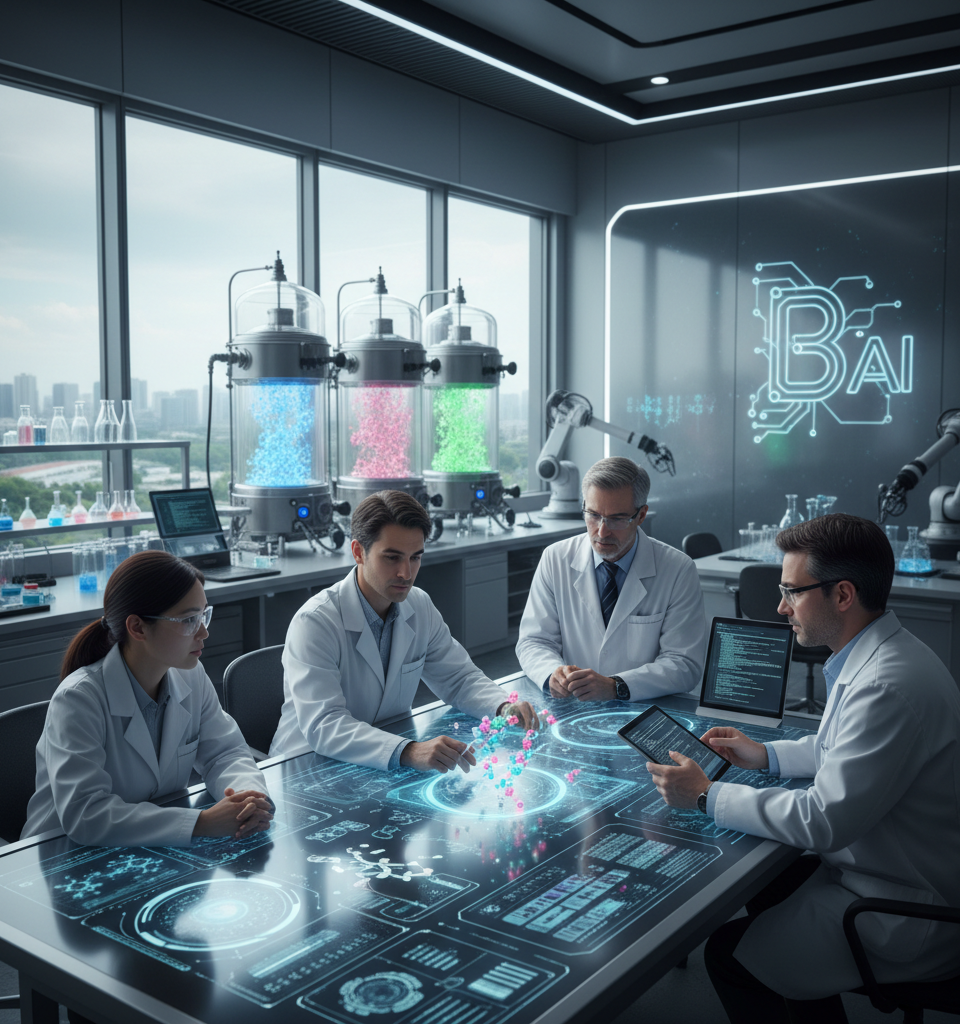
In a remarkable convergence of artificial intelligence and biotechnology, Anew Labs, the drug discovery division of Chinese technology giant ByteDance, is applying its algorithmic prowess to the field of medicine. The company, renowned for developing TikTok's highly effective recommendation engine, is now utilizing a related class of AI to predict molecular behavior within the human body, aiming to develop treatments for conditions long considered "undruggable" by traditional pharmaceutical methods. This groundbreaking initiative was brought into the spotlight recently when Anew Labs presented its inaugural AI-designed therapy at a prominent scientific gathering, marking a pivotal moment in the nascent field of AI-driven drug development.
The AI Revolution in Pharmaceuticals
The pharmaceutical industry has historically grappled with the enormous costs and lengthy timelines associated with drug discovery, with the average new drug taking approximately 10-15 years and over $2 billion to bring to market. A significant portion of this investment is often lost on drug candidates that fail in clinical trials, predominantly due to efficacy or safety concerns. This reality has created a fertile ground for disruptive technologies like AI, which promise to accelerate the identification of potent therapeutic compounds and streamline the development pipeline.
ByteDance's entry into this domain is particularly notable given its deep expertise in algorithms that understand and predict complex human behaviors and preferences, albeit in a different context. The transition from predicting viral content to predicting molecular interactions highlights the versatility and potential of advanced AI systems.
Key Innovations and Early Successes
Anew Labs' approach centers on generative AI models capable of designing novel molecules from scratch, rather than merely screening existing compound libraries. These models analyze vast datasets of chemical structures, biological targets, and disease pathways to propose compounds with desired pharmacological properties. The specific AI-designed therapy introduced by Anew Labs targets a protein class that has proven notoriously difficult for conventional small-molecule drugs to address, hinting at its potential to unlock new treatment avenues for diseases like certain cancers or neurodegenerative disorders. While specific data on human trials remains pending, the successful presentation at a major scientific conference suggests a strong validation of their computational methods and preclinical results.
Industry Implications and Competitive Landscape
ByteDance's foray into drug discovery signals a broader trend of technology companies investing heavily in biotech. Giants like Google (through its DeepMind subsidiary and Isomorphic Labs) and Nvidia are also channeling significant resources into AI-powered drug discovery platforms. This influx of capital and computational power is intensifying competition in an industry traditionally dominated by established pharmaceutical firms.
For incumbent pharma companies, the rise of AI specialists like Anew Labs presents both a threat and an opportunity for collaboration. The ability to rapidly identify and optimize drug candidates could drastically reduce R&D costs and accelerate time-to-market, potentially reshuffling the rankings of leading pharmaceutical innovators within the next decade. Analysts estimate that AI could shave billions off drug development costs annually if widely adopted and successful.
Expert Perspectives on AI in Drug Development
Industry experts and computational chemists are largely optimistic yet cautiously pragmatic about the true impact of AI on drug discovery. Dr. Elena Petrova, a computational biology professor at a leading research institution, remarked, "ByteDance's move is a powerful validation of AI's potential in drug discovery.
Their algorithmic sophistication, honed by TikTok, could indeed provide an edge in navigating the vast chemical space. " She emphasized that while AI can significantly accelerate early-stage discovery, the fundamental challenges of drug development – particularly issues of pharmacokinetics, toxicity, and human safety – remain formidable, requiring continued human expertise and experimental validation.
The Road Ahead: From Algorithm to Approved Medication
Looking forward, Anew Labs is expected to continue its preclinical development, moving towards Investigational New Drug (IND) applications and subsequent human clinical trials. The next critical milestones will involve demonstrating not only the safety but also the efficacy of their AI-designed compounds in patient populations. Success in these later-stage trials would not only validate ByteDance's innovative strategy but also open doors for other tech-driven companies to challenge the traditional drug development paradigm. The ultimate goal remains bringing these novel therapies to patients, potentially revolutionizing treatment options for diseases that currently have limited or no effective cures. The fusion of entertainment algorithm design with life-saving medicine underscores a future where technological boundaries continue to blur, yielding profound societal benefits.
Regulatory Landscape and Ethical Considerations
The rapid advancement of AI in drug discovery also brings forth new regulatory and ethical considerations. Agencies like the FDA will need to adapt their evaluation frameworks to accommodate AI-generated drug candidates, focusing on the robustness of the AI models and the transparency of their design rationale. Ethical questions surrounding intellectual property for AI-designed molecules and the potential for algorithmic bias in drug targeting will also need careful consideration. As Anew Labs progresses, its transparency and adherence to global regulatory standards will be crucial not only for product approval but also for building trust within the scientific and medical communities. This foundational work will pave the way for a new era of medication development.